Politics & Government
Report: Apples Have Highest Pesticide Levels
How should families balance a diet high in fruits and vegetables with the potential dangers of pesticides in conventionally-grown produce?
The Environmental Working Group (EWG) released its 2011 Shopper's Guide to Pesticides in Produce this week. The list ranks 53 fruits and vegetables for pesticide levels tested by the U.S. Department of Agriculture and the Food and Drug Administration from 2000 to 2009.
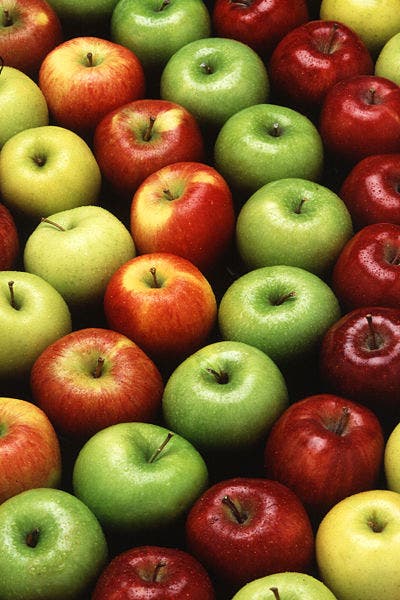
Apples ranked first on the list this year, with the USDA finding that 98 percent of 700 apples tested had pesticide concentrations in the fruit's flesh. Of those apples, 56 chemicals were present, with 92 percent containing two or more pesticide residues.
Here are this year's EWG "Dirty Dozen" rankings:
Find out what's happening in Harrisonfor free with the latest updates from Patch.
- Apples
- Celery
- Strawberries
- Peaches
- Spinach
- Nectarines - imported
- Grapes - imported
- Red Peppers / Sweet Bell Peppers
- Potatoes
- Blueberries
- Lettuce
- Kale / Collard Greens
While EWG maintains that the list is not meant to discourage people from eating fruits and vegetables, the group's president says that consumers should avoid pesticides by buying organic varieties of the aforementioned items whenever possible.
“Though buying organic is always the best choice, we know that sometimes people do not have access to that produce or cannot afford it,” said EWG President Ken Cook. “Our guide helps consumers concerned about pesticides to make better choices among conventional produce, and lets them know which fruits and vegetables they may want to buy organic.”
Find out what's happening in Harrisonfor free with the latest updates from Patch.
But Cornell University Professor of Horticulture Marvin Pritts says that EWG's rankings could cause unnecessary hesitation on the part of consumers to eat fruits and vegetables.
“There is strong consensus among scientists that the benefits of eating fruits and vegetables–even those containing pesticide residues–is far greater than any theoretical negative effect," he said.
Pritts also noted that the produce studied were sampled from supermarkets, and consequently don't represent other sources of the items tested.
"For example, strawberries were ranked third on the list. Supermarket strawberries are most likely from Florida or coastal California where daily rainfall and morning dew create conditions that require frequent fungicide applications," he said.
Produce industry trade groups maintain that their products are safe because pesticide concentrations found were less than tolerance levels set by EPA.
“If anything, the USDA data report, from which the Dirty Dozen is purportedly created, underscores the safety of fruits and vegetables," said United Fresh Produce Association President and CEO Tom Stenzel. "In its latest report, the USDA states the overall residues found on tested foods were 'at levels below the tolerances established by EPA.'"
In the USDA's Executive Summary of the 2009 Pesticide Data Program results, it notes that "residues exceeding the established tolerance were detected in 0.3 percent of the samples tested, and residues with no established tolerance were found in 2.7 percent of the samples." New York was one of 12 states to have its produce tested in the 2009 survey.
While very few items tested by the USDA were found to have pesticide levels above the set tolerances, concern has been expressed that frequent consumption of pesticides can cause detriment to the human body, especially in children.
Numerous studies have linked high levels of pesticides categorized as organophosphates to ADHD, low IQ levels and motor ability impairments in children. Long-term exposure in adults has been linked with cancer.
"I really worry that pesticides on food are unhealthy for the tender, developing brains and bodies of young children," said Dr. Harvey Karp, MD, FAAP. "Parents don't realize they're often feeding their little ones fruits and veggies with the highest pesticide residues. Studies show even small amounts of these chemicals add up and can impair a child's health when they're exposed during the early, critical stages of their development."
"When pesticide sprayers have to bundle up in astronaut-like suits for protection, it's clear parents want to feed their families food containing as little of these toxic chemicals as possible."
To avoid exposure to high pesticide concentrations, EPA recommends that people wash and peel their fruits and vegetables, and eat a variety of produce, as to "give a better mix of nutrients and reduce your likelihood of exposure to a single pesticide."
Like apples, many of the other "Dirty Dozen" items were found by the USDA to contain more than one pesticide. EWG notes that 14 pesticides were detected on imported grapes, and 13 pesticides on each of strawberries and domestic grapes. The peach sample was found to have been treated with 57 different chemicals.
So what should parents do to curb their family's exposure to pesticides that are rampantly present in conventionally-grown produce?
This is a tricky question, which can be best presented in the case of the apple.
According to the New York State Apple Association, New York is the second largest producer of apples in the U.S., with 694 commercial apple growers farming 29.5 bushes of apples each year. The apple industry thus supports the state's economy, as well as many New York farm families and their employees.
But with apples ranking at the top of EWG's list this year, consumers might think twice about taking their kids to a farm upstate, or buying New York apples from the farmers market or grocery store.
However, organic apples are hard to come by in New York, and the environmental toll that comes with buying organic apples, often grown and shipped all the way from New Zealand, might of buying local apples, even if they are treated with pesticides.
It seems to me that healthy eating is all about balance, so it might be a good idea to talk with your apple farmer about what pesticides they use on their crops and decide whether or not your family's overall pesticide consumption is too high to support eating conventionally-grown apples.
Aside from buying organic–and ideally local–the EWG recommends buying conventionally grown produce that ranked at the bottom of this year's list.
The EWG's "Clean 15" list includes:
- Onions
- Sweet Corn
- Pineapple
- Avocado
- Asparagus
- Sweet Peas
- Mango
- Eggplant
- Canteloupe - domestic
- Kiwi
- Cabbage
- Watermelon
- Sweet Potatoes
- Grapefruit
- Mushrooms