Community Corner
Dumbo Artist's Eviction Is 'The Story Of What Is Happening In NY'
After losing her Dumbo studio, 75-year-old artist Carol Bruns found herself in a homeless shelter, selling off work from her 50-year career.


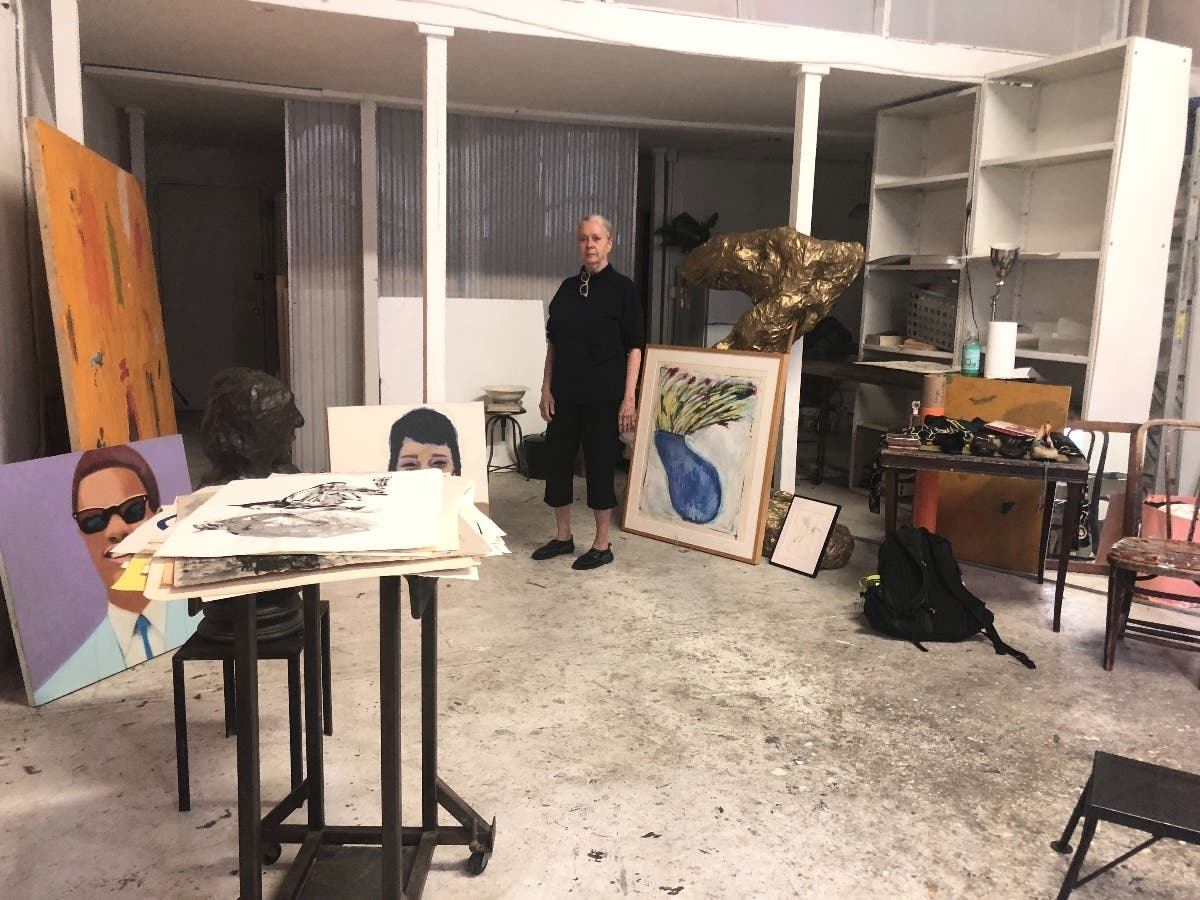

DUMBO, BROOKLYN — When 75-year-old Carol Bruns found herself in a homeless shelter after losing the loft and art studio she called home for 25 years, she took to Instagram.
Her page soon filled with daily updates: of the Upper West Side shelter bed she'd moved into, the library table that became her office and the pieces of art that made up her life's work she may now have to leave behind.
Bruns said her daughter was skeptical of her mom putting these posts on the typically all art-related social media page: why was she making this difficult part of her life public?
Find out what's happening in Brooklyn Heights-DUMBOfor free with the latest updates from Patch.
But Bruns, whose art career had brought her to the Lower East Side, then to SoHo, and finally to an industrial loft in Dumbo, said she felt compelled to publish her story for thousands to see for an important reason.
"My story is not just my story — it's the story of what is happening in New York City," Bruns said. "Artists are being driven out of all these neighborhoods that they pioneered. ... This happens over and over again. But now what’s happened is, there is no place to move to."
Find out what's happening in Brooklyn Heights-DUMBOfor free with the latest updates from Patch.
The latest updates to Bruns' Instagram page are photos of the drawings, mural-sized paintings and $40,000-worth prized bronze sculpture she has been trying to find a home for since learning she would need to move out.
This is the artwork, she said, that didn't fit in the two 10- by 20-foot storage units in Canarsie, where hundreds of her other pieces ended up.
View this post on Instagram#brunsstudio#carolbruns#sculpture#beforestorage#drawing#psyche#curator. Last days of the studio
A post shared by carol bruns (@carol.bruns) on Apr 22, 2019 at 5:31am PDT
The race to save her life's work from a dumpster on her June 1 move-out date started a few months ago, Bruns said, when her landlord told her he wanted to turn the loft that doubled as her apartment and art studio into a shared office space.
The trend isn't uncommon in the waterfront area where she lives, she said.
"He doesn't really want artists anymore because very few artists can come up with these gigantic rents," she said. "Dumbo is now full of IT workers and people who just want a little cubicle, have a business idea, but can't necessarily afford a whole office yet. Those people cycle in and out, but they make more money."
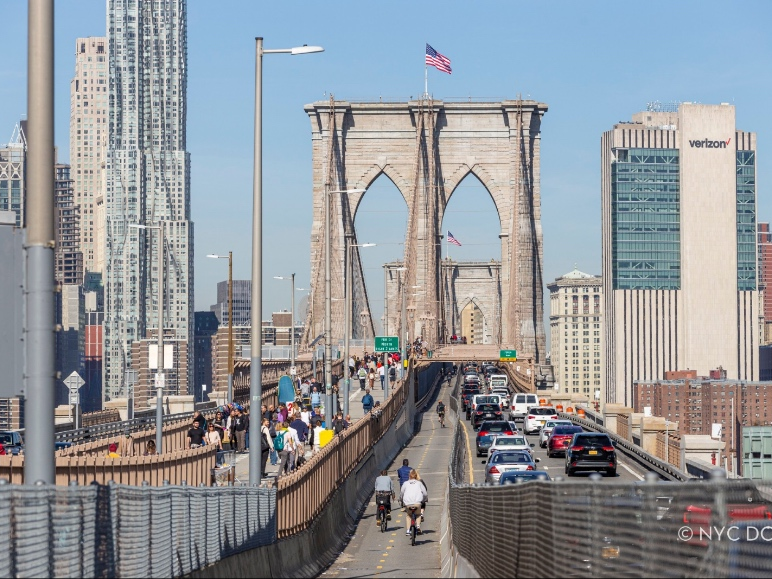
The Brooklyn Tech Triangle, which includes Downtown Brooklyn, Dumbo and the Navy Yard, is home to 500 technology and creative companies, the New York Times just reported last month based on numbers from the Dumbo Improvement District.
Employment at these tech firms has increased throughout Brooklyn by 57 percent since 2009, changing Dumbo from a "sleepy bohemian neighborhood to a booming office area," the Times wrote.
Bruns — whose side-gig making custom metal architectural pieces had been dwindling — said, at first, she tried to fight the landlord's plan. She set up a GoFundMe and looked into city programs that might help her, but soon realized she couldn't raise enough to pay the back-rent she owed, let alone sustain the rent checks it would take to stay long-term.
"I thought maybe this thing is going to come through and I'll be able to recover my balance," she said. "[But] I realized I could never make up all that back rent...and I'm going to have to leave."
The other problem was that Bruns' loft is technically a commercial space, like those of many artists who flocked to the once-cheap former industrial spaces throughout New York City.
Her apartment is among those that don't qualify for protections under a 1982 New York State "Loft Law" that sought to recognize and protect those living illegally in industrial spaces. The law's effectiveness or the best way to revise it has been hotly debated for years.
Many who propose strengthening it, including a proposal by Mayor Bill de Blasio, point to the need to protect artists that made the neighborhoods "fashionable" and are now being kicked out as gentrification takes over.
View this post on Instagram#carolbruns#brunsstudio#sculpture#drawing . Hope you can come to my sale: Mexican masks, old crochet bed cover, art ❗️❗️
A post shared by carol bruns (@carol.bruns) on Apr 2, 2019 at 9:43am PDT
Bruns said that what she's found in her 25, or arguably 50 years, watching and experiencing this change, is that gentrification doesn't only harm individual people like her, but the art world as a whole.
At the very least, gentrified neighborhoods have made artists few and far between instead of how, a few decades ago, a whole building could be full of artists and artisans pushing each other's work forward.
“You can’t measure the value of that and the quality that gives to your life,” Bruns said.
But also, a lot of the only artists that can now afford to live and work in New York City are wealthy residents who take up art as a hobby, rather than those who made their career in the industry, she said.
And, Bruns contends, the changes are even affecting the type of art that artists can make. Artists are forced into smaller and smaller spaces, meaning works like large sculptures that Bruns focused on for 25 years are fading out.
But even so, Bruns still has hope.
"I am taking it one step at a time," she said. "But I'm not going to just give up."
Friends have told Bruns to move to another state or another part of New York, but she said, even with all that has happened, she refuses to leave the New York City art community she has grown to love.
Right now, she plans to continue sales in her John Street loft to find homes for as many of the pieces as she can. So far, Bruns said, she's sold about 15 pieces, mostly to friends. Some of her work will also be shown in a pop-up at 38 Driggs Ave. next weekend.
Unfortunately, most pieces she's had to part ways with were for well below what they normally would sell for, or even for the money it took to make them, she said. But, she added, the thought that they will bring joy to the friends who took them gives her some peace of mind.
The rest of what she can't sell or keep somewhere, she will photograph to document the memory, and then have to throw out, Bruns said.
Next up, Bruns says she will finish a book she started about her time in the homeless shelters and the "wonderful, incredible women" she's met there, start sculpting again and, hopefully, begin curating shows.
But, not before she finds a home.
"My life goal is to resume working where I left off, because art is a train of thought," she said "If I get a little apartment to have a key in the door and I have that autonomy, then I have a stable base to try and recreate my life."
Get more local news delivered straight to your inbox. Sign up for free Patch newsletters and alerts.