Community Corner
Film Reveals Underground Railroad Descendants' Ties To Brooklyn
Six descendants of fugitive slaves and abolitionists met in Plymouth Church to uncover their shared histories in this new Sundance film.


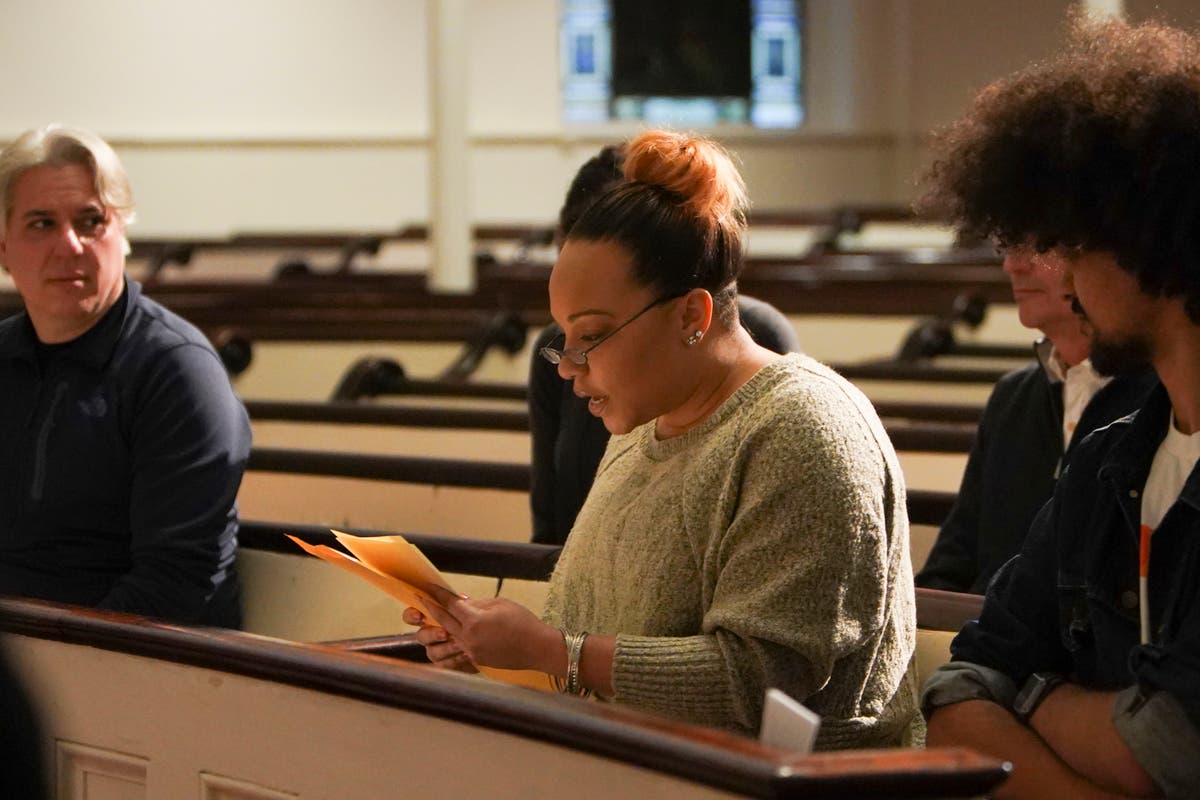


BROOKLYN HEIGHTS, BROOKLYN — When Gayle George got a letter in November asking her to be part of a documentary with the genealogy company Ancestry, she was intrigued – but not quite sure what to expect.
The letter, also sent to five other people eventually featured in the film, told George that she was somehow connected to a historical moment of significance, but did not specify exactly what that was.
But George had already been thinking about researching her family's history so she decided to give it a shot, the Washington D.C. resident said.
Find out what's happening in Brooklyn Heights-DUMBOfor free with the latest updates from Patch.
"I am definitely an adventurous person, so I was like 'Oh, let's see,'" George said. "For the whole thing we were in suspended animation — we didn't know what was going to be revealed."
The letter turned out to be for the new Sundance documentary "Railroad Ties,"which brought George and the five other people to Brooklyn to uncover the borough's historical connection to the Underground Railroad.
Find out what's happening in Brooklyn Heights-DUMBOfor free with the latest updates from Patch.
The six participants found out the walking tour wasn't just revealing Brooklyn's history, but their own.
George, two of her cousins and three strangers ended the tour in Brooklyn Height's Plymouth Church, also known as the "Grand Central Depot" of the Underground Railroad. It was there that the historians unveiled to them their shared history – that they were each descendants of the fugitive slaves and abolitionists they had been learning about that day.
"It was in the hidden corners and secret passageways below this room that many enslaved people found their way to freedom," George reads in the film as the group sits in the church. "Your family was among them."
George, her two cousins and, it turns out, another man in the group they had thought was a stranger, were all descendants of Mary Weems, one of 10 slave children that the abolitionist community rallied behind to bring to freedom. Mary and her nine siblings were the children of John, a free man, and Arabella Weems, a slave.
The group discovered that another man in the group was the descendent of Lewis Tappan, a Brooklyn abolitionist who sheltered one of the other Weems children, who dressed up as a man to make it to freedom.
The family histories — including that of a sixth person, a white man who found out he actually was the descendent of black slaves — were thanks to Ancestry's historical and genealogical databank. One of the researchers, Lisa Elzey, said the team explored five to seven different family trees before finding the six people they could connect for the film.
"This is a unique challenge — we were dealing with people who did not want to be found, they were purposefully fleeing a horrible circumstances," said Elzey, who is a senior family historian with Ancestry. "Luckily at Ancestry we have so many billions of records we’re able to find research."
The researchers focused on filling the gap between when the fugitive slaves had fled to where they ended up once they reached freedom and, in many cases, changed their names. The project included pouring over census records in Canada and family trees developed on Ancestry to trace their journeys.
The company, along with film director Sacha Jenkins, then collaborated to center the story around a tangible, significant place. Plymouth Church, which became a prominent abolitionist hub with pastor Henry Ward Beecher, seemed like the perfect spot, Elzey said.
George added that sitting in the church while learning about its history made the experience all the more powerful. Her and the rest of the group still stay in touch and have become even more fascinated by their family's histories, she said.
"There’s such a wealth of information preserved about the times and the place of the church...that was really meaningful for me," she said. "It connected dots for me that I had in a way that was really powerful and I’ve been doing research non-stop since."
You can view the full documentary here.
Photos provided by Ancestry.
Get more local news delivered straight to your inbox. Sign up for free Patch newsletters and alerts.