Arts & Entertainment
New Tiki Exhibit Opens at Huntington Public Library This Summer
"Intriguing Idols & Enchanting Exotica: The Age of Tiki in Postwar America" runs at the library through Aug. 26.

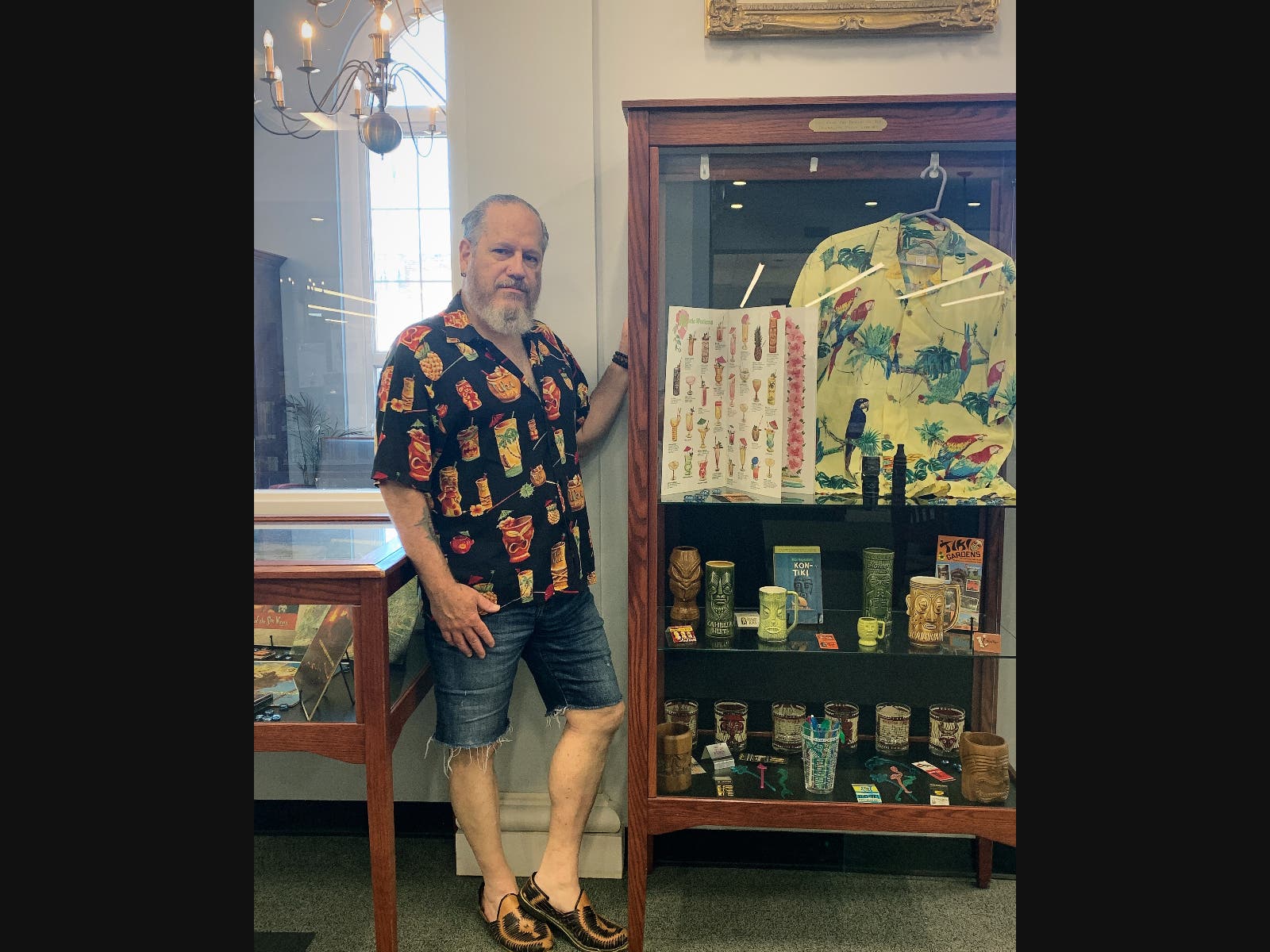


“The “Intriguing Idols & Enchanting Exotica: The Age of Tiki in Postwar America” exhibit at Huntington Public Library puts a kitschy spotlight on the world of classic American tiki culture, an era of faux-tropical fantasy expressed in art, music, cuisine, cocktails, clothing and architecture that fascinated the U.S. from the end of WWII until the 1970s.
Curated by tiki enthusiast Greg Fasolino, it showcases vintage items from his collection including tiki idol mugs, iconic exotica vinyl records, colorful restaurant menus, evocative matchbook covers and Hawaiian shirts.
Displayed in the glass lobby cases at the library’s main branch at 338 Main Street in Huntington, the show runs from July 6 through Aug. 26.
Find out what's happening in Huntingtonfor free with the latest updates from Patch.
The 20th century American cultural phenomenon known as “tiki” began as a fantasy approximation of Polynesia, sparked by the 1939 California World’s Fair’s “Pageant of the Pacific” and the postwar return of American G.I.’s from service in the South Pacific. Tiki served as pure escapism, offering a romanticized bar/restaurant experience. It also found expression in art, music, books, television, fashion and architecture. Although tiki’s primary focus was always Polynesia, over time it grew to incorporate elements from various locales in Asia, Africa, the Caribbean and Central/South America that were perceived as “exotic.”
In post-Prohibition California, two tiki pioneers kicked off the craze: Donn Beach (inventor of the Zombie, Cobra’s Fang and Pearl Diver cocktails) opened Don the Beachcomber in 1933, while Victor Bergeron (inventor of the Mai Tai, Fog Cutter and Scorpion Bowl) opened rival Trader Vic’s in 1934. Both soon expanded worldwide to forge an empire of themed restaurants and lounges. Other prominent classic tiki bars included the Tonga Room (San Francisco, 1945), Zombie Hut (Sacramento, 1945), Pago Pago Lounge (Tucson, 1947), Alibi Tiki Lounge (Portland, 1947), Stephen Crane’s The Luau and Kon-Tiki chains (1950s), Kalua Room (Seattle, 1953), Bali Hai (San Diego, 1954), Hawaiian Village Hotel (Honolulu, 1955), Mai Kai (Florida, 1956), Tiki Ti (Los Angeles, 1961), Kahiki Supper Club (Columbus, 1961), Hawaii Kai (NYC, 1962), Kon Tiki Bar (Tucson, 1962) and Chin Tiki (1966, Detroit).
Find out what's happening in Huntingtonfor free with the latest updates from Patch.
Tiki cocktails – strong, sweet, Caribbean-style mixtures of rums and fruit juices – were often garnished with fruit, flowers, umbrellas or collectible swizzle sticks and served in decorative collectible tiki mugs. On the culinary end, tiki rooms served Cantonese cuisine and fantasy versions of Polynesian food such as crab Rangoon, rumaki and pupu platters. The décor, intended to transport the diner to the fantastical South Seas, typically featured carved idols, flower leis and rattan furniture. These lounges flourished across the nation, and Polynesian-inspired design and architecture became a common sight. Disney even jumped on the trend, opening Walt Disney’s Enchanted Tiki Room attraction in 1963. Tiki rooms promoted their appeal with large menus replete with colorful cocktail images, as well as via evocative matchbook covers, a popular form of advertising in an era of mainstream public smoking. Tiki culture also infiltrated American clothing, boosting the popularity of men’s Hawaiian shirts and women’s sarong-style dresses.
The sounds of tiki culture first focused on Hawaiian hula, but by the 1950s, it had been overshadowed by what became known as exotica music, a lush blend of jazz with Polynesian, Asian and Latin instrumentation, spiced up with marimbas, bongos and bird calls. The genre was exemplified by Martin Denny’s chart-topping 1957 LP Exotica, which featured percussionist Arthur Lyman, iconic model Sandra Warner and definitive Les Baxter song “Quiet Village.” Other essential musical works of exotica included Baxter’s groundbreaking Ritual of the Savage (1950), Tamboo! (1955), Ports of Pleasure (1956), The Sacred Idol (1959), Jewels of the Sea (1961) and The Soul of the Drums (1963); Denny’s Forbidden Island (1958), Primitiva (1958), Exotica II (1958), Exotica III (1959), Hypnotique (1959), Quiet Village (1959), The Enchanted Sea (1959) and Exotica Suite (1962); Lyman’s Taboo (1958), Hawaiian Sunset (1958), The Legend of Pele (1958), Bahia (1959) and Taboo 2 (1959); Yma Sumac’s Legend of the Sun Virgin (1952); Chaino’s Jungle Rhythms (1958); Esquivel’s Four Corners of the World (1958); Don Ralke’s The Savage and the Sensuous Bongos (1959); Dominic Frontiere’s Pagan Festival (1959), Frank Hunter’s White Goddess (1959); Milt Raskin’s Kapu (1959); Robert Drasnin’s Voodoo (1959); Tak Shindo’s Brass and Bamboo (1960), Tito Puente’s Tambo (1960); Stanley Black’s Exotic Percussion (1961); and Walter Wanderley’s Rain Forest (1966).
Click here to listen to the “Intriguing Idols & Enchanting Exotica” Spotify playlist accompanying the exhibit!
Two books by Thor Heyerdal proved essential to the tiki phenomenon: Kon-Tiki (1948), recounting his Pacific rafting expedition from South America, introduced the word “tiki” into the popular American lexicon, while Aku-Aku: The Secret of Easter Island (1957) helped make Easter Island moai statues into a tiki essential. Television incorporated the tiki craze with Hawaiian Eye (1959-1963), Gilligan’s Island (1964-1967) and the iconic The Brady Bunch episode “The Tiki Caves” (1972).
Tiki culture began losing steam in the late ’60s as Americans turned their interest to counterculture and space themes, and faded in the ’70s, when many iconic tiki restaurants closed. A tiki revival began in the late ’90s, spearheaded by the reincorporation of tiki drinks in the craft cocktail scene, exotica CD reissues and “hipsters” interested in retro culture. Modern tiki touchstones include artists like Shag, Sven Kirsten’s The Book of Tiki, Jeff “Beachbum” Berry’s cocktail guides, and in one mainstream example, SpongeBob SquarePants (1999).