Neighbor News
Residents React After Huntington Board Approves Melville Crossing
Supporters called the mixed-use project a long-awaited step toward revitalizing Melville, while critics warned of risks to taxpayers.


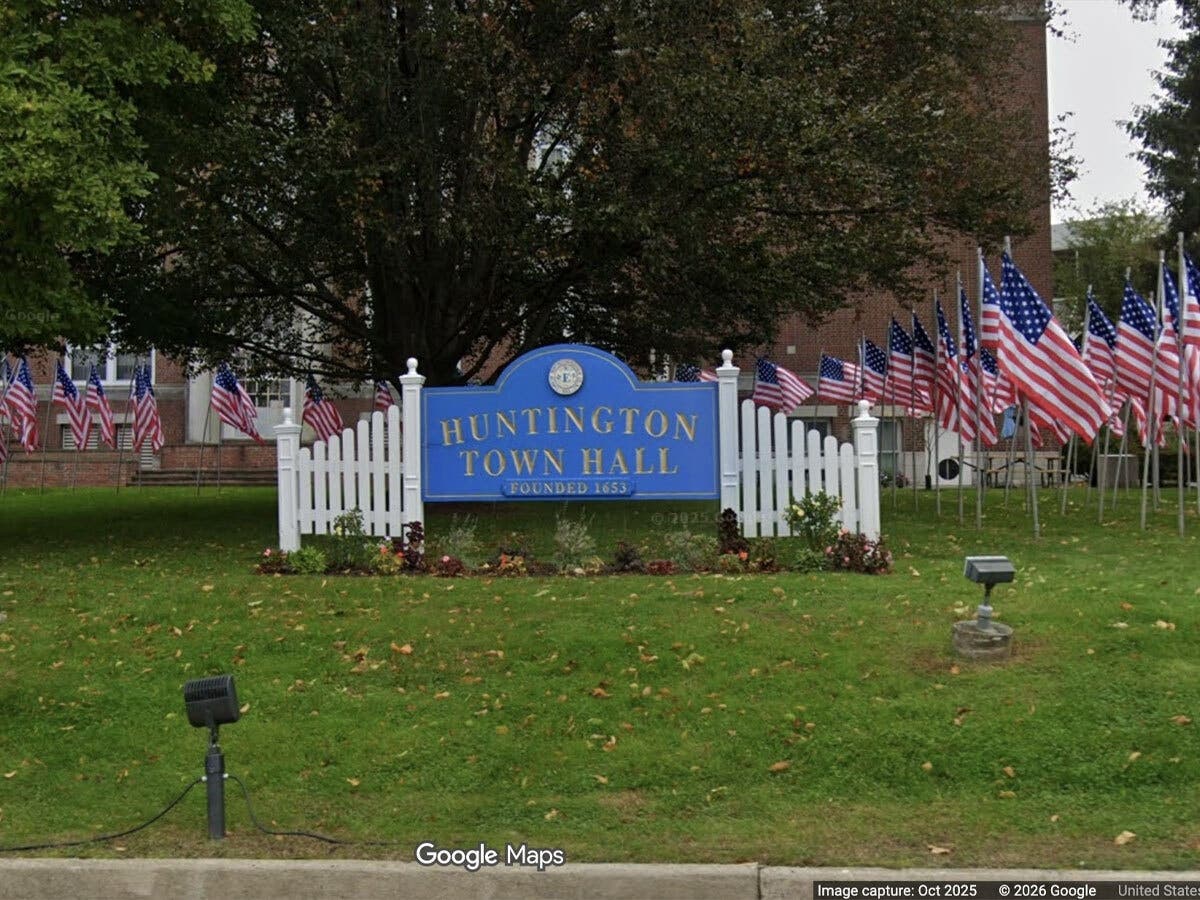
HUNTINGTON, NY — The Huntington Town Board voted 4-1 on April 14 to approve the Melville Crossing development at 75 Maxess Road, advancing a long-debated project that has sharply divided the community.
The development, proposed by Steel Equities, will replace a long-empty office building with a mixed-use community featuring housing, retail space, and public gathering areas. Plans include a mix of studio and one-bedroom units, a smaller number of two-bedroom residences, and approximately 20 percent affordable housing, along with amenities designed to create a pedestrian-oriented environment.
“For the last four years, countless hours have been spent planning the Melville Town Center," said Huntington Town Supervisor Ed Smyth at the board meeting on Tuesday. “It has been an exhaustive and exhausting process to get to today. It is the model for what development should be in Melville.”
Find out what's happening in Huntingtonfor free with the latest updates from Patch.
The approval, granted through a special use permit, follows years of planning, months of negotiations, and a packed public hearing last month, which laid bare a sharply divided community.
At the March 19 Town Board meeting, dozens of speakers weighed in on the project. Supporters said the proposal is a necessary response to a regional housing crisis, warning that young residents are increasingly being priced out.
Find out what's happening in Huntingtonfor free with the latest updates from Patch.
“I’m scared for my daughter and my grandson—they have to leave, and I don’t want them to leave,” said David Leviton, a Melville resident at the March meeting. “It’s communities like this that will keep them here.”
Opponents, however, raised persistent concerns about school funding, infrastructure strain, and environmental impact.
“A studio can easily go for $2,500,” Huntington resident Cynthia Clark said. “That’s not affordable for Huntington.”
East Northport resident Denise Schwartz told Patch she had been closely following the proposal and criticized the approval as premature.
“This approval really opens up a Pandora’s box of possibilities,” she said. “Affordable housing in our area is an oxymoron… affordable is still expensive. When there are so many more questions than answers, you don’t jump into something. The developers get all their tax breaks — they don’t pay their fair share of school taxes, which hurts the rest of the tax base. When they realize what they’ve done, it can be too late, because you can’t go back.”
At the March 19 meeting, Half Hollow Hills Superintendent John O’Farrell cautioned against PILOT agreements — which allow developers to pay reduced taxes in the early years of a project — warning they can limit immediate revenue for schools even as new housing brings added costs.
“PILOTs are not good for school districts. For better or worse, public school districts run on taxes, and PILOTs are tax abatements," O’Farrell said. “The most beneficial type of development in any school district is a fully taxed industrial or commercial property that does not yield students. Projects that receive a PILOT and generate students are even more concerning for schools. With any large development, there is a risk of a sudden and substantial student yield that exceeds the income to the district. We cannot maintain our history of excellence without contributions from developers beyond PILOT payments.”
Councilman Dave Bennardo said his support for the Melville Crossing project was contingent on ensuring the Half Hollow Hills school district would be financially protected.
Bennardo said that while PILOT agreements delay full tax revenue, they would not take money from existing taxpayers, framing the project as a long-term financial gain for the district.
Bernardo said the town is moving toward requiring developers to offset the impact of new students through formal agreements that could apply town-wide, so districts are not forced to negotiate project by project.
“One of my acid tests from the beginning was that the school be protected,” he said. “We look to set a hearing to memorialize that so the school district doesn’t have to negotiate 26 times with 26 developers. Anyone who wants to build a multi-family situation of any sort has to make a similar deal with the school district to protect their interests.”
Councilwoman Jen Hebert said she had environmental concerns about the development, particularly its long-term impact on Long Island’s water supply, but voted in favor after securing key commitments from the developer.
Hebert said her concerns centered on how new development interacts with Long Island’s water system. Each new residential unit adds to wastewater, and without advanced treatment, much of that water is not fully returned to the aquifer — the underground system that supplies Long Island’s drinking water — reducing natural groundwater recharge and increasing contamination risks.
By requiring a commitment to tertiary sewage treatment — a more advanced process that removes additional pollutants — Hebert sought to ensure that any new development minimizes its impact on both the quality and long-term availability of drinking water.
“I have concerns — real concerns — about our water on Long Island,” Hebert said. “We live on top of our sole source of potable water, our aquifers. I believe that it’s vital that we have the foresight to protect them now and not wait until it’s too late. I made my support for Melville Crossing conditional on two things. I requested their written commitment to tie into a tertiary sewage treatment if and when we’re able to get it built. I’ve received their commitment in writing. We’re making sound decisions when it comes to the sufficiency, quality, and quantity of our water.”
Councilwoman Brooke Lupinacci was the lone vote against the project, saying that while she supported advancing the proposal to a public hearing, she was not comfortable approving it in its current form.
“After carefully reviewing the application and listening to residents at last month’s meeting, I am not able to support the project at this time,” she said. “I believe some details would benefit from further clarity. I want to wish the applicant every success, and I hope the initiative proves beneficial for our town.”
Get more local news delivered straight to your inbox. Sign up for free Patch newsletters and alerts.