

Superstorm Sandy decimated shoreline communities, causing widespread power failures and flooding to New York City and its surrounding suburbs. Many residents in hard-hit areas like Coney Island and the Rockaways were plunged into darkness for weeks, their only connection to the outside world was from volunteers who trudged up many flights of stairs to deliver critical supplies like food, water and medicine, underscoring our reliance on the power grid.
And though most of Larchmont remained intact throughout the storm—apart from the many downed trees lining local roadways—many were without power for weeks, as they camped out at local libraries to use the internet and charge their devices.
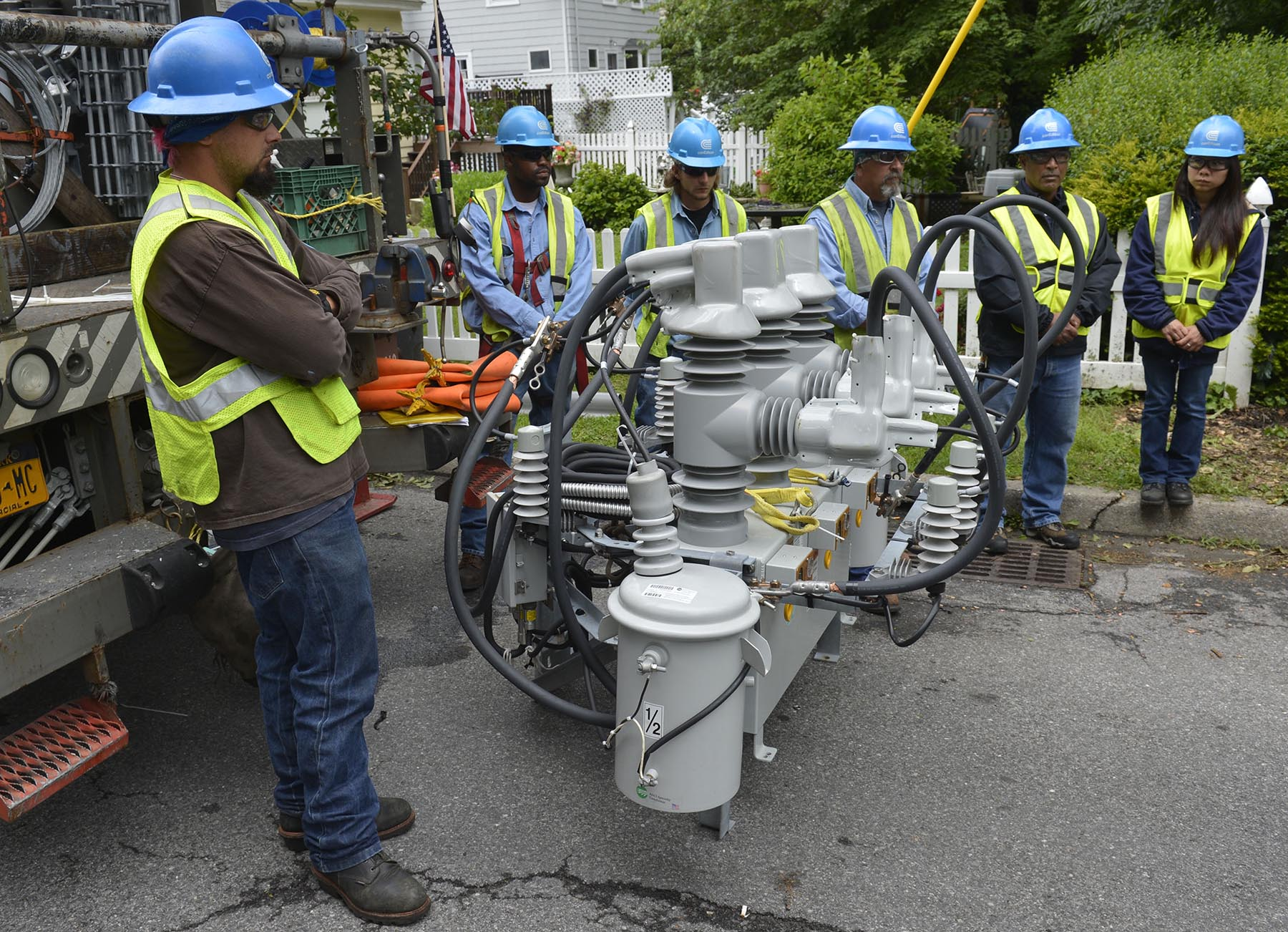
Now nearly 1,000 Larchmont customers will be hooked up to Con Ed’s new “smart” switch, which was installed today on Vanderburgh Avenue. The switch is designed to help manage the disruption caused by power outages by dividing the power grid into sections that can be shut off independently while being worked on, so as not to black out the entire neighborhood.
Find out what's happening in Larchmont-Mamaroneckfor free with the latest updates from Patch.
The Larchmont switch will have 946 customers on Hall and Palmer Avenues, Woods Way and Howard Street, divided into two sections of 473 each.
“If 1,000 customers are out, the switch will reduce outages by 50 percent,” said D. Joy Faber, a media relations manager for Con Ed.
Find out what's happening in Larchmont-Mamaroneckfor free with the latest updates from Patch.
So far, 35 “smart” switches have been installed in Westchester, with 230 more planned for the end of the year, said Con Ed CEO Kevin Burke.
In a press conference for the media today, Burke said that the company will make a $1 billion investment in storm protection measures over the next four years in NYC and Westchester County, with $130 million allocated to an electric distribution system.
“We’ll invest that money from our investors in the equipment,” said Burke.
The measures include the addition of stronger poles and cables designed to withstand high winds of up to 110 mph; the installation of stronger aerial cables; and the implementation of special connectors that allow electric wires to detach, preventing damage from falling trees and strong winds.
With Superstorm Sandy, however, all previous precedents were recalibrated. Burke said that of the 3.3 million customers Con Ed has, nearly 1.2 million were without power as result of the storm.
“We went from a record of 200K [outages] to 1.2 million,” he said, continuing, “What we have to do is be ready for these types of storms.”
Get more local news delivered straight to your inbox. Sign up for free Patch newsletters and alerts.