Politics & Government
Letter To The Editor: Hampshire Developer Misleading Community
The author of the letter is the president of the Mamaroneck Coastal Environment Coalition.


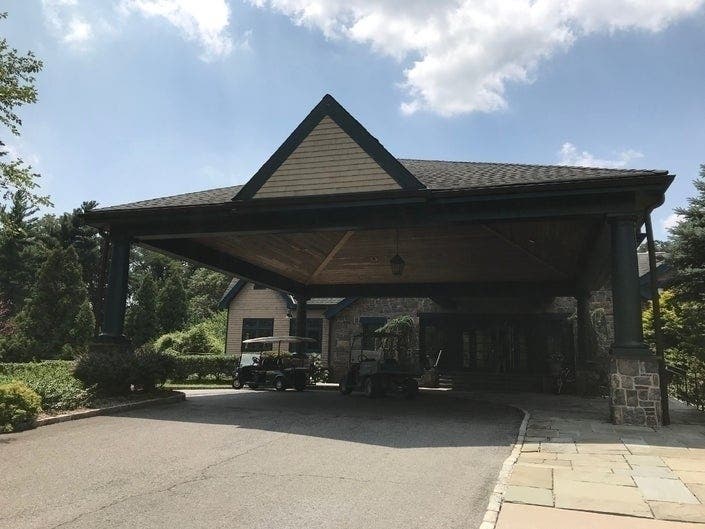
I am writing to respond to Susan Goldberger’s letter published last week. She is an employee of the developer focused on accomplishing the developers’ goal of realizing as large a profit as possible from their investment in the Hampshire property. In her LinkedIn profile, Ms. Goldberger describes her job responsibility as “day-to-day oversight of development plans and club operations.” She is clearly biased, and her primary interest is as an employee responsible for overseeing the development plans for the property, not as a community member focused on the impacts of the development on the community. I have lived in Mamaroneck for 33 years and have been very active here for decades.
The content of Ms. Goldberger’s letter is intended to mislead with misinformation.
Developer is Wrong on the Law
Find out what's happening in Larchmont-Mamaroneckfor free with the latest updates from Patch.
The Village regulation on filling in designated flood plains (Section 186-5(A)(3)(c)) of the Village Code) applies to all flood plains. The language of the Code provision is clear, and the Village Building Department confirmed, when asked to do so by the developer, that the provision applied to all flood plains, including the Hampshire flood plain. This not only is the clear language of the law, but is also common sense since our community is prone to flooding and the impact of filling a flood plain needs to be carefully reviewed in order to protect all Village flood plains and carry out the Village’s coastal protection in the face of climate change and expected sea level rise and more frequent and more severe storms.
The project would not be permitted due to impermissible use of private roads. Notwithstanding several requests by the Planning Board to produce evidence (even if only through a legal opinion) of its right to use the roads, Hampshire has steadfastly refused, because it is unable to do so. The issue is not restriction for use by the community or the club of its historic uses, but the new uses of the private roads for 6-7 years of heavy construction and as primary access for a new housing development. For Cooper Avenue, the issue is using a private road for public access that was never previously used by the public. These new uses are not permissible.
Find out what's happening in Larchmont-Mamaroneckfor free with the latest updates from Patch.
The proposed development is not “as of right” by any stretch of the imagination. The property is zoned R-20, which means homes on ½ acre lots could be built, but only if all other aspects of development are permitted. A typical ½ acre subdivision is not possible because, among other things, so much of the property is low-lying and subject to serious flooding. The developer is therefore asking for permission to cluster homes under a special Code provision (Section 342-52 of the Village Code) that requires special Planning Board approval and is authorized only if certain findings are made. It is MCEC’s position that, not only are the purposes for which such cluster housing may be approved not met, but the proper calculation of density for such cluster housing would result in a fraction of the number of homes now included in the project.
Developer is Wrong on Community Impacts
MCEC has not ignored results of the expert studies included in the preliminary EIS. MCEC does not assert (with one small exception) that the project would increase flood waters in other parts of the community. The primary issue on flooding is the impact of the development on residents and first responders in a flood event. We all know the property and the two current access roads are inaccessible in flood events (which have occurred multiple times over the last several years). As a result, the developer was forced to propose a new third access road to be built through the property leading to Cooper Avenue. Cooper is a narrow one-way road and at points will only be at a 13’ flood elevation. The current storm flood elevation is 12’ and New York State projects a mid-range future sea level rise of 4 feet with high estimates of 5-6 feet over the next several decades. Under any of these scenarios Cooper would be covered in feet of flood waters and would be unavailable as an exit route for residents or as a way for emergency vehicle to access the site, putting both residents and first responders at risk. In addition, as a one-way road, it would be impossible for emergency vehicles to enter as residents are attempting to evacuate.
On the issue of contamination, there have been NO state or local level environmental reviews of the impact of release of toxins. The New York State Department of Environmental Conservation considered only the narrow question of whether excavated soil could be reused onsite if properly covered with “clean fill” to protect residents. The NYSDEC did not review or even have any information regarding processes proposed to excavate and manage on-site fill nor did it address dangers and safety precautions necessary during long periods of stockpiling of the contaminated soil on property that is subject to flooding and is located close to a middle school, playing fields and other homes. It also made clear that further testing and analysis would have to be done on excavated material to understand the nature of the contamination as construction proceeded. In addition, there were other expert reports submitted showing the potential for wind and water borne dispersion of contaminants.
The preliminary FEIS shows that all 432 old growth trees will be cut down. There will be no remaining large trees on the property. The developer has proposed to replace these trees with 432 tiny saplings that would take decades to grow to maturity. The Village’s consultant recognized the lack of equivalency in the tree replacement. In addition, the remaining “open space” will consist of the 9 holes of the reduced golf course and some homeowner association open space (that includes the berm areas on which the homes will be built) that will encircle the housing development, be disjointed and will, according to several submissions to the Planning Board, significantly degrade the value of the property from an ecological perspective.
The developer’s reference to “millions” of lost revenues to the community is not true. The large amount of “revenue” is based on highly inflated assessed values asserted by the developer for the new homes ($2.6 million for the 4-bedroom homes and $1.3 million for the 3-bedroom town houses). Based on more realistic assessed values, together with more realistic assumptions on numbers of students (as presented by the Mamaroneck School District) resulting from the project, the impact on “revenue” would not be material and could, under certain assumptions, create a net cost for the School District. And note that over 15% of the developer’s estimated “revenues” include County taxes which do not benefit local residents virtually at all.
Wrong on Impact on the Club
There is no evidence at all that the building of the development will have any positive impact on the survivability of the club. None of the proceeds from the sale of the homes will go to benefit the Club (they will all go to the developer) and there is no requirement that homeowners will become members of the club. An expert analysis submitted to the Planning Board showed that in a community such as ours, where homeowners buy homes for the schools, character of the community and proximity to New York City, it would be expected that the new development would provide only a handful of new members. That will have no material impact on the viability of the Club. In addition, as was also included in that expert analysis (and is also common sense) 9-hole golf clubs are much less desirable for golfers than 18-hole courses. The Project would therefore neither be “a much-needed revenue source” for the club, nor would it make the course attractive to more golfers. Undertaking the project would create a greater likelihood that the Club will fail.
Other Issues
There are many other issues in Goldberger’s response and with the project. Please read the preliminary EIS, which is available on the Village of Mamaroneck website, and attend Planning Board meetings to get real information. You can also get information by visiting the MCEC website at www.MCECNY.org.
Celia Felsher
President, Mamaroneck Coastal Environment Coalition
SEE ALSO: Letter To The Editor: Follow Law, Science, Facts About Hampshire
Get more local news delivered straight to your inbox. Sign up for free Patch newsletters and alerts.