Politics & Government
Meetings on Sportime Renovations Spur Questions, Debate
Village board members tackle three important issues. How will the renovations will be financed? Where in Harbor Island Park will the new facility be built? And what will the renovations include?

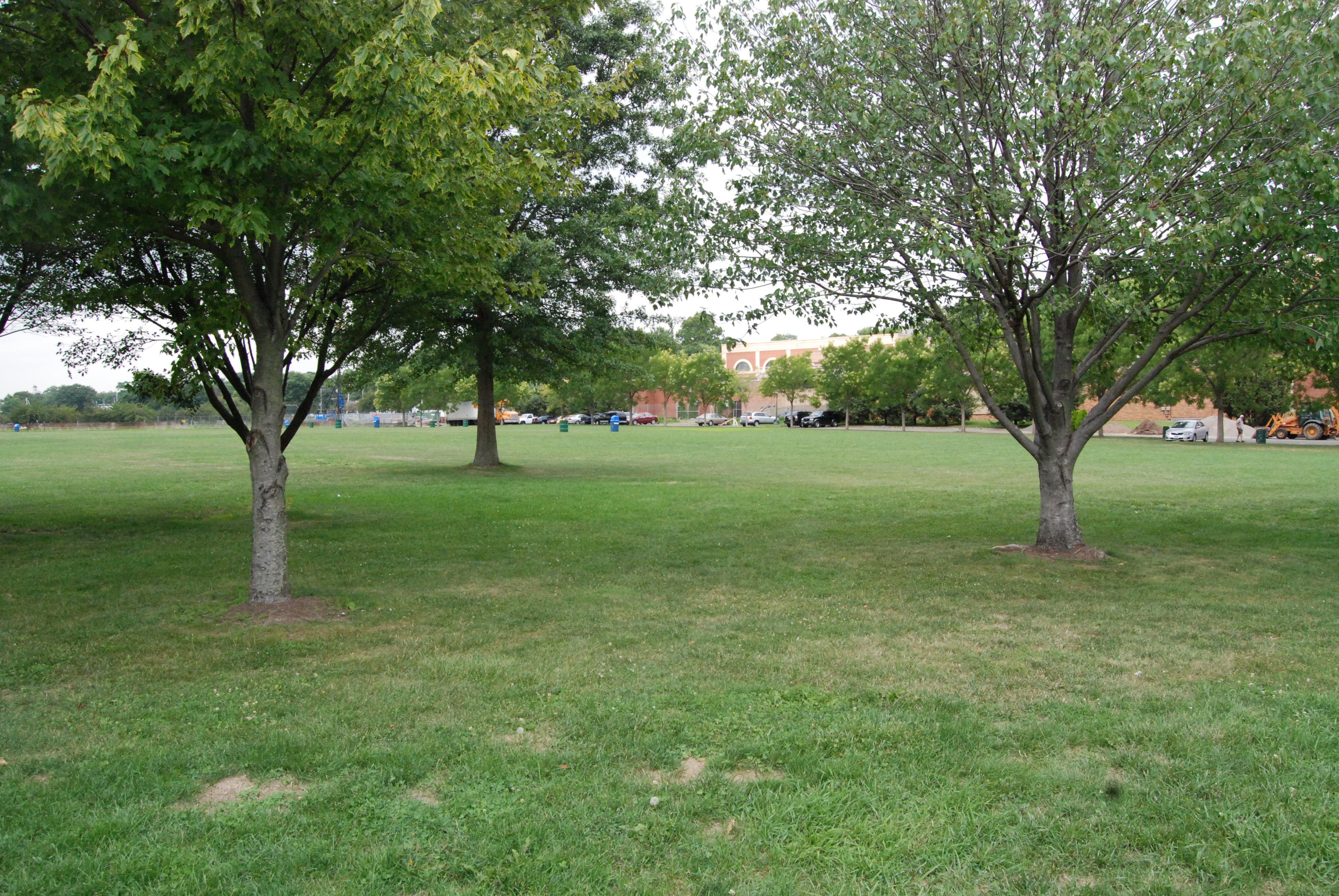


Last week village board members had two separate meetings, one with their bond counsel and one with Sportime, to discuss future renovations to the sport facility in Harbor Island Park.
Board members agree the project will cost millions, with a price tag ranging anywhere from $6-10 million. What they can't agree on is whether it will be financed privately or through municipal bonds. They also can't agree on if it should be moved from its current location to the field behind the sewage treatment center.
Talks have been ongoing for over 10 years about how to renovate Sportime. An official agreement penned in 2002 calls for building a new 20,000-square-foot multi-sport facility in the park. causing both sides to look at the numerous factors surrounding the proposed renovation.
Find out what's happening in Larchmont-Mamaroneckfor free with the latest updates from Patch.
FINANCING ISSUES
According to Eric Fromm, general manager of Sportime, if the village lets Sportime finance through its municipal bonds, and both parties agree to relocate the facility, Sportime will pay the entire debt service on that bond. Essentially, it will cover all costs associated with renovating the field where the tennis courts currently operate.
Find out what's happening in Larchmont-Mamaroneckfor free with the latest updates from Patch.
Fromm said private financing would come at a rate of approximately 12 percent. If they finance the renovation through local municipal bonds, they would be able to borrow somewhere between 4-5 percent.
"We just strongly recommend borrowing through municipal bonds because it's a perfect solution for them," said Fromm.
Mayor Norman Rosenblum said he was open to using municipal bonds to fund the renovations, but that no decision has been made yet on this issue.
"If Sportime finances it, the cost will be much higher. The end result will be that the village will receive less. If the village did a bond, it would be cheaper," he said.
Trustee John Hofstetter said the renovation is too expensive, and he isn't convinced that the burden won't fall on taxpayers. Hofstetter expressed concern about taking on the renovation due to the small amount of village residents that actually use Sportime— currently only about 20 percent.
"I'm not in favor of using the village's ability to finance this through bonding to improve the profitability of a private company who is running a club on public property," said Hofstetter.
Stromm verified that only about 20 percent of it's clientele come from the village, but said that Sportime expects the new multi-sport component will attract many new residents.
Both the mayor and Trustee Richard Slingerland said the renovations would pay for themselves through fees charged to customers of Sportime.
"The village board and I are looking very carefully to make sure that there is minimal-to-no impact on the local tax base," said Slingerland, who noted that an increased number of clients at Sportime would help cover costs of renovation.
Fromm said that the cost of renovation would in no way fall on the taxpayers, regardless of the fees at the new Sportime.
"None of this will costs taxpayers a dime," said Fromm, "If the village decides, and if we agree, to make the facility smaller than what we have the right to build, and take components away that we've been discussing, specifically the multi-sport rink, the only thing that will happen is the village will get less in licensing fees," he said.
Sportime currently pays the village approximately $360,000 in licensing fees a year. Fromm said the number could reach as much as $500,000 a year once the renovations are done.
Hofstetter thinks there are other reasons why Sportime is pushing the village to issue municipal bonds for the project.
"There is a sewage pipe that runs underneath the tennis courts," said Hofstetter, "I would think it would be very hard to get financing because of that. Also, it benefits them to move the tennis courts because they could rebuild the tennis courts without interrupting their season. To them, it's beneficial," he said. "It's not my job to finance their construction projects so they can make more money."
PROS AND CONS FOR THE VILLAGE
According to Slingerland, Sportime has tripled the amount of money that goes to the village to pay for the operations, and that offsets the tax base.
"Having an efficiently-run, 12-month facility gets a lot more users and creates enough of a profit that it could fund improvements without cost to the taxpayers," he said, "Sportime has been profitable in the past for the village, and will continue on this path after expansion."
The village will own the new complex as soon as it is built, although Sportime will retain the right to operate it for an agreed upon number of years.
Trustee Hofstetter sees the renovation as too big of a risk.
"If something happens to Sportime, if they go out of business for whatever reason, we can't turn around and sell park space," he said. "The village would have to run it."
Fromm said the benefits outweigh the risk. "Nothing in life is completely risk-free, but this is about as close as you can get to risk-free," he said, "This club is extremely successful. We have been running it for 8 years and it has generated a lot of income."
PUBLIC INPUT GOING FORWARD
Mayor Rosenblum said the board will continue to do due diligence as negotiations continue, and that they welcome public input.
"At the end of the day, Sportime will do what's good for Sportime. We will do what's good for the village. Hopefully we will meet somewhere in the middle," said the mayor.
Get more local news delivered straight to your inbox. Sign up for free Patch newsletters and alerts.