Politics & Government
VOM To Appeal Court's Decision Regarding MBYC
The decision annuls the Planning Board's Findings Statement and orders the approval of 32 seasonal housing units.

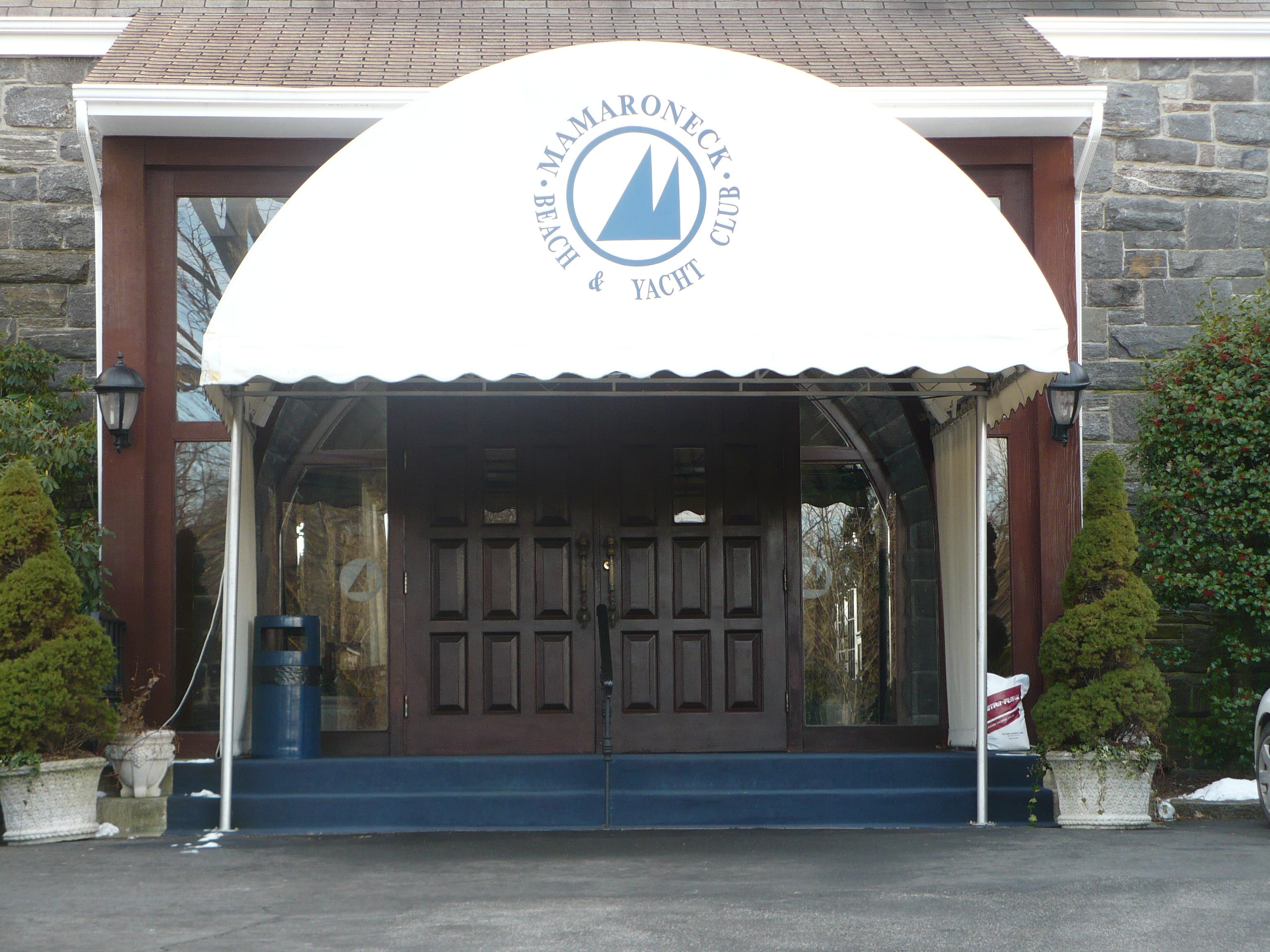
The attorney representing the Village of Mamaroneck in its legal battle against Mamaroneck Beach and Yacht Club said today that the village intends to appeal the latest court decision regarding the club's proposed plan to build 32 seasonal housing units.
This comes a day after the village released the June 16 New York State Supreme Court decision, which orders the Village of Mamaroneck Planning Board to issue a new Environmental Findings Statement approving the units and annuls the previous statement, calling the village's actions "arbitrary, capricious, unresponsive and unlawful."
Steve Silverberg, the attorney representing the village, said the village was disappointed with the decision. "We feel that the judge overlooked some important points that he should have considered," referring to a letter from the New York State Department of State that he said determined the club's proposal was inconsistent with the village's Local Waterfront Revitalization Plan. "That was not even mentioned in the judge's decision," he said. "We have some issues with the decision… It's the intention to appeal it."
Find out what's happening in Larchmont-Mamaroneckfor free with the latest updates from Patch.
The village and the club have been entangled in ongoing litigation for the past six years regarding the club's proposed construction. Earlier this year, there was talk of a possible settlement, but negotiations stalled.
Joel Sachs, the club's attorney, said the club was "very pleased" with the decision and hopes the village can see that it is in its interest to reach a settlement. The club is "in the driver's seat now," considering the multiple adverse court decisions against the village, he said. "If they want to litigate, we will litigate and let the court decide."
Find out what's happening in Larchmont-Mamaroneckfor free with the latest updates from Patch.
"The elected officials don't seem to get the message. They would rather fight in court and spend thousands of dollars in fees and be stuck with damage awards of several million dollars," he added.
When rumors spread in January that Mayor Norman Rosenblum was considering a settlement, a number of residents spoke in opposition, asking the village to wait until the court issued a decision, some hoping that the decision would be in favor of the village.
"This remains a very complicated situation that demands all parties listen to one another and seek a mutual agreement, if possible, without the expense to both sides for a long and extracted court proceeding," said Rosenblum today. "The Village of Mamaroneck will proceed forward on the different legal issues involved and will also seek to continue to take steps on all other possible avenues to mitigate any potential negative impact on the village."
A long battle (as detailed in the decision)
The village and the club have been entangled in ongoing litigation for the past six years regarding the club's proposed construction plans. The application seemed to be on its way to approval until the public, mainly the Shore Acres Property Owners Association, spoke against it, according to the decision. The question was whether seasonal housing units were permitted within the Marine Recreation district the club is in. That's when the first Article 78 claim was filed by the club.
In 2004, the board was directed to review the club's application, but refused to do so, citing a zoning moratorium on development in that district. MBYC filed a civil suit in response, and two years later the court agreed that the board had "unreasonably failed to comply" with the order, and would be held in contempt unless it started reviewing the application within a month, regardless of the moratorium.
The review process began in 2006, which is when the club applied for 32 units of seasonal housing (20 were to be placed in free-standing buildings, and the remaining 12 in the club house). In support of the proposal, the club maintained that the 20 seasonal units "were a unique amenity and a financially necessary component to effectuate the other aspects of the proposed improvements of the club," according to the decision.
In that same year, the board approved the 12 clubhouse units, but not the rest. The decision states that this was, according to the board's Findings Statement, to "minimize adverse environmental impacts" while accommodating the club's social and financial needs. At this point, the club filed a second Article 78 proceeding, claiming that the board "improperly manipulated the New York State Environmental Quality Review Act… while appearing as if it had taken the required hard look."
Subsequently, the club pointed to the board's "demonstrated, persistent and unreasonable refusal to consider its site plan application." This, paired with the "disparate manner in which neighborhood opposition was permitted to influence the process evidences the arbitrary, capricious and unreasonableness" of the board with regard to this case.
Then, the club claimed that the board's findings were tainted by a change in the Zoning Code after the application had been submitted, and that the board's refusal to allow the free-standing units went against the goal's of the Local Waterfront Revitalization Plan, which Silverberg refers to above, and the establishment of the Marine Recreation District in 1985.
The court concluded that the board failed to weigh and balance relevant environmental impacts with social, economic, and other considerations, and did not make a reasoned elaboration for its decision. The club's application sought to improve the club by building new, free-standing units to generate revenue that would in turn allow for other facility improvements, the decision said. Instead, the board focused on other alternatives that excluded those units. Moreover, the decision defines the board's efforts to apply subsequently-enacted zoning changes to its decision "poorly veiled," "arbitrary" and "capricious." In sum, the board's actions provide evidence of their "intent to frustrate the revitalization plan entirely."
A second decision
Also yesterday, the village released a decision in a separate case involving the club, in which Supreme Court Justice John LaCava upheld the club against the village in issues of disclosure of certain appraisal documents. "The village has failed to make even a pretense of showing how the accounting is necessary and material to its case..." he wrote in December.
Editor's Note: readers have asked why past violations issued by the New York State Department of Environmental Conservation to the club were not considered in the court's decision regarding the housing units. Silverberg stated that those violations "are not necessarily related directly to the issue in this particular case."
To read the full decisions, see our photo section.
Stay tuned for more on this story.
Get more local news delivered straight to your inbox. Sign up for free Patch newsletters and alerts.