Schools
Long Beach High School Students Make Scientific Breakthrough
They were the first to sequence the DNA of a wetlands parasite.


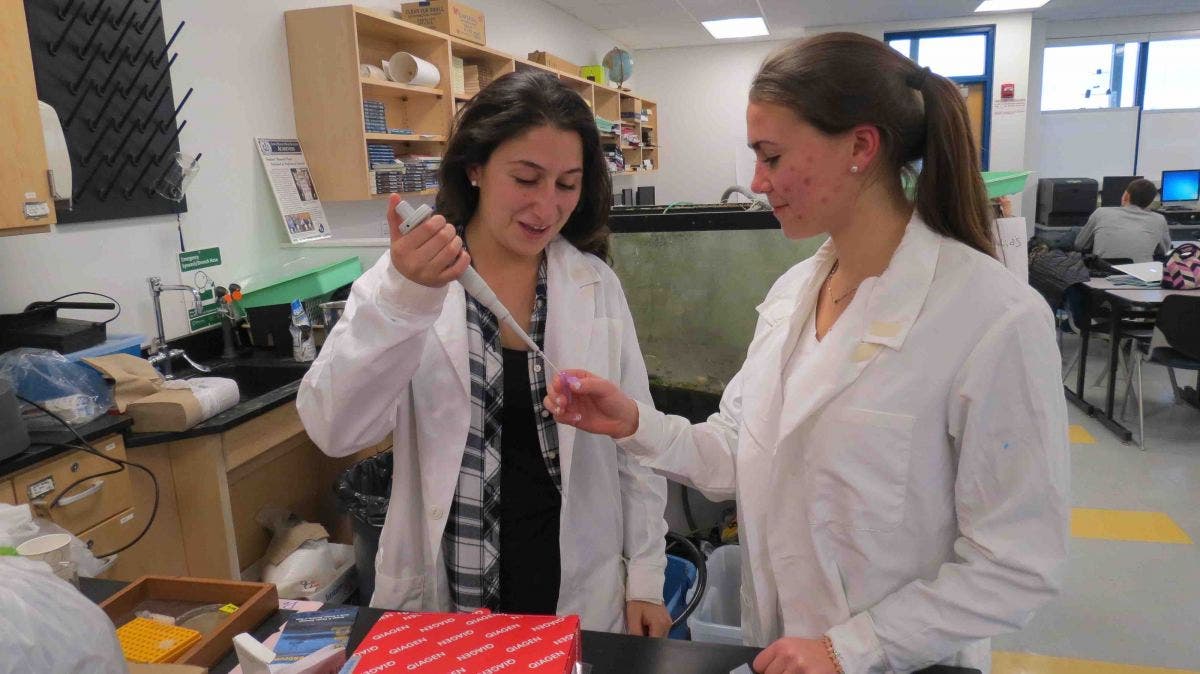
A new DNA sequence that Long Beach High School seniors and International Baccalaureate Diploma candidates Savannah Kile and Leah Shokrian identified through their participation in the school’s Science Research program was published to the National Center for Biotechnology Information’s international database, GenBank.
The students were the first researchers to record a partial sequence for the parasite Pleurogonius malaclemys, and as an outcome of their explorations, scientists around the world now have access to their discoveries.
For three years of their high school careers, Kile and Shokrian spent countless hours observing and analyzing Pleurogonius malaclemys, a parasite that often forms cysts on its hosts. The students learned about the parasites and turtles in consultation with two Hofstra University professors, Dr. Russell Burke and Dr. Jason Williams. The students investigated the infection rate of mud snails in the tidal wetland located on the campus of Long Beach High School. This parasite relies on two hosts – turtles and snails, in this case – in order to complete its life cycle.
Find out what's happening in Long Beachfor free with the latest updates from Patch.
Specifically, the hosts for the parasite are diamondback terrapin turtles and mud snails.
Mud snails are abundant, often found in quantities of hundreds or even thousands in marshlands, ponds and other wetlands. Diamondback terrapin turtle numbers are known to be declining and there is a need for more data regarding their population. Therefore, as Kile and Shokrian explained, presence of the parasitic cyst on snails likely means that the turtles are in the area as well, and measures can be taken to preserve their habitats and enforce efforts to protect their nests.
Find out what's happening in Long Beachfor free with the latest updates from Patch.
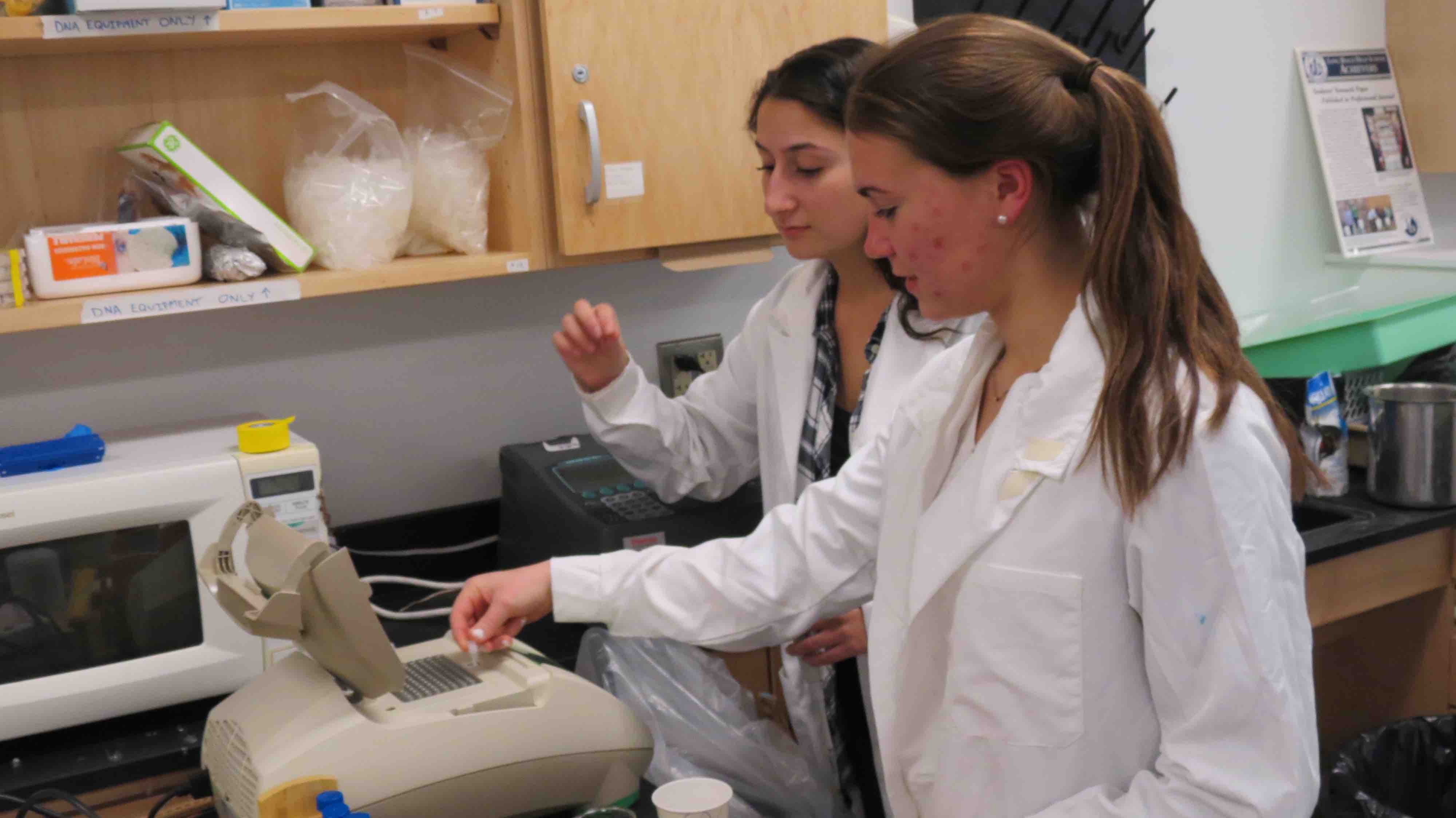
The students collected snails in sites local to western Long Island, including the Long Beach High School pond, and studied them for cysts in the building’s science lab. While conducting their research, they realized a correlation between the size of the snails and presence of the parasite. This enabled the students to work more efficiently by narrowing their selection pool of hundreds of snails down to those that were most likely to be infected.
“We knew that if larger snails were not infected with the parasite, it was most likely not going to be found at that location,” said Shokrian.
The two took their research even further by conducting DNA barcoding of the cysts, which confirmed the identify that their samples were Pleurogonius malaclemys and now their sequences can be used by others to identify the parasite species.
“Taxonomy, especially of smaller organisms, has traditionally been done by specialized experts,” said Long Beach High School science teacher Cody Onufrock. “DNA barcoding allows people to study biodiversity on a much more sophisticated level than ever before. Cold Spring Harbor Laboratory’s DNA Learning Center and local students are building a database of life.”
After a year-and-a-half-long process of submitting their results and securing approval, Kile and Shokrian work was published in GenBank in December.
“The benefit is that this will come up as a match for anyone studying the Pleurogonius malaclemys Trematode,” said Shokrian.
“This is a professional-level accomplishment for two high school students,” said Long Beach’s Director of STEM 6-12 Deborah Lovrich.
Photos: Long Beach School District
Get more local news delivered straight to your inbox. Sign up for free Patch newsletters and alerts.