Community Corner
Long Island Lobsterman Falls Into Sea, Shares Harrowing Ordeal, Miracle Survival
John Aldridge's miracle story of survival against all odds has sent him soaring to the international spotlight, with a new book and movie.


MONTAUK, NY — The night of July 14, 2013 began much like any night in the life of lobsterman John Aldridge of Montauk, who set off with his partner and childhood best friend Anthony Sosinkski on their boat, the Anna Mary, and headed out to sea under velvet skies.
But what happened next was far from ordinary. It was, in fact, an extraordinary tale of survival and perseverance, hope and faith — and the power of the indomitable spirit to overcome even the most seemingly insurmountable adversity.
Aldridge, going about his tasks for the evening, tried valiantly to move two heavy, ice-packed coolers, using a long-handled box hook over the plastic hook of the bottom cooler and pulling with all his might and weight.
Find out what's happening in Montaukfor free with the latest updates from Patch.
When the handle snapped, sending Aldridge careening backward off and into the sea, 40 miles from shore, as his partner slept, unknowingly, below — life as Aldridge knew it changed forever.
What followed during the next 12 hours of Aldridge's desperate struggle to survive the elements, circling sharks, and an internal battle with fear and despair is a story so compelling and gripping that a new memoir chronicling that fateful night, "A Speck in the Sea: A Story Of Survival and Rescue," published by Weinstein Books, will be released Tuesday.
Find out what's happening in Montaukfor free with the latest updates from Patch.
And there's a movie to follow, now in priority development with The Weinstein Company, along with screenwriter Jeff Pope and producers Rachael Horovitz and Jason Blum.
Aldridge, 45 years old at the time of the rescue, shared his amazing story with Patch this week, describing in heart-stopping detail the moments when he went sailing off his boat and into the most terrifying moments of his life.

He and his partner had left the dock at approximately 8 p.m.; it takes about 9 hours to get to the fishing grounds where the traps are located, he said. They'd gotten fuel and ice and placed the ice in the two big coolers, which had been stacked on top of one another.
His partner and the crew were asleep, he said. "I was the only one on watch."
When the handle on the cooler snapped at around 2:30 a.m., sending him flying off the back of the boat, it was a moment of terror frozen in time. "It was very scary," he said.
The water, at about 71 degrees, wasn't at a temperature where he'd even normally consider swimming, he said. "I wouldn't even go in a pool at 71 degrees. But my adrenaline was going so hard it actually felt warm to me," he said.
His first thoughts after plunging into the sea remain vivid even years later.
"I thought, 'Oh, my God, today's the day I'm going to die.' Who gets to know the day you're going to die? It's so overwhelming."
Initially, Aldridge began flailing about, panicking. That desperation was a way to "blow your energy" and make drowning easier, he said. "You're freaking out."
And then, the first of many miracles, when he realized, while pulling off his boots, that they were buoyant; he emptied the water, filled them with air, and tucked one under each arm.
"This gave me a chance," he said. "Suddenly, I wasn't swimming for my life."
For the next 12 to 13 hours, Aldridge began treading water in the dark of the night, rocked by 4-foot swells in the sea.
The terror was heightened when he noticed sharks swimming menacingly close in the moonlight.
"I panicked, but then I realized if I started really freaking out the sharks would check me out. So my mantra became, 'Just ignore them and they'll leave me alone.'"
The sharks, just 10 feet away, remained close for an agonizing 40 minutes, minutes measured, "second by second," Aldridge said.
A 500-pound ocean sunfish that swam up beside him also frightened him, Aldridge said; he kicked him to keep him away.
Throughout the long night, Aldridge had one thought to cling to: "You just have to stay alive till daylight," he said. Once sunrise came, he knew the desperate search would begin, as his partner woke up and found him gone.
And so he did, using his mind and his wits and the power of positive thinking to stay afloat in a situation so overwhelming that few might have survived under similar circumstances.
The mental fight to overcome the "seductive" negative thoughts that threatened to envelope him was as ferocious as his physical battle to stay afloat, he said.
Once daylight finally broke over the horizon, Aldridge knew he had to find a buoy, a "salvation buoy to hold on to."
He began to swim in the direction of where he knew a fellow fisherman had traps, even taking one of his white socks off, to give himself more pull and traction in the water.
"I just tried to be as efficient as I could," he said.
When he fell in, Aldridge was wearing a light blue T-shirt, his socks and boots, colors difficult to see for searchers. That's why he knew a brightly colored buoy would help.
After a few hours, he found two buoys, bright orange poly balls; he tied two together. "I sat in between them, figuring that's where I was going to die," Aldridge said.
Tight-knit Montauk community rallies to save their own
What ensued when Sosinksi woke, bewildered, to find him gone, calling frantically for help, is a story of hope, faith and steely determination that brought the United States Coast Guard, his partner and crew and the entire Montauk together in a fierce mission to rescue Aldridge and bring him home.
"Thank God for the Coast Guard," Aldridge said, whose valiant search is chronicled in the pages of the memoir.
Reflecting on what kept him holding on during the darkest of hours, Aldridge said it was the thought of his nephew, Jake, then 4, "the first kid in the family. He basically kept me alive. I kept thinking, 'How's he going to grow up, without me alive? That's not going to happen.'"
His mind was racing, Aldridge said. "Everything went through my mind. 'Who's going to take care of my dog?' 'Who's going to get my apartment?' 'What are people going to think?'"
And perhaps most chilling of all, "No one even knows I'm missing," he said.
And then, salvation.
When the first Coast Guard swimmer came up to him, he asked, "Sir, are you okay?" Aldridge said, "I turned around and told him I had two more days left in me and he laughed. The Coast Guard swimmer said, 'I've been looking for you for 9 hours. And I said, I've been looking for you, for 12.'"
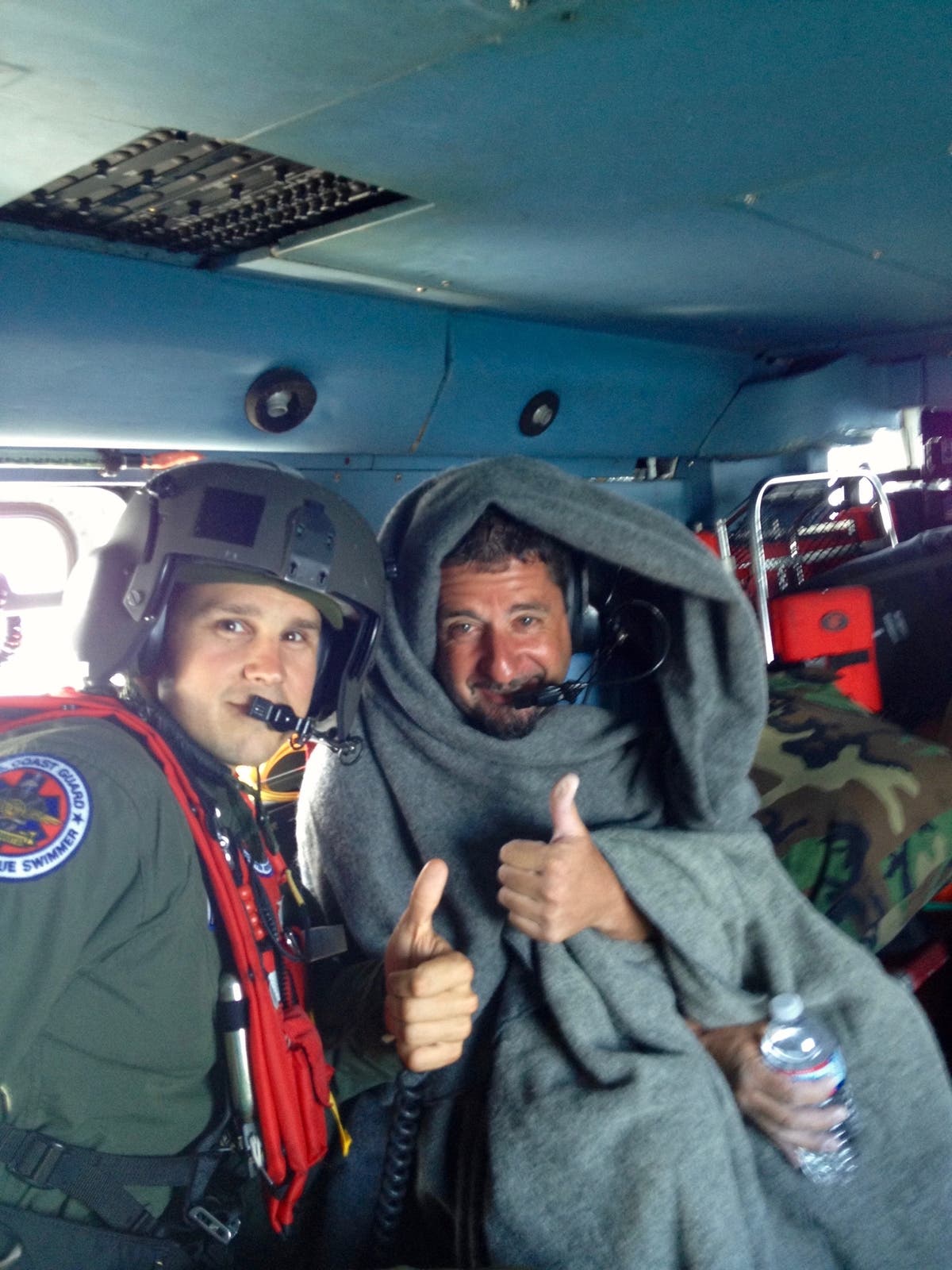
Then the Coast Guard swimmer put his arm around Aldridge and helped him into a basket, which lifted him up and out of the water.
After 12 hours in the elements, Aldridge's core temperature was 93 degrees, his lips were swollen, and he had second degree burns on his face; he was suffering from dehydration and hypothermia.
He was covered with shrimp, sea lice, and other sea creatures that had attached to him during his ordeal during his stay in their ecosystem, all of which fell off while at the hospital.
His first thoughts? "Basically, I thought, 'I'm saved.' It's that moment when you can stop fighting for your life and just relax for a second. It was so overwhelmingly gratifying," he said.
Next, he was flown to Falmouth, MA, where he was brought to the hospital for one night.
His Montauk community, Aldridge said, stepped up in a show of love, support, and solidarity, joining forces to find him.
Not just the Coast Guard, but 21 boats from the Montauk harbor were out looking.
"Our community, when someone's hurt or in need, people really step up. This is a unique place. There's not many places where people just drop whatever they're doing for someone they might not even know, who's in need," he said.
At the heart of his survival, Aldridge said, is his family. When they heard that he'd survived, he said, "They were beside themselves. The Coast Guard called them. We have a really tight family."
His journey to Montauk began with a childhood in Oakdale, Aldridge became a fisherman in 1997 and bought the boat with his partner Sosinski.

Fishing is so deeply ingrained in his blood and heart that he was ready to head right back the day after his ordeal. "I had to take two weeks off. I was ready to go right back. This is what I do. We're fishermen. We don't like land. We'd rather stay on the ocean."
After his near-death experience, Aldridge said his world has shifted. "I definitely don't take every day for granted anymore. Every day is special. I don't sweat the small stuff. You move on. This teaches you to be more humble."
International recognition
For a man more at home on his boat, spending long hours at sea, being plunged into the international spotlight as his story of survival spans continents has been an incredible experience, Aldridge said.
"It's pretty surreal," he said. "It's crazy. Especially living out here, in Montauk. I'm just a fisherman and all of a sudden I'm doing three interviews a day and speaking around the world. It's unbelievable," he said.
He credits the entire team, as well as his sister and manager Cathy Patterson, for working tirelessly to see the book come to fruition over a year and many drafts.
A new outlook
Aldridge has begun inspirational speaking, sharing his story with others and an important message he believes can be life-altering.
"Always look on the bright side. The positive side. The more positivity you can project, the more positive of an outcome will happen. When I saw that helicopter go by, instead of saying, 'They didn't see me,' I thought, 'At least they're still looking.' If I had thought negatively, it would have drained me. Positive thinking is a very powerful tool. When your life is on the line, those things really matter," he said.
Today, Aldridge balances interviews with his normal routine, still heading out on his boat as usual, despite all that's happened. While he wasn't wearing a flotation device that night, today, the entire crew wears life jackets, and there's a transom now on the back of the boat for extra safety.
There's no way he'd give up fishing, the heartbeat of his existence, Aldridge said.
"I'm not going to work on land, no way, 9 to 5," he said. "I can't go back to that."
Thinking of his life, the quiet solitude found in the deep of night at sea, a world away, realizing his dream on the water, Aldridge said simply, "What else am I going to do?"
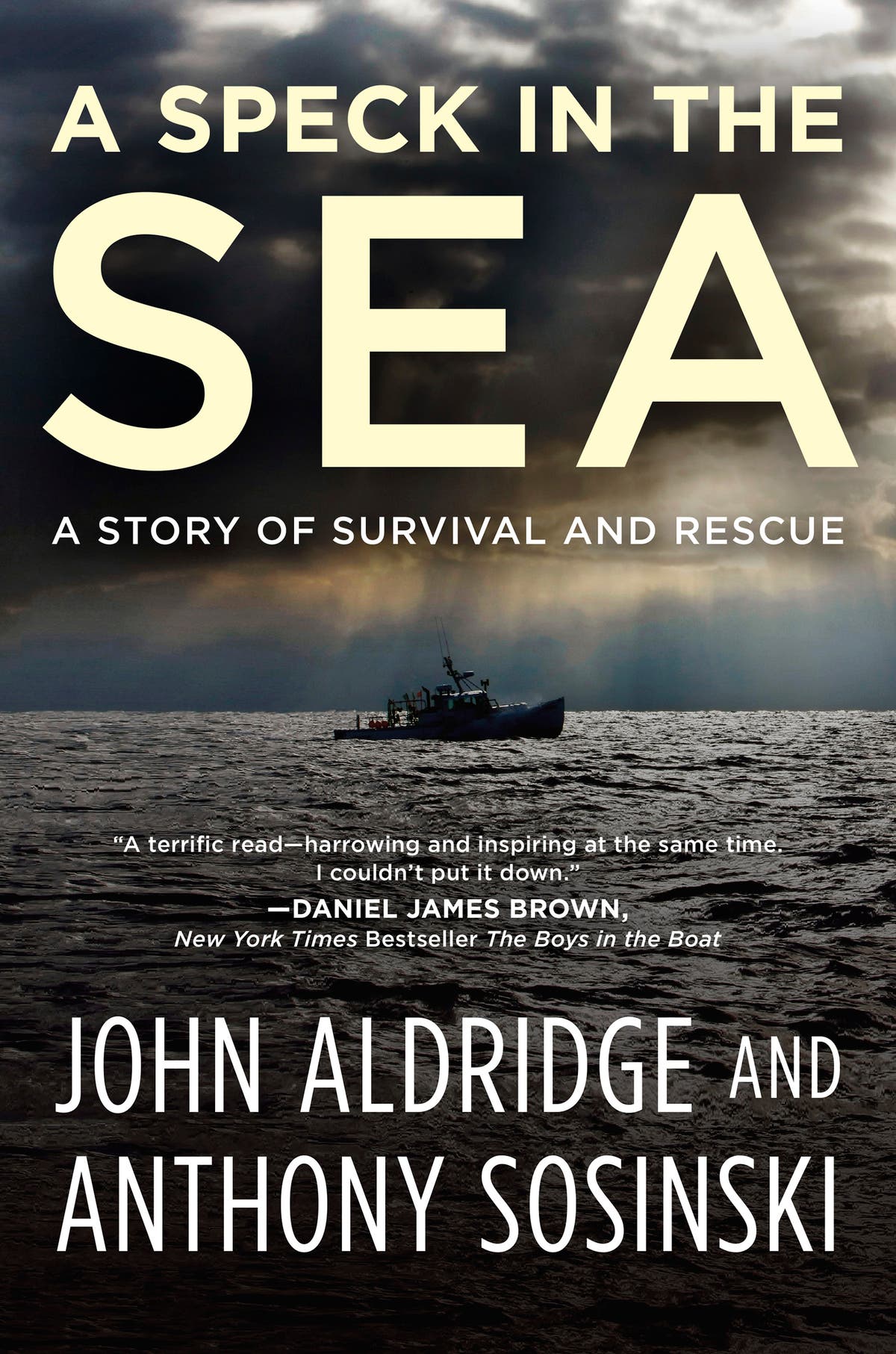
Patch courtesy photos.
Get more local news delivered straight to your inbox. Sign up for free Patch newsletters and alerts.