Politics & Government
Drilling for CO2 Research at Thruway Exit in Nanuet
They will be there for just a few more weeks


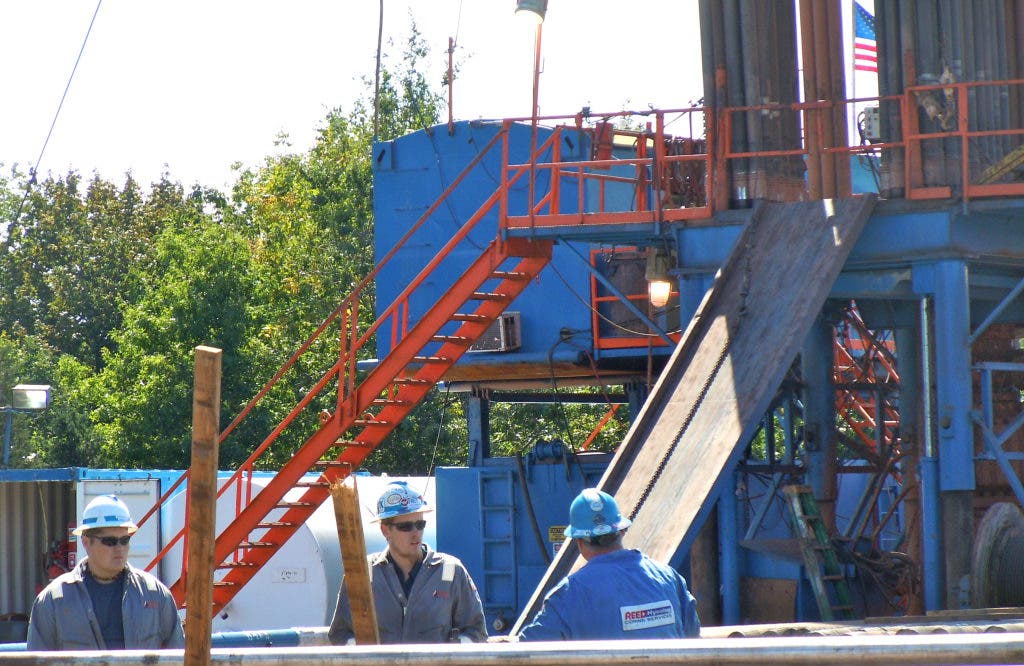


At the off and on ramp for the New York State Thruway by the Spring Valley Market Place, a drill rig extends 130 feet into the sky. Sandia Technologies, based in Houston, are there for research.
“We’re collecting information on the formations that exist in the Newark Basin. What we’re doing is strictly research,” said Bill Armstrong, principal engineer of the project on site. “It’s funded by DOE (Department of Energy) and New York State for collecting research for CO2 sequestration. It’s research on formations that can be used for long-term disposal of greenhouse gases.”
Newark Basin lies underneath a heavily urbanized and industrialized portion of New Jersey, according to the U.S. Geological Survey. “The basin extends south and westward from the lower Hudson River region, across northern and central New Jersey, and continues southward into Pennsylvania where it diminishes and then enlarges southward into the Gettysburg Basin.”
Find out what's happening in Nanuetfor free with the latest updates from Patch.
Carbon Capture & Sequestration
“CO2 is your primary emission of stack houses,” said Armstrong. “And what the government is really interested in is, does it make sense to capture, compress and inject the CO2 for disposal instead of releasing it into the atmosphere?”
To slow down climate change, CO2 emissions must be controlled and experts have identified several options to help reduce these emissions, according to NYSERDA, New York State Energy Research and Development Authority.
Find out what's happening in Nanuetfor free with the latest updates from Patch.
Carbon capture and sequestration (CCS) is one of the many options. In this process, sources that emit CO2 into the atmosphere will now capture that CO2 gas and inject it into underground rock formations. That CO2 gas will stay underground instead of contributing to climate change. For more information, visit the NYSERDA’s website.
Their Progress
Currently, they’re at 4,570 feet deep.
“We’ll probably go to about 6,500 feet deep,” said Project Manager Dan Collins. “But the maximum we can go to is 8,000 feet, which is what we have in the state and county permits.”
“All we’re doing on this site is drilling and coring. We’re going to start coring where we drill a hole into the bed basin and bring back about 60-foot sections of rock at a time, 3-inch columns,” said Armstrong. “We’ll bring back the rock and then analyze it in a lab.”
“(The rock samples) will be mainly be going to the New York State Museum in Albany, Rutgers University in New Jersey and Columbia University in New York City,” said Collins. “They have technical experts working on the project with us. Any special analysis will be done at (our home base) in Houston.”
“The analysis will go on for a long time. We’ll collect data on the formations and then at that point we’ll plug up (wells) with cement plugs and well boards and we’ll be through,” said Armstrong. “There will not be any other research done on this site. This is just to collect research, collect formation samples and then evaluate the samples. We’ll plug up and abandon the well and you’ll never know we were here. We’ll turn it back over to the NYS Thruway Authority.”
“We’ll be here less than another month,” said Armstrong. They started drilling July 9 weekend.
“We started the project two years ago, Oct. 2009,” said Collins. “Its an ARRA-funded program, which expires in about two years.” ARRA is the American Reinvestment Recovery Act, more commonly known as the Stimulus Bill.
Get more local news delivered straight to your inbox. Sign up for free Patch newsletters and alerts.