Politics & Government
Jaffee Bill Aims to Close Gender Wage Gap (VIDEO)
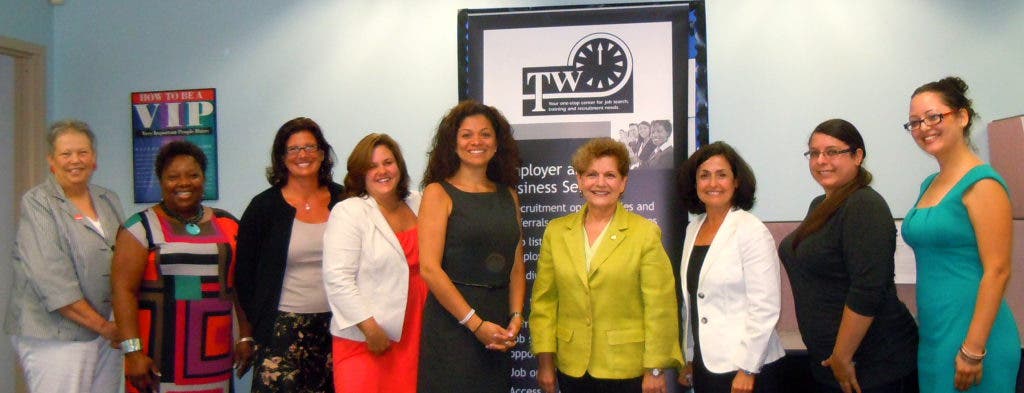
The legislation will expand work force assistance and training programs for women so they qualify for higher paying jobs, including those jobs that have traditionally gone to men.




On average, do you know how much less a woman makes working full time compared to a man working full time?
$8,290, said Assemblywoman Ellen Jaffee (D-Suffern) at a press conference on Tuesday afternoon.
Find out what's happening in Nanuetfor free with the latest updates from Patch.
“An annual disparity often means a difference between self-sufficiency and poverty,” she said. For some, it’s been a few decades of waiting, but on Aug. 8, Governor Andrew Cuomo signed a legislation sponsored by Jaffee that addresses the gender wage gap in New York.
“The journey to be here today … started … in the 1980s when there was a 1-time adjustment analysis of the New York State employees. They found there was a wage gap, a disparity,” said Beverly Neufeld, president of the New York Women’s Agenda and director of Equal Pay Coalition of NYC. “These things take a very long time. It does underscore how difficult it is to attack some of these issues. (Jaffee’s) passion around the issue … made all the difference.”
Find out what's happening in Nanuetfor free with the latest updates from Patch.
The legislation will expand work force assistance and training programs for women so they qualify for higher paying jobs, including those jobs that have traditionally gone to men.
“Occupational segregation … (is a) persistent feature of the U.S. labor market. Traditionally female occupations pay considerably less than traditionally male occupations,” said Jaffee. “It became apparent that New York needed to improve the effectiveness of its workforce development policies and programs by expanding employment prospects and earning potential for women.”
“New York acknowledged that there is a gender wage gap and we do have to fix it,” said Kelli Owens, director of government relations for the New York State YWCA. “We know that if women are given information about the gender wage gap in their area … they’re going to make the right decisions for themselves and their families and train for the higher wage jobs. This legislation … moves the bar up in regards of pay equity. The women we are serving … are taking two (minimum-wage) jobs to make things work.”
The YWCA has several resources that promote economic empowerment for women.
Christine Sadowski is the executive director of YWCA of Orange County and the public policy committee chair of the NYS YWCA program; she added that they’re trying to “reframe the type of work (women) want to do” so that they can start considering skilled labor jobs that are non-traditional and pay more.
“This gender age gap starts when we’re kids. Little girls babysit and little boys mow lawns. That tracks out (in society) the message we get throughout the development,” said Sadowski. “As we go into the workforce, women are traditionally looking at jobs in home health care, childcare. I’m not saying that those aren’t important jobs, but those are the jobs that pay minimum wage or a little bit more.”
The bill, A.9020- B/ S.6429-A, will add a work force training program within the Department of Labor that is specifically intended to help women seek higher paying jobs. Now that it's been passed, the next step is for the Department of Labor to develop a policy that will provide the following to women:
- current information about careers that offer a higher salary and compensation
- counseling
- skills development
- training that encourage women to seek jobs with higher earning potential
Watch the videos to hear the stories of Willow Maese and Nora Easterling, women who have taken non-traditional routes for higher pay.
Maese, 23 of Nanuet, is a RCC student majoring in cyber security. She is currently employed at Rain Computers in Ringwood, NJ.
Easterling, mother of a young son, is working temporarily for the Orangetown Highway Dept where she is earning $30 an hour. Her job ends this Friday and she says 90 percent of the jobs she'll be offered are traditionally "women's work" and will pay her far less.
Get more local news delivered straight to your inbox. Sign up for free Patch newsletters and alerts.