Arts & Entertainment
Foraging for Fun on a Rockland Ramble
Two workshops presented by Rockland Forager introduce people to the activity of seeking out edible and medicinal plants and herbs and making tinctures, oils, salves, etc.
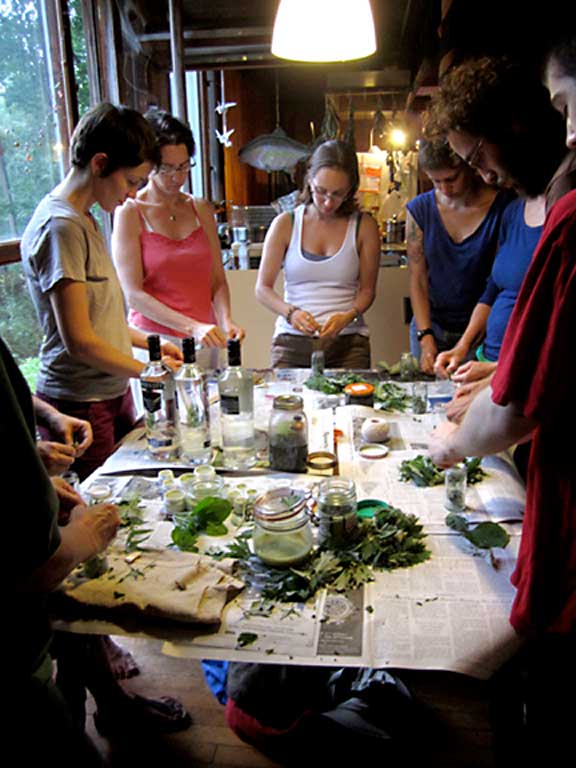


If everything green and natural outside your door looks like grass, trees, wildflowers and weeds, think again. Some of those weeds are nutritiously edible plants with healing properties and nutrients sought after in expensive food supplements.
"I eat weeds every day," said Paul Tappenden who partners with Brooke Smokelin in presenting two workshops this weekend. One involves searching for and identifying edible and medicinal herbs and plants found either in the wild or your own backyard. The second workshop involves making medicinal tinctures, salves, vinegars and oils. Tappenden uses "Stinging Nettle" to effectively treat arthritis pain and takes hot baths in "Mugwort" to get a good night sleep, free of painful leg cramps. These are just two of the 350 plants he has documented in the Hudson Valley.
The first workshop entitled the "Hudon Valley Ramble" takes place on Saturday, September 11 at 11 am at Hi Tor State Park. Anyone interested in learning to identify edible plants in the wild for fun, adventure, or as a survival skill is welcome to attend.
Find out what's happening in Nanuetfor free with the latest updates from Patch.
Smokelin, a graduate of Cornell University with a degree in environmental education is a transplant from Ohio. After living in Rockland for eight years, friends introduced her to Tappenden after realizing that both had similar interests in "foraging," the term used to describe seeking out edible and medicinal plants in the wild. The idea for the workshops came to them after a couple of years and they have really caught on.
"I think this is what what's going to save us," said Smokelin. "The more people learn how amazing it is, the gifts and intelligence about it, the more they might not want to destroy it." Both Smokelin and Tappenden are on the same page as far as having a passion for sharing their knowledge with others. Tappenden grew up in Britain and learned to appreciate the "gifts" of nature on many trips with his family to the country to gather berries for making wines, jellies and preserves. He began learning even more about which plants could be ingested during his extensive travels to different places..
Find out what's happening in Nanuetfor free with the latest updates from Patch.
"The whole industrial world has stolen our essence of what makes us human and it does my heart good to bring people back to the world of nature," he said. Tappenden is a former fine artist and commercial artist in the entertainment field. "Ironically," he said, "the economy has slowed down that end of my life and I'm happy it turned out this way, because I really love what I'm doing."
Other ideas for future workshops include learning about flower essences, cooking with wild herbs and plants and surviving in the wild, which would include learning how to make a fire by using sticks and how to find water. They also plan to have a workshop for making decorative items from nature.
Smokelin takes some of the workshops into schools where she has taught second graders and Tappenden has shared his expertise with seniors involved with Meals On Wheels. They also have a cooperative of at least eight people who specialize in their own special interests, such as Alana Fein of Westchester who has studied with herbalists. Some people who take the workshops over and over become knowledgeable enough and eventually want to teach and be involved in the workshops.
Tappenden says that many different types of people take the workshops. Doctors and physicians who study alternative medicine, survivalists, science enthusiasts or people who are just curious come to the workshops and enjoy learning together in a social environment rather than reading about it in a book. Smokelin said that this is something that people used to do a lot more often before we because such a insular society. "We don't get together as we used to. Learning to forage together builds social bonding."
Many of the plants that they introduce people to as edible and nutritious are often weeded from gardens and discarded. "Purslane" for example contains Omega 3 that people take in pill form. "Plantain" is so prevalent and is good for bee stings. It is a natural bandaid just as aloe is, though aloe does not grow around here. "You chew it to make a paste form, then rub the paste on the wound and discard the plant material." "Lambsquarter" is another edible plant that is related to spinage and "Mullein", pronounced (Mullen), is good for lungs. It makes a good tea and is good to stock up for the winter cold season.
Though they have a website up with the name "Rockland Foragers," they are in the process of changing it to "Suburban Foragers" and the new website will be more interactive and conducive to sharing information as people discover new sources of certain species.
For more information about the workshops, please call: 845-3045822.The cost for the Rockland Ramble taking place at Hi Tor State Park at 11:00 a.m. is $20 per person. The cost for the Part III of the Herbal Remedies Workshop taking place at 2:00 on Sunday is $40 per person plus $5 for materials. That takes place at the home of Brooke Smokelin on Gate Hill Co-op Road in Stony Point.