Arts & Entertainment
Billions Of 17-Year Cicadas Set To Emerge In NY In 2021
Noisy black, orange and red Brood X cicadas last emerged in the state in 2004.


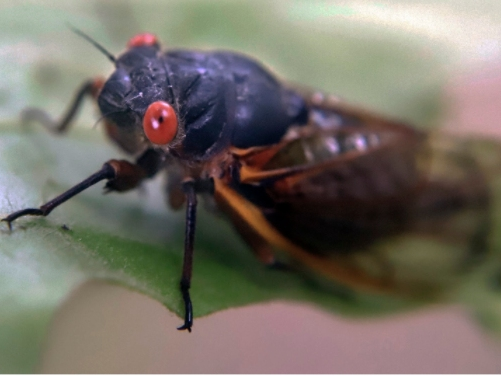
NEW YORK CITY — Billions of red-eyed cicadas that have spent 17 years gestating underground are about to emerge and could swarm parts of New York.
The Brood X insects – black, orange and red creatures – have spent their immature years in the soil. But soon they'll scramble to the surface and emerge all at once in a scene that's almost biblical.
There are 15 different types – or broods – of the cicada though, which means a type is emerging somewhere on the east coast almost every year. The last time Brood X emerged was 2004, mainly on Long Island.
Find out what's happening in New York Cityfor free with the latest updates from Patch.
They're different from the green cicadas which are present every year, according to Cicada Mania, a site dedicated to "the most amazing insects in the world."
In New York City, cicadas are mainly found in Central Park and parts of Staten Island and The Bronx, emerging when the ground heats to about 64 degrees – around May. They're harmless, but on big years of emergence they fly into people – and the noise they create is almost deafening.
Find out what's happening in New York Cityfor free with the latest updates from Patch.
The collective song of male cicadas calling for mates can reach up to 100 decibels. Think of a Harley-Davidson motorcycle with straight pipes constantly running outside your window.
The male cicadas are the ones that make all the noise. They do it by vibrating their tymbals, drum-like membranes on their abdomens. They're used to create a mating call, and the noise is so loud because every male is seeking a mate at the same time.
After mating, the females split the bark on living tree trunks, branches and twigs, burrow in and lay between 24 and 48 eggs at a time.
Scientists can’t entirely explain the synchronized emergence of periodical cicadas, but one evolutionary hypothesis is that the forced developmental delay was an adaptation to climate cooling during the ice ages.
Get more local news delivered straight to your inbox. Sign up for free Patch newsletters and alerts.