Politics & Government
BOE Accidentally Reveals How Dante De Blasio, 100s Others, Voted
A flaw in how the embattled Board of Elections reports election data revealed the mayoral primary choices of 378 voters, researchers found.


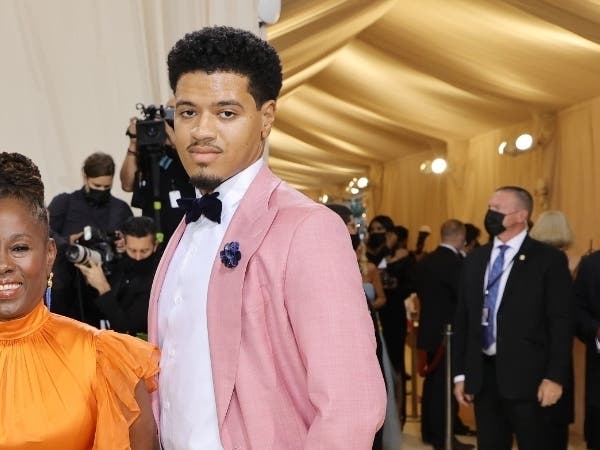
NEW YORK CITY — A privacy loophole accidentally revealed the choices of 378 New York City voters, including the mayor's son, Dante de Blasio, according to a new study.
The study — "Privacy Concerns in New York City Elections" — released Monday highlights a flaw in how the city's embattled Board of Elections reported election data from the recent mayoral primary.
Researchers from Princeton's Electoral Innovation Lab and the Stevens Institute of Technology found the error by comparing state voter files with results from election districts with only one voter registered. One of those single-voter districts was Gracie Mansion, where Dante de Blasio is registered.
Find out what's happening in New York Cityfor free with the latest updates from Patch.
They found Dante de Blasio's ranked-choice ballot choices for mayor in the Democratic primary were Maya Wiley in the first slot, followed by Eric Adams, Kathryn Garcia, Ray McGuire and Shaun Donovan.
"We were able to individually identify 378 voters and their choices in the 2021 New York City mayoral and all lower primary elections," the researchers wrote. "While this is only a small fraction of all votes cast, it raises a major privacy concern and reveals a conflict between the NYC BOE’s current implementation of reporting requirements and the New York Voter Bill of Rights secret-ballot provision."
Find out what's happening in New York Cityfor free with the latest updates from Patch.
The Board of Elections came under intense fire during the June 22 mayoral primary — the first in which the city cast ranked-choice ballots.
A "discrepancy" — 135,000 test ballots left in computer systems — in a June 29 round of ranked-choice votes forced Board of Elections officials to scrap previously released results and restart counting. The fracas prompted national criticism, embarrassment for the already error-prone board and widespread calls for its complete overhaul.
Accidentally revealing the votes of hundreds of New Yorkers could add to the fire. But the researchers made clear the error stemmed from the election reporting requirements the Board of Elections must follow this year.
In previous years, the Board of Elections bundled results from single-voter precincts into neighboring districts, according to the study. BOE officials — who, the study notes, were aware of the re-identification risk — told the researchers in a Sept. 13 call that this year the reporting requirements changed.
"In their interpretation, they believe that legal reporting requirements to make data available in a particular format does not allow them latitude to group single-voter precincts, as was previously done," the study states. "They thought that changing this practice would require a change to the New York City Charter."
The privacy loophole can be closed by grouping records from single-voter precincts with neighboring areas, researchers wrote.
"This operational fix would take a few minutes of staff time per election, and would bring BOE procedures into line with the New York State Voter Bill of Rights," the study states.
Get more local news delivered straight to your inbox. Sign up for free Patch newsletters and alerts.