Neighbor News
Building a Legal Legacy in New York: Reflections from Esteemed Attorney David Lever
What he wishes someone told him when he first became an attorney

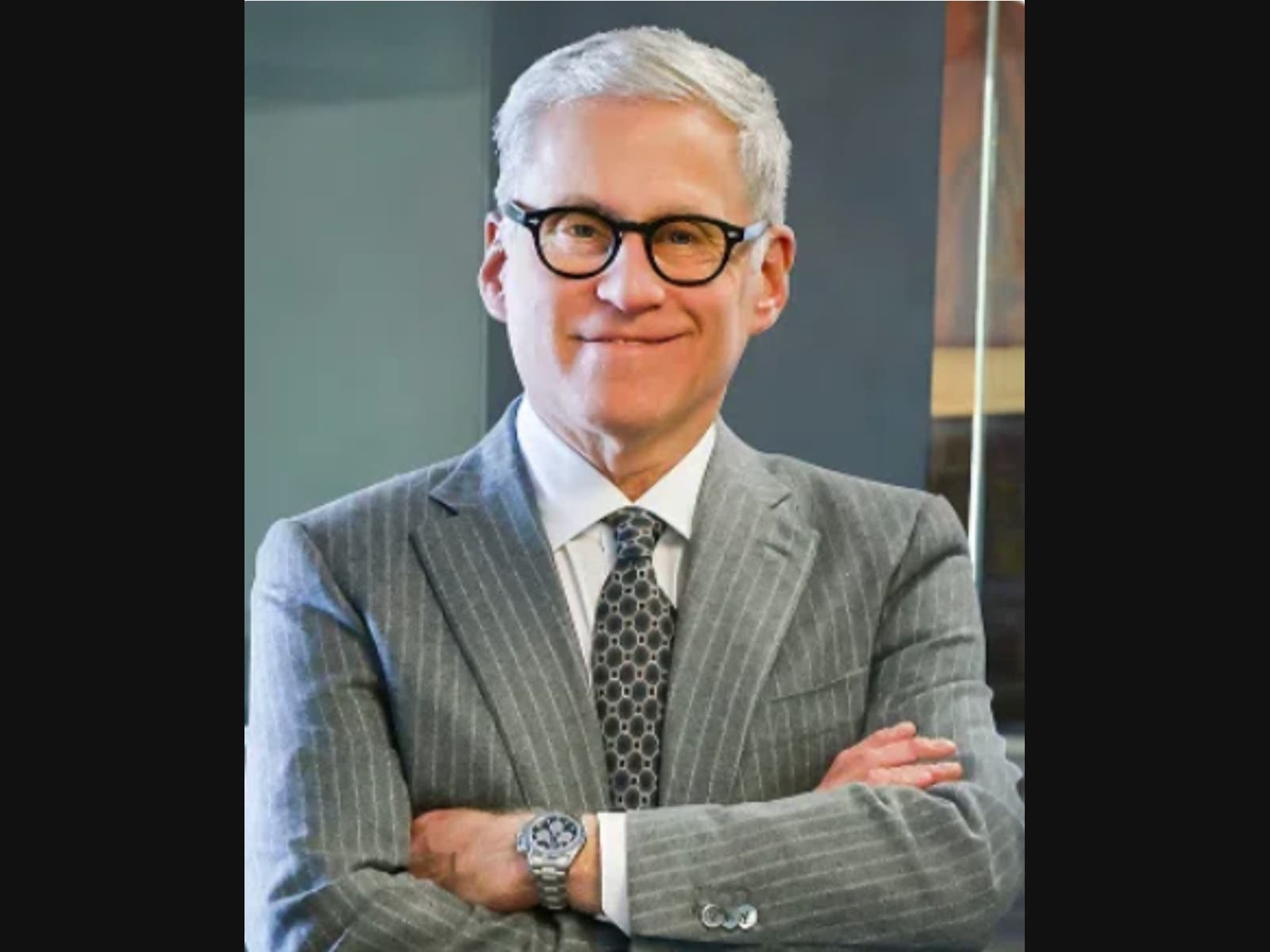

In the neighborhoods and courtrooms across New York, few attorneys have witnessed the human impact of accidents and injuries as intimately as David B. Lever. For more than three decades, the White Plains-based attorney has built a practice and reputation rooted not in corporate defense or insurance litigation, but in standing beside New Yorkers at their most vulnerable moments—when a construction fall changes a family's future, when a reckless driver leaves lasting damage, or when a preventable tragedy becomes a fight for accountability.
As Founder and Senior Partner of Lever & Ecker, PLLC, Lever has recovered millions of dollars for accident victims throughout the New York metro area, including a confidential $12 million settlement for a client catastrophically injured in a motor vehicle collision. But beyond the verdicts and settlements, Lever's work reflects a broader commitment to the city and region he serves. He sits on the Board of Directors for Adults and Children with Learning Disabilities, Inc. (ACLD), supports organizations like St. Jude, Memorial Sloan Kettering, and The Toby Project, and actively advocates for insurance and civil-justice reforms that would better protect everyday New Yorkers.
His journey into personal injury law began not with ambition, but with circumstance—and a personal understanding of what injury does to a life. What followed was a career defined by meticulous preparation, straight talk with clients, and a firmwide commitment to systems that deliver consistent results. Recognized as a New York Metro "Super Lawyer" annually since 2020, named one of the Top 25 Lawyers in Westchester County, and honored among the Top 100 Civil Plaintiff Trial Lawyers in New York by The National Trial Lawyers, Lever has earned respect not just for winning cases, but for the way he approaches them.
Find out what's happening in New York Cityfor free with the latest updates from Patch.
In this conversation, Lever reflects on the path that brought him to this work, the reforms he believes New York needs, the cases that have shaped his practice, and the five lessons he wishes someone had shared when he first hung his shingle.
---
Find out what's happening in New York Cityfor free with the latest updates from Patch.
What is the "backstory" that brought you to this particular career path in law?
I didn't set out to be a personal-injury lawyer. I thought I'd work in real estate law after school, but the job market pushed me to answer an ad at a plaintiff's firm. Once I began meeting injured people and their families, I saw how a good lawyer can be the difference between a dignified and substantial recovery and a lifetime of hardship. Early in life I experienced a serious motorcycle crash, which gave me a visceral sense of what injury does to a person and their family. That combination of serendipity and empathy kept me in this work for 35 years and counting.
Can you share the funniest or most interesting story that occurred to you in the course of your law career?
"Funny" is tough in personal injury. Here's an instructive story. Years ago, a young parent was hit by a driver with only New York's minimum coverage. The at-fault policy couldn't cover the out of pocket medical bills. Because our client carried greater underinsured-motorist limits than the at-fault driver maintained, we unlocked meaningful compensation from our client's own policy. That one choice, made before the crash, changed the family's trajectory. It cemented my mission to educate every client about uninsured/underinsured motorist coverage.
What are some of the most interesting or exciting projects you are working on now?
Beyond our day-to-day injury docket (motor-vehicle, construction, premises and wrongful death cases) we're involved with litigation tied to PFAS exposure, including firefighter foam (AFFF) and contaminated drinking-water matters. We're also involved with litigation in certain sexual-abuse cases. These efforts are about accountability at scale: safer products, safer water, and institutions that protect, not conceal.
What are some of the most interesting cases you have been involved in? Without sharing anything confidential can you share any stories?
Construction fall case: A worker fell due to a missing safety device. The defense argued that our client was a recalcitrant worker, but site records showed weeks of ignored safety complaints. The result helped the family stay in their home and resulted in the contractor changing its safety practices.
High-impact crash with no third-party insurance coverage: We aggressively pursued a bodily injury claim against our client's underinsured-motorist coverage. The insurance company took a no-pay position, but following contentious litigation and binding arbitration we obtained a full policy limits recovery. Obtaining justice and optimal recoveries takes planning, good lawyering and patience, but it's often the only way to reach a just result.
Unsafe premises: A property owner cut corners on maintenance, leading to a serious fall and extensive injuries and damages. Video retention policies were conveniently "short." We compelled the property owner to preserve evidence by taking swift action and established liability. The case resolved on terms that made our client whole and also forced procedural fixes.
Which people in history inspire you the most? Why?
Winston Churchill and Franklin D. Roosevelt for holding the line when the world was on fire. In modern life, I'm inspired by Aaron Judge. He performs at the highest level, stays humble, always smiles, and puts his team first. That's the model: do the work, own the standards, keep your ego out of the way.
What advice would you give to a young person considering a career in law?
Pick a lane you actually care about and be slow to drift. You may need a bridge job, but don't let short-term convenience rewrite your long-term plan. Learn the business side early. Build boundaries so you can sustain the work. And find mentors who will edit your writing, not just praise it.
If you had the ability to make three reforms in our judicial/legal system, which three would you start with? Why?
Raise minimum auto-liability limits in New York. The $25,000/$50,000 minimums date to the early 1990s and are grossly inadequate today. A realistic floor, at least $100,000/$300,000, would allow for more reasonable compensation for pain and suffering, to recover medical costs and lost earnings.
Require uninsured/underinsured motorist (UM/UIM) limits to match bodily injury liability limits by default. Most people don't realize their UM/UIM is far lower than their liability coverage. Default parity would better protect families when the other driver is uninsured or underinsured.
Protect the right to a jury trial and oppose damages caps on non-economic loss. Arbitrary caps devalue the harms suffered by retirees, children, and caregivers who may have little "economic" loss but immense human loss. Justice should be fact-driven, not capped by statute or economic means.
(Separately, I support modernizing wrongful-death laws in New York State so that families can recover for emotional loss and specifically grief and anguish, not just narrow economic metrics and conscious pain and suffering.)
How have you used your success to bring goodness to the world?
First, by leveling the playing field so injured people, regardless of income, can stand toe-to-toe with insurers and large corporations. Second, through service and philanthropy. I serve on the board of ACLD (Adults & Children with Learning and Developmental Disabilities) and support organizations including St. Jude, Memorial Sloan Kettering, the American Heart Association, the Michael J. Fox Foundation, and The Toby Project in New York City, which provides mobile spay/neuter services to reduce shelter euthanasia. Our firm also underwrites Thanksgiving turkey programs in our community.
I know this is not an easy job. What drives you?
Clients place profound trust in us at the worst and most vulnerable moment of their lives. That drives me to deliver, case by case. I'm also driven to hold insurers and corporations accountable so that safety isn't optional. And I'm building a durable firm - people, systems, processes - so excellent representation is the rule, not the exception.
What are your "5 things I wish someone told me when I first started," and why?
Learn business early. Law school teaches doctrine, not operations. Accounting, hiring, case selection, KPIs, and client experience determine whether your firm survives. Example: Once I tracked cycle times and touchpoints, outcomes improved without adding headcount.
Build systems and write them down. "Winging it" works, until it doesn't. Example: Standardizing intake and evidence gathering/preservation cut missed-document issues to near zero.
Set boundaries, including your availability. If you answer emails at midnight, you've trained everyone to expect midnight responses. Tactical rule: don't give out your personal cell broadly; route through firm channels.
Protect your health to protect your clients. Exercise, sleep, and some form of mental recovery are not luxuries. Example: A consistent morning routine made me a better strategist in afternoon mediations.
You'll never finish everything today. Prioritize and leave. The list never ends. Example: When I accepted that, I had energy left for family and friends, and my judgment at work sharpened.
We are very blessed that some of the biggest names in Business, VC funding, Sports, and Entertainment read this column. Is there a person with whom you would love to have a private breakfast or lunch? Why?
Aaron Judge. I'm a lifelong Yankees fan. He represents excellence without ego, team over self, and leading by example. Those are values I try to model in practice.
---
For New Yorkers navigating the aftermath of an accident, Lever's insights carry practical weight. His call to raise minimum auto-liability limits and reform uninsured-motorist coverage reflects a system that hasn't kept pace with the realities of modern healthcare costs and New York traffic. His emphasis on systems, boundaries, and sustainable practice offers a blueprint not just for lawyers, but for anyone building a career meant to last.
What emerges from this conversation is a portrait of a professional who has spent 35 years translating legal expertise into tangible human outcomes—helping families stay in their homes, holding negligent parties accountable, and building a firm culture where excellence isn't accidental. Whether watching the Yankees with his family, serving on the ACLD board, or preparing for trial, Lever's approach remains consistent: do the work, own the standards, and keep your ego out of the way.
It's a philosophy that has shaped a career, strengthened a community, and redefined what it means to practice law in New York with purpose and integrity.