Arts & Entertainment
Final Three Months to See Auschwitz. Not long ago. Not far away.
Extended to May 2, 2021, the exhibition features more than 700 objects and 400 photographs on display in North America for the first time.


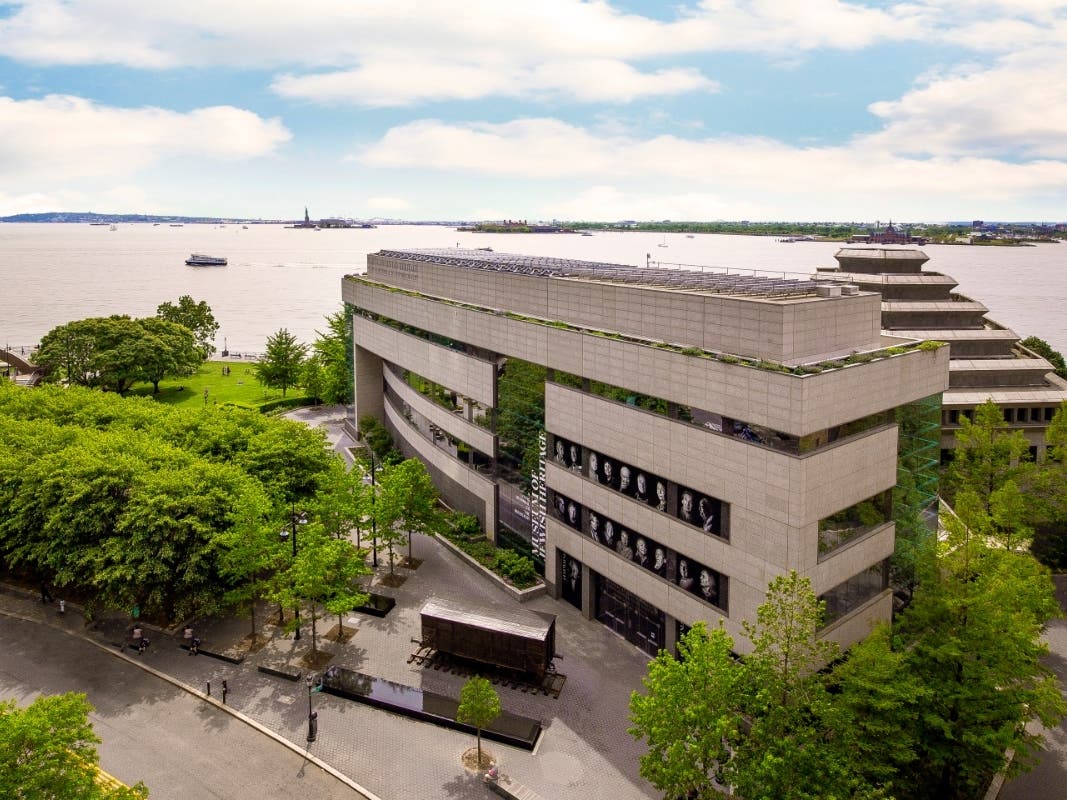
The Museum of Jewish Heritage – A Living Memorial to the Holocaust today announced there are only three months left to see the internationally acclaimed and popular exhibition, Auschwitz. Not long ago. Not far away., before it leaves New York City. The exhibition will be on view at the Battery Park City-based Museum through May 2, 2021.
Produced by the international exhibition firm Musealia and the Auschwitz-Birkenau State Museum in Poland, the groundbreaking exhibition Auschwitz. Not long ago. Not far away. is the largest ever on Auschwitz with more than 700 original objects and 400 photographs.
The exhibition has been extended twice since it was opened in May 2019, due to the record number of visitors – more than 168,000 people, including more than 35,000 students – until the Museum temporarily closed because of COVID-19. The Museum reopened on September 13, albeit at 25% of the Museum’s previous capacity to maintain proper social distancing.
Find out what's happening in New York Cityfor free with the latest updates from Patch.
Currently, the Museum is open three days per week—Wednesdays, Thursdays and Sundays—rather than the previous six, and with limited hours, from 10 AM to 5 PM. General admission, timed-entry tickets purchased online in advance allow access to all Museum galleries. On the other days, the Museum deep cleans all public spaces.
Auschwitz. Not long ago. Not far away. explores the dual identity of the camp as a physical location—the largest documented mass murder site in human history—and as a symbol of the borderless manifestation of hatred and human barbarity.
Find out what's happening in New York Cityfor free with the latest updates from Patch.
The exhibition traces the development of Nazi ideology and tells the transformation of Auschwitz from an ordinary Polish town known as Oświęcim to the most significant Nazi site of the Holocaust—at which ca. 1 million Jews, and tens of thousands of others, were murdered. Victims included Polish political prisoners, Sinti and Roma, Soviet prisoners of war, Jehovah’s Witnesses, and those the Nazis deemed “homosexual,” “disabled,” “criminal,” “inferior,” or adversarial in countless other ways. The exhibition tells not only the story of their persecution and murder, but also the myriad ways ordinary people responded to the unfolding genocide, including inspiring stories of resistance, resilience, courage, and altruism. In addition, the exhibition contains artifacts that depict the world of the perpetrators—SS men who created and operated the largest of the German Nazi concentration and extermination camps.
Featuring more than 700 original objects and 400 photographs, mainly from the Auschwitz-Birkenau State Museum, the New York presentation of the exhibition allows visitors to experience artifacts from more than 20 international museums and institutions on view for the first time in North America, including hundreds of personal items—such as suitcases, eyeglasses, and shoes—that belonged to survivors and victims of Auschwitz.
Other artifacts include concrete posts that were part of the fence of the Auschwitz camp; part of an original barrack for prisoners from the Auschwitz III-Monowitz camp; a desk and other possessions of the first and the longest-serving Auschwitz commandant Rudolf Höss; a gas mask used by the SS; Picasso’s Lithograph of Prisoner; and an original German-made Model 2 freight train car used for the deportation of Jews to the ghettos and extermination camps in occupied Poland.
Later added to the exhibition was a shofar (a ram’s horn that is made into a special wind instrument used during Jewish High Holiday services) that was hidden and clandestinely blown in Auschwitz.
The Museum of Jewish Heritage added into the exhibition nearly 100 rare artifacts from its collection that relay the experience of survivors and liberators who found refuge in the greater New York area. These artifacts include Alfred Kantor’s sketchbook and portfolio that contain over 150 original paintings and drawings from Theresienstadt, Auschwitz, and Schwarzheide; the trumpet that musician Louis Bannet (acclaimed as “the Dutch Louis Armstrong”) credits for saving his life while he was imprisoned in Auschwitz; visas issued by Chiune Sugihara, a Japanese diplomat in Lithuania often referred to as “Japan’s Oskar Schindler”; prisoner registration forms and identification cards; personal correspondence; tickets for passage on the St. Louis; and a rescued Torah scroll from the Bornplatz Synagogue in Hamburg.
Also on display from the Museum of Jewish Heritage collection are Heinrich Himmler’s SS helmet and his annotated copy of Hitler’s Mein Kampf, as well as an anti-Jewish proclamation issued in 1551 by Ferdinand I that was given to Hermann Göring by German security chief Reinhard Heydrich on the occasion of Göring’s birthday. The proclamation required Jews to identify themselves with a “yellow ring” on their clothes. Heydrich noted that, 400 years later, the Nazis were completing Ferdinand’s work. These artifacts stand as evidence of a chapter of history that must never be forgotten.
Auschwitz. Not long ago. Not far away. is produced in partnership with the international exhibition firm Musealia and the Auschwitz-Birkenau State Museum in Poland, and curated by an international panel of experts, including world-renowned scholars Dr. Robert Jan van Pelt, Dr. Michael Berenbaum, and Paul Salmons, in an unprecedented collaboration with historians and curators at the Research Center at the Auschwitz-Birkenau State Museum, led by Dr. Piotr Setkiewicz.
Late last year, the European Commission and Europa Nostra named Auschwitz. Not long ago. Not far away. as one of its three Grand Prix laureates, noting, “Exhibitions such as Auschwitz. Not long ago. Not far away. – based on rigorous research and European collaboration – are important in that they raise awareness and make the lessons from our shared past more tangible, offering factual and clear evidence of what can happen when various forms of extremism are tolerated.”
Earlier in 2020, the exhibition received the 2020 European Heritage / Europa Nostra Award
in the category of Education Training and Awareness-Raising — the most prestigious award in the field of European heritage. The Award jury said the exhibition “preserves the memory of one of the worst episodes in the history of humanity and is based on deep, scientific, historical research. It succeeded in recreating the emotional experience of visiting the real site, which is challenging for a travelling exhibition and is thanks in part to the richness of the content.”
Following the New York presentation, the exhibition will open at Union Station in Kansas City in June 2021.
Auschwitz. Not long ago. Not far away. at the Museum of Jewish Heritage – A Living Memorial to the Holocaust is made possible with lead support by Bruce C. Ratner, George and Adele Klein Family Foundation, Ingeborg and Ira Leon Rennert, and Larry and Klara Silverstein & Family. The exhibition is presented in part with major support by The David Berg Foundation, Patti Askwith Kenner, Oster Family Foundation, and The Bernard and Anne Spitzer Charitable Trust. Additional generous support is provided by Simon & Stefany Bergson, The Knapp Family Foundation, and the Blanche and Irving Laurie Foundation.