Arts & Entertainment
A Forgotten NYC Landmark Returns This Summer
A New York waterfront icon is restored with a controversy many people misunderstand.


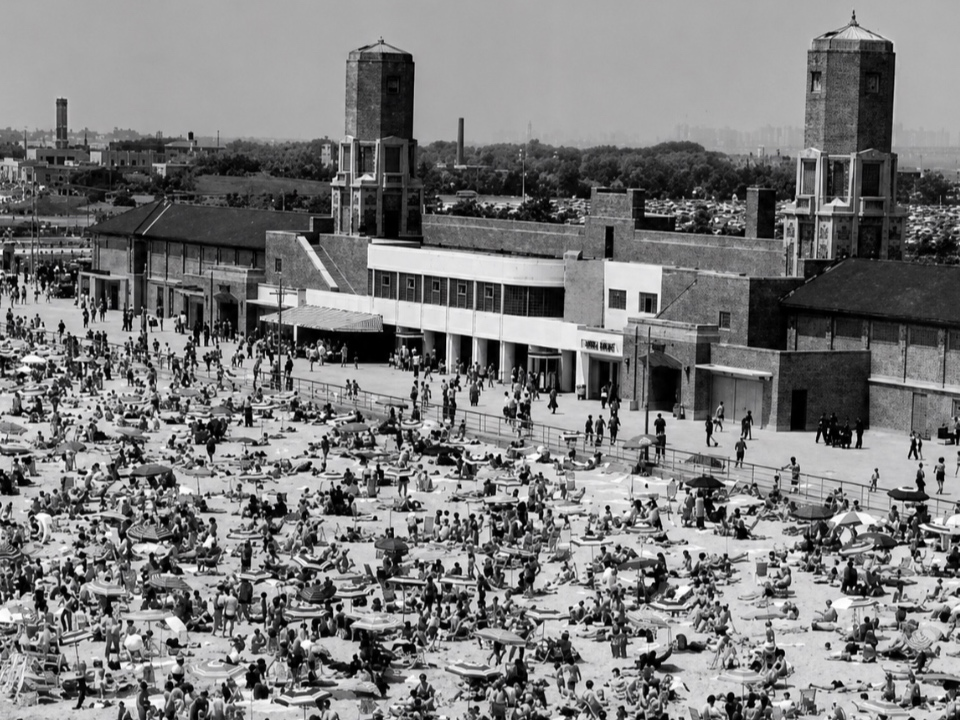
NEW YORK, NY— For more than five decades, the Jacob Riis Bathhouse stood as a time capsule from another New York: the era of Robert Moses, Art Deco grandeur and a city determined to bring the ocean within reach of its residents.
Generations of beachgoers walked past the shuttered landmark, unaware of the bustling public destination it had once been.
They passed the empty rooms, the deteriorating walls and the faded remains of a place designed as a gateway between the city and the ocean.
Find out what's happening in New York Cityfor free with the latest updates from Patch.
But in 1932, the bathhouse served as one of the City’s most ambitious public beach facilities.
At its peak, the building welcomed more than 8,000 visitors at once.
Find out what's happening in New York Cityfor free with the latest updates from Patch.
It had a cafeteria, rooftop restaurant, orchestra hall, solarium, thousands of lockers and facilities designed to make a day at the beach possible for New Yorkers escaping the heat and density of the city.
This summer, the building will reopen as Rockaway Ocean Club, a new destination built around the restoration of the historic landmark
The Jacob Riis Bathhouse will reopen as Rockaway Ocean Club, a beachfront destination operated under a 60-year lease with the National Park Service.
The reopening begins with a Preview Season before the full project launches in spring 2027.
A Public Landmark Born From A Complicated Era
The Jacob Riis Bathhouse has always carried a contradiction.
The park’s redesign was tied to Robert Moses, the powerful parks commissioner whose projects reshaped New York’s landscape in the 20th century.
Under Moses, Jacob Riis Park was developed as an urban counterpart to Jones Beach, with improved access by road, public transportation and expanded recreational facilities designed to give New Yorkers an escape from crowded neighborhoods.
But the era that produced these public spaces was also shaped by debates over who benefited from large-scale development.
While Moses expanded public recreation, many of his projects depended on automobile infrastructure that critics argued favored drivers and suburban residents over New Yorkers who relied on public transportation.
His transformation of Long Island’s recreational landscape, including Jones Beach, became a symbol of both the possibilities and contradictions of his approach: creating public spaces while shaping who could most easily reach them.
Jacob Riis Park occupied a different place in that history.
Built as a public beach destination accessible from the city, it became a gathering place for generations of New Yorkers, including communities often excluded from other spaces.
Nearly a century later, its restoration has reopened an old question that has followed New York’s public spaces for generations: What does it mean for a place to truly belong to everyone?
The New Yorkers Who Restored The Bathhouse
The restoration project began with an unexpected phone call in 2017.
Aaron Brando, founder of Brooklyn Bazaar, had already worked in the Rockaways through beach concessions and built a relationship with the National Park Service.
When the agency issued a request for proposals to restore the vacant bathhouse, he pursued the opportunity and called Ursula Damani, a hospitality and marketing executive with two decades of experience in New York.
Damani was sitting at a friend’s dining room table when the call came in.
"It’s one of those calls that you never forget where you were," she said.
After reviewing the proposal, she began assembling a team of developers, preservation specialists and hospitality professionals who would spend the next nine years bringing the landmark back.
CBSK Developers joined the effort, followed by Beyer Blinder Belle, the preservation firm selected as restoration architect.
Within months, the team had assembled, but transforming an abandoned 1932 landmark into a functioning 21st-century property required years of approvals, financing and preservation reviews.
After six years navigating regulatory processes, the team signed a lease with the National Park Service in 2022 and secured construction financing in 2023.
Then the restoration began.
Decades of vacancy and deferred maintenance had left the Jacob Riis Bathhouse severely deteriorated.
The City closed the building in 1972, and while the National Park Service later used portions for lifeguard housing, Hurricane Sandy caused additional damage in 2012.
Workers restored original windows, tile, masonry and the landmark’s signature towers while adding modern flood protection, accessibility upgrades and safety systems.
"Every component — every brick, window, tile, metal flashing, even paint color — was chosen with great respect for what came before," said Carlos Cardoso, a partner at Beyer Blinder Belle.
The $88 million restoration will include public spaces such as boardwalk-facing food and beverage offerings, retail, the courtyard and other ground-floor areas.
Developers say about 60 percent of the restored building will remain open to the public without membership, while private offerings will include access to a pool, outdoor lounge and other amenities.
That balance between public access and private membership has become the most debated part of the reopening.
What The Membership Supports
The membership model exists, Damani said, because maintaining a historic waterfront building requires ongoing revenue.
The property must cover staffing, maintenance, pool operations, safety requirements and the continued upkeep of a historic structure.
She said the team explored multiple financial models before choosing membership, with local memberships starting at about $1,200 annually.
The goal, she said, was to create a sustainable operation that would prevent the building from falling into disrepair again.
"We have a 60-year land lease," she said. "This building and this project is going to outlive everybody that’s on it right now."
Damani said the challenge was creating a model that could sustain the landmark for future generations while maintaining public access.
"We’re not trying to take something away," she said. "We’re trying to give it back."
Can The "People's Beach" Stay True To Its History?
Damani said she understands why people feel protective of Jacob Riis Beach, and said her team feels the same connection.
"This is our love letter to the City of New York," she said.
Jacob Riis Beach developed a reputation as one of New York’s most inclusive waterfront spaces long before the bathhouse’s restoration became a debate.
By the mid-to-late 20th century, LGBTQ+ New Yorkers had established a visible presence on the beach, especially as other public and private spaces remained restricted by social stigma and discrimination.
Over time, generations of beachgoers came to see Jacob Riis not simply as a place to swim, but as a place where different parts of New York could exist alongside one another.
The phrase “People’s Beach” reflects that history: not an official title, but a cultural nickname rooted in the belief that the shoreline has long belonged to the many communities that use it.
That history has made some visitors question whether a private club model fits within the “People’s Beach.”
A TikTok video from Pigeon Post criticized the membership model and questioning whether private amenities belonged at a beach long associated with public access and LGBTQ+ communities.
The creator said they hoped Jacob Riis Beach would remain accessible to the communities that have long gathered there.
“Otherwise next year, we may need to go from gay pride month to gay wrath,” the creator said.
Damani said preserving Jacob Riis Beach’s history is central to the restoration, and that pushing out the communities that helped define the space would contradict the project’s purpose.
"That would break my heart," she said. "They’re such an important part of the fabric of what makes the People’s Beach so special.”
The video also questioned the project’s marketing language around family programming, arguing that the club’s branding did not align with Jacob Riis Beach’s history and identity.
Damani said both can co-exist, and described a future that includes children’s swim lessons, community events, cultural programming and nightlife — different uses sharing the same waterfront.
"That’s what makes New York so special," she said. "It’s just this incredible intersection of people."
She said the team considered several possible futures for the vacant building, including continued deterioration, a publicly funded restoration or a redevelopment led by a large hospitality company with its own brand identity.
Instead, she said, a small group of New Yorkers spent nearly a decade restoring the landmark while trying to preserve its history.
"The real story is actually really good," she said.
The Price Of Saving A Public Landmark
When Damani began the process, she was 38 years old and living a very different life.
"I don’t even recognize the girl I was when I started this," she said.
She started the project single and living in Manhattan. She completed it married with two children.
Other members of the team experienced marriages, births and personal losses during the same period.
"A lot of life has happened," she said. "But yet our commitment to this building stayed the same."
For nearly a century, the Jacob Riis Bathhouse has reflected the changing ideas of what public space can be.
It was built as a promise that the ocean could belong to everyone, left vacant when that promise fell into disrepair, and now returns through a model that blends public access with private investment.
The building that once helped New Yorkers escape the City will now test whether a landmark can evolve without losing the communities that made it meaningful.
What Will Remain Public At Rockaway Ocean Club
The restored Jacob Riis Bathhouse will include several spaces open to all visitors, according to developers. Those public areas include:
- Boardwalk-facing food and beverage offerings
- Retail shops
- The courtyard, including live music, public events and community programming
- Ground-floor public spaces
- Public beach access through Jacob Riis Park
Developers say about 60 percent of the restored building will remain accessible to the public without membership.
What Membership Includes
Rockaway Ocean Club will also offer private membership options designed to support the ongoing operation and maintenance of the historic property.
Membership offerings include:
- Access to the members’ pool
- Outdoor lounge access
- Members’ lounge (opening with the full 2027 program)
- Additional programming and amenities as the property expands
Membership tiers include:
- Rockaway Annual (local): starting at $1,200 per year
- Regular Annual membership: starting at $1,700 per year
- Founding memberships: available during the launch period
The membership model is intended to help fund staffing, maintenance, pool operations, safety requirements and preservation of the 1932 landmark under the property’s 60-year lease with the National Park Service.
Get more local news delivered straight to your inbox. Sign up for free Patch newsletters and alerts.