Weather
Global Warming Could Make NYC Feel Like Arkansas By 2080: Study
The study looked at how weather was predicted to change in the next 60 years.

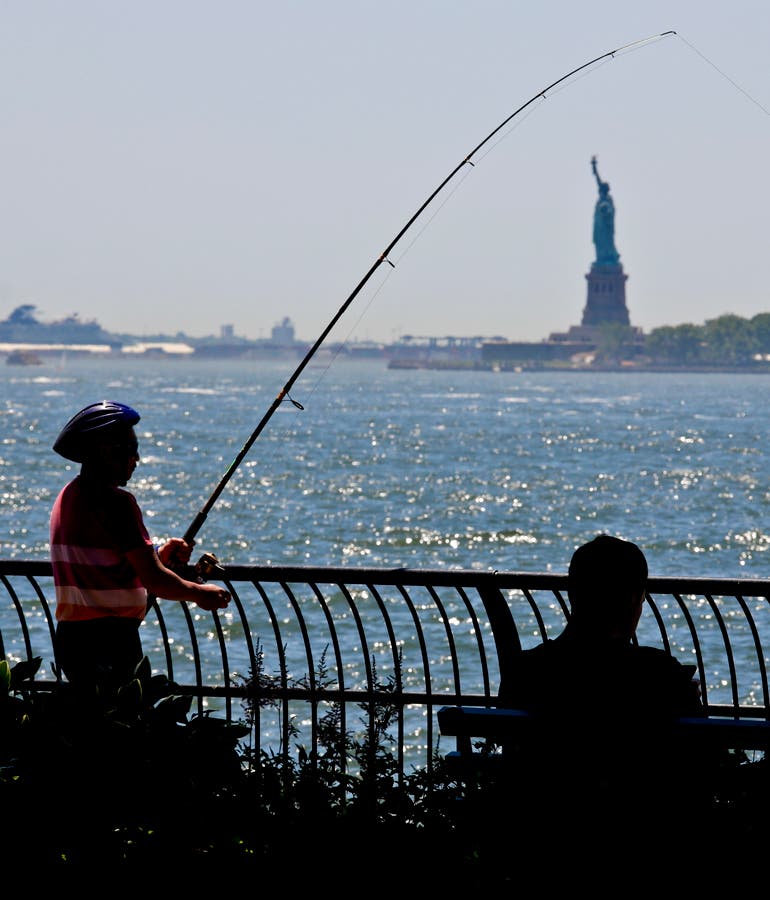
NEW YORK — The climate in New York City in 60 years could feel like Arkansas now if global warming pollution continues at the current pace. That's according to a report released Tuesday in the journal Nature Communications that tries to explain climate change.
"The children alive today, like my daughter who is 12, they're going to see a dramatic transformation of climate. It's already under way," said study lead author Matt Fitzpatrick, an ecology professor at the University of Maryland's Center for Environmental Sciences.
But if the world cuts back on its carbon dioxide emissions, peaking around 2040, then New York's climate can stay closer to home, feeling more like central Maryland.
Find out what's happening in New York Cityfor free with the latest updates from Patch.
Fitzpatrick looked at 12 different variables for 540 U.S. and Canadian cities under two climate change scenarios to find out what the future might feel like in a way a regular person might understand.
He averaged the climate results from 27 different computer models then found the current city that most resembles that futuristic scenario.
Find out what's happening in New York Cityfor free with the latest updates from Patch.
He put the results on a website that allows people to check how their nearest city could feel.
The 540 cities on average move 528 miles to the south climate-wise, if carbon emissions keep soaring. If the world cuts back, the cities move on average 319 miles (514 kilometers).
The city that moves the most is Wasilla, Alaska, which if emissions aren't cut back could feel like eastern Wisconsin, 11 degrees warmer in the summer. It's a change of about 2,720 miles.
"Visualizations that tap into our own lived experiences make a lot of sense," said Oregon State University climate scientist Kathie Dello, who wasn't part of the study and doesn't like what it shows for her region.
"Telling people in historically mild Portland that the climate in the late 21st century will be more like the hot Central Valley of California is jarring."
AP Photo/Bebeto Matthews, File