Community Corner
Green-Wood Cemetery's 478 Acres Host Research in Environmental Studies
Researchers from Cornell, Columbia and CUNY Awarded Grants to Study Trees, Wildlife, and Soil Science


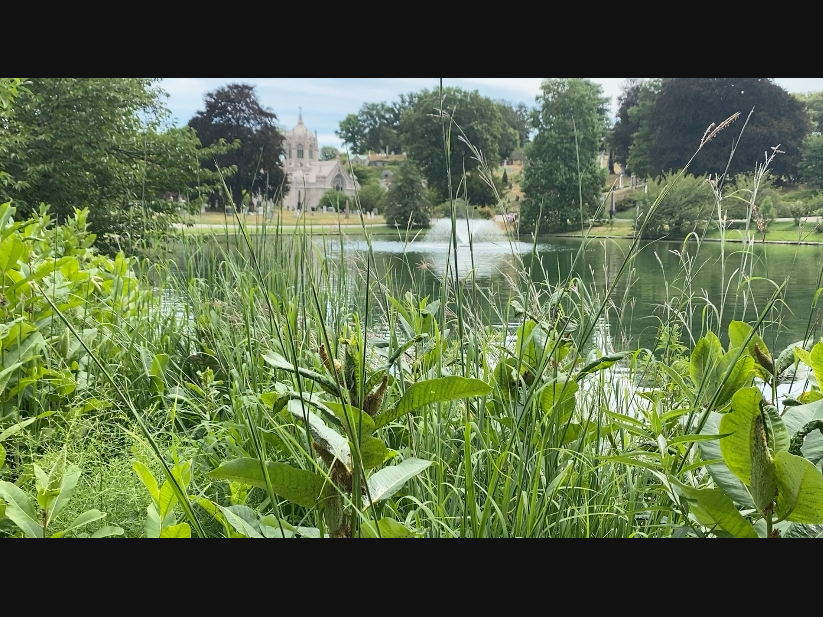


How does the soil beneath our feet affect climate change? What role do trees play in our shared cultural history? Why are there so many raccoons in New York City and how should we humans coexist with them?
These are just some of the questions being explored at The Green-Wood Cemetery by researchers from Cornell University, Columbia University, and CUNY’s Brooklyn College.
Throughout the year, three scholars are examining the intersections of urban green spaces and human influence at this National Historic Landmark, and their findings could transform how we experience and can protect our natural environment—from the soil in our own backyards to the trees towering above us.
Find out what's happening in New York Cityfor free with the latest updates from Patch.
Recognizing that its vast urban greenspace presents unique opportunities for environmental research, Green-Wood accepted applications from researchers in the New York City area in early 2022. Research proposals in the two fields of Urban & Environmental Studies and Human & Nature Interactions were sought. The grant program provided by Green-Wood to support emerging investigators in environmental research was launched after an internal benchmarking study that explored the work of other urban greenspaces nationwide.
Green-Wood’s goal was to underscore and augment its own institutional commitment to the environment by inviting scientists to utilize the historic landscape in their research. The application review committee included representatives from Brooklyn College, The School of Integrative Plant Science at Cornell University, Columbia University, The New School for Social Research, NYU Tandon School of Engineering, and SCAPE Landscape Architecture.
Find out what's happening in New York Cityfor free with the latest updates from Patch.
As one of New York City’s first, large green spaces, Green-Wood was an early inspiration for the creation of the city’s public parks. Today, Green-Wood’s arboretum (nationally accredited at the second highest level in the country) features a dynamic living collection of trees and shrubs, including 690 unique tree species and cultivars. Some of Green-Wood’s oldest specimens predate the Cemetery’s founding in 1838, and the collection continues to grow—with new plantings selected for climate adaptiveness, wildlife value, enhancement of the beauty of the landscape, and resilience.
Green-Wood Board Chair, Peter Davidson notes, “Green-Wood is an outstanding resource for environmental research. We're located in the largest city in the United States, and this landscape is the city’s largest private hub for hands-on work in environmental studies. We believe the implications for urban greenspaces nationwide will be profound.”
Joseph Charap, Director of Horticulture at Green-Wood, adds, “The Green-Wood Cemetery includes a number of dynamic ecosystems that allow us to explore and promote environmental stewardship. Our green space provides important habitat for wildlife and is an actively curated arboretum. Given the biodiversity here, Green-Wood is an ideal place for these researchers to further their research and make important contributions to the field of environmental study.”
Information about the 2023 grant application process will be available on the Green-Wood website later this year.
2022 Research Studies at Green-Wood
1. Soil Science and Climate Change
Professor of Biology at Brooklyn College and the CUNY Graduate Center, Theodore R. Muth is exploring the soil at Green-Wood. The study, titled “Disturbed and Diverse: Soil Microbial Communities of Green-Wood Cemetery,” examines the impact of land use and anthropogenic stress (including climate change) on the diversity and activity of soil.
“Rarely discussed outside academic circles, yet an essential factor in climate change is the soil beneath our feet. Soils recycle nutrients, absorb stormwater runoff, and promote plant and tree health. And importantly, soils store significant amounts of carbon. This study analyzes microbial communities in urban soils and how they are impacted by ground disturbances. The hope is that our findings can inform how we develop management practices that can support essential soil microbes and the crucial services they provide in healthy ecosystems.”
2. The Cultural, Spiritual, and Medicinal Importance of Trees and Plants
Researcher Ilexis Xochitl Chu-Jacoby is a Ph.D. candidate in Horticultural Biology at the School of Integrative Plant Science at Cornell University. They are documenting a full life story for Green-Wood’s iconic trees from historic, ecological, and ethnobotanical perspectives. Their study is titled “Ethnobotanical Urban Forestry at Green-Wood Cemetery”.
“I am examining when, where, and why a tree was planted, what role the tree plays in its surrounding ecosystem (both above and below ground), and for whom the tree holds cultural, spiritual, and medicinal importance, This cemetery's landscape is influenced by histories of Indigenous land tenure and dispossession, cultural and economic shifts in land management, and ecologies of death, mourning, and remembrance. These stories are present and active in the environment at Green-Wood, and I hope we can learn more about ourselves through learning about these trees."
3. Mesocarnivores (Raccoons) in New York City
Myles Davis, M.A. candidate in Ecology, Evolution, and Environmental Biology at Columbia University, is examining a subject familiar to New Yorkers. His study is titled “Mesocarnivore Distributions Across NYC Greenspaces: Raccoon Space Use in Green-Wood Cemetery and Prospect Park”.
“Surprisingly, with the ubiquity of raccoons in big cities, no study of this type has ever been conducted in an urban greenspace,” Myles Davis said. “This important work will help us understand how human-created environmental factors (like water sources and anthropogenic food sources) influence raccoon populations. It will also address the issues of disease transmission and property damage and understand how humans and raccoons can coexist in urban environments.”
The grant program has been made possible by The Green-Wood Cemetery’s 501c3 not-for-profit organization, the Green-Wood Historic Fund, which supports educational and cultural programs at the historic burial ground.
Established in 1838, The Green-Wood Cemetery, a National Historic Landmark, is recognized as one of the world’s most beautiful cemeteries. As the permanent residence of over 570,000 individuals, Green-Wood’s magnificent grounds, grand architecture, and world-class statuary have made it a destination for half a million visitors annually, including national and international tourists, New Yorkers, and Brooklynites. At the same time, Green-Wood is also an outdoor museum, an arboretum, and a repository of history. Throughout the year, it offers innovative programs in arts and culture, nature and the environment, education, workforce development, restoration, and research. For more information, please visit www.green-wood.com.