Politics & Government
Happy The Bronx Zoo Elephant Isn't A Person, Judges Rule
While a majority of state appeals judges found Happy is not illegally confined, one dissent called it "inherently unjust and inhumane."


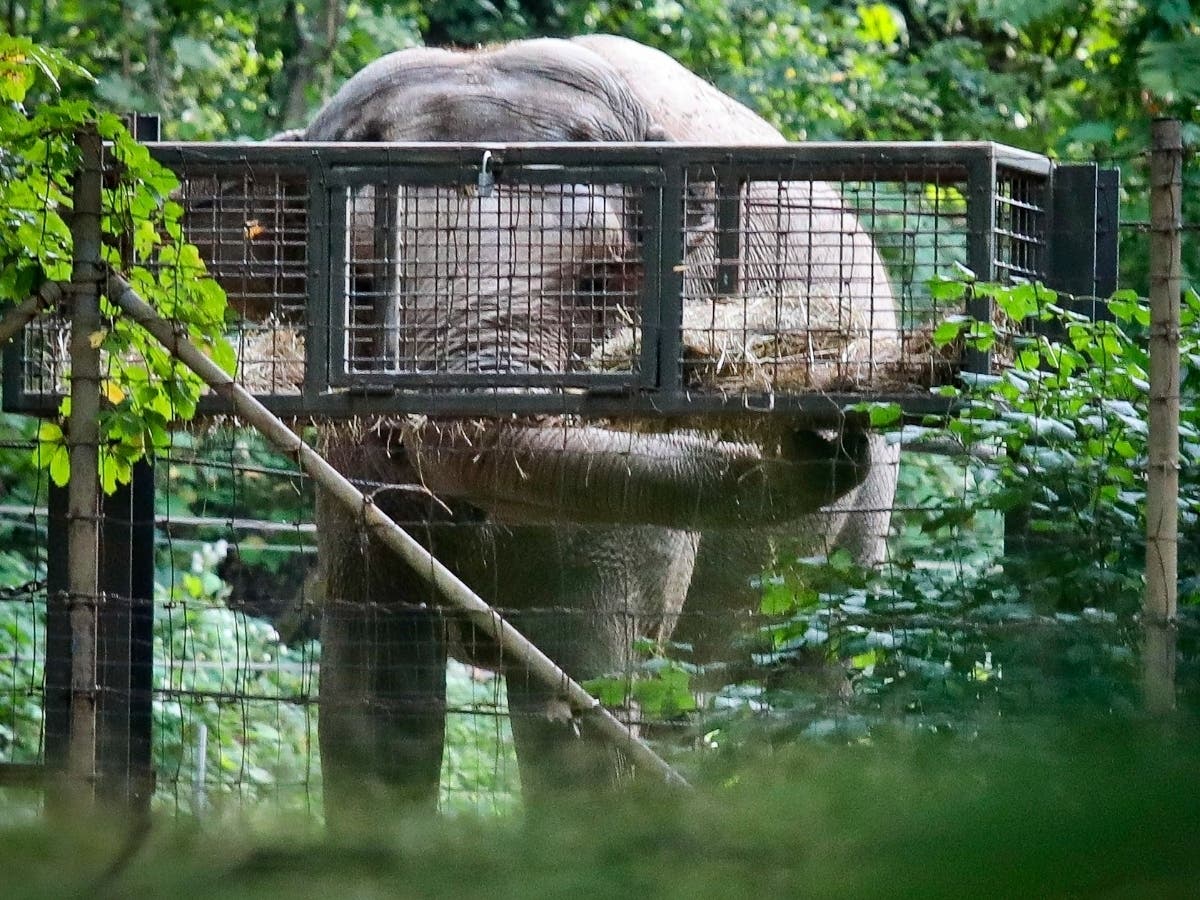
NEW YORK CITY — Animal advocates got some unhappy news from New York's top court: Happy, a Bronx Zoo elephant, is not a person.
Happy is a nonhuman animal who cannot be subjected to illegal detention, state Court of Appeals judges wrote in a 5-2 majority opinion released Tuesday.
The long-awaited decision is a setback for advocates with the Nonhuman Rights Project who hoped Happy's case could not only get the hapless pachyderm transferred to a bigger facility but also expand animal rights.
Find out what's happening in New York Cityfor free with the latest updates from Patch.
Their arguments did not completely fall on deaf ears. Chief Judge Janet DiFiore wrote in the majority opinion that “no one disputes that elephants are intelligent beings deserving of proper care and compassion." But DiFiore argued the writ of habeas corpus — which is used to challenge illegal confinement — is a right of human beings, not nonhuman animals.
"A determination that Happy, an elephant, may invoke habeas corpus to challenge her confinement at the Bronx Zoo — a confinement both authorized and, by all indications, compliant with state and federal statutory law and regulations — would have an enormous destabilizing impact on modern society," DiFiore wrote.
Find out what's happening in New York Cityfor free with the latest updates from Patch.
For those with memories as long as an elephant's, the case over Happy's rights has gone on for years.
Happy was captured in the wild in the early 1970s and brought from Asia to the United States as a 1-year-old calf. She arrived at the Bronx Zoo in 1977, but two of her close elephant companions died over the decades.
She has spent much of the past decade separated from the zoo's other elephant, Patty, with whom she shares a hostile relationship, according to court documents.
Advocates have argued in a yearslong spate of lawsuits that Happy's isolation, especially within a 1-acre zoo enclosure, is inhumane. They argued Happy is an autonomous and extraordinarily cognitively complex being with legal rights, even if she cannot advocate for herself, who should be moved to a 2,300-acre sanctuary.
The Bronx Zoo, in the case, argued Happy is a well-cared-for elephant “respected as the magnificent creature she is."
The two dissenting judges — Rowan Wilson and Jenny Rivera — argued that Happy has legal rights, in large part because of studies that show her complexity.
Wilson argued the question is not whether Happy is a "person" — she's an elephant, he wrote — but whether humans' understanding of certain animals shows they have rights of their own.
"She has self-awareness, social needs and empathy," Wilson wrote. "She also comes from a wild, highly social species whose bodies and minds are accustomed to traversing long distances to connect with others and to find food."
"Happy has established a prima facie case that her confinement at the Bronx Zoo stunts her needs in ways that cause suffering so great as to be deemed unjust," Wilson wrote.
Rivera was even more emphatic in her dissent.
Happy is an autonomous being held in an unnatural environment that keeps her from living as a wild elephant, "as she was meant to," Rivera wrote.
"Happy’s confinement by human beings has never been intended to benefit her but serves only to entertain and satisfy human curiosity, regardless of the loss of freedom to Happy," Rivera wrote. "Her captivity is inherently unjust and inhumane. It is an affront to a civilized society, and every day she remains a captive — a spectacle for humans — we, too, are diminished."
The Associated Press contributed to this report.
Get more local news delivered straight to your inbox. Sign up for free Patch newsletters and alerts.