Neighbor News
How the COVID-19 Pandemic Hastened Nursing Home’s Tech Adoption
"Tech has been a tremendous help," says The Allure Group's founder, Joel Landau.

Where technology is concerned, The Allure Group, a network of six New York City-based skilled nursing facilities, has always tried to stay ahead of the curve. That focus on innovation has enabled the company to stay on top of things during the coronavirus pandemic, and figures to make a considerable difference in The Allure Group’s future as well.
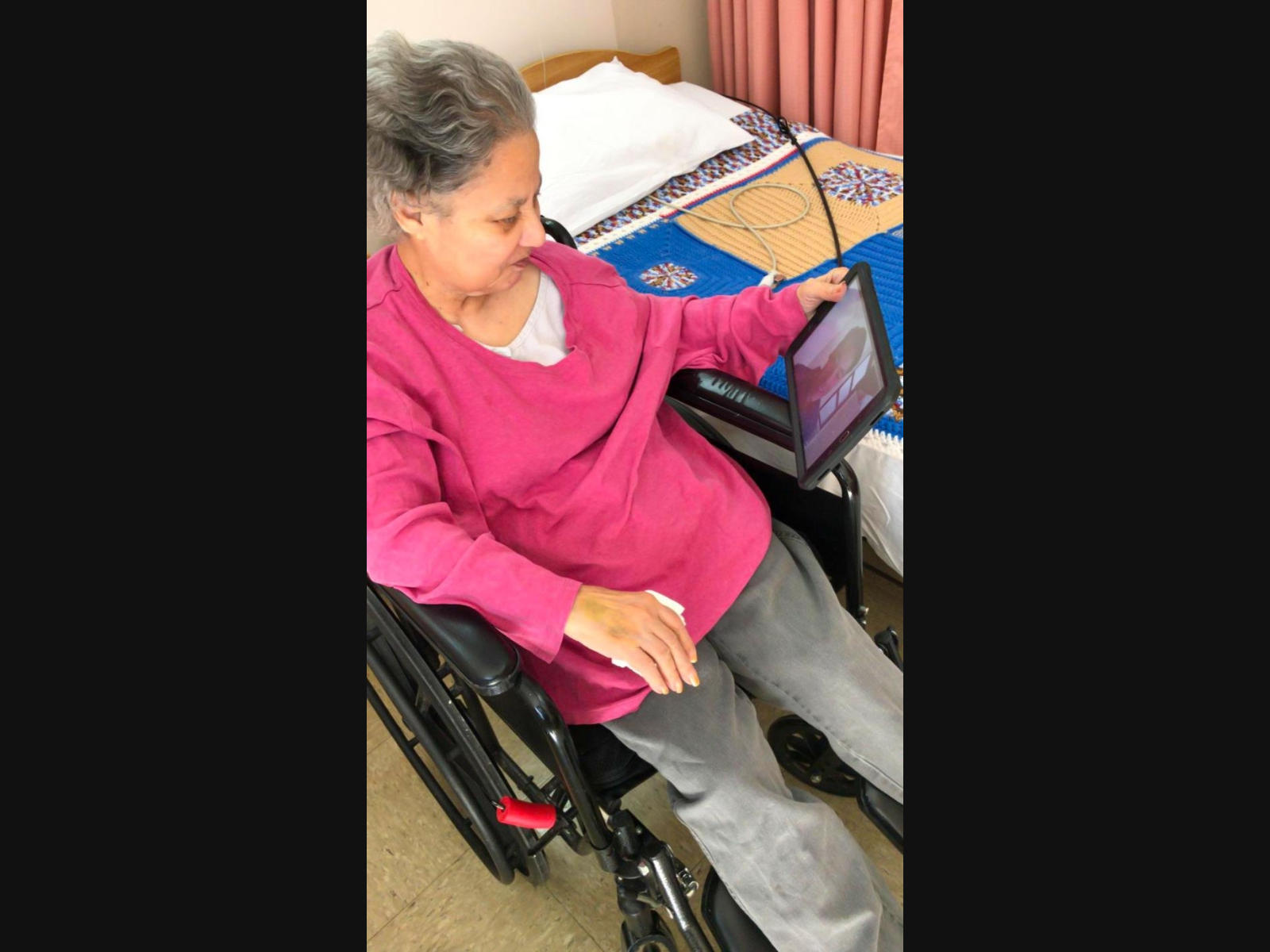
As chairman/founder Joel Landau pointed out, The Allure Group adopted PadInMotion technology in 2019, a decision that proved fortuitous when the crisis struck. A Samsung tablet was placed at every bedside, and while residents at first used them for entertainment and stress relief, they became something of a lifeline when governmental limits on visitation were put into effect.
“They are now helping them stay in touch with their loved ones over audio and video chats,” Joel Landau told McKnight’s Senior Living.
That is as healthy as it is heartening, given that social isolation has many adverse implications for the elderly, among them an increased risk of premature death, heart disease, dementia and depression.
Find out what's happening in New York Cityfor free with the latest updates from Patch.
Other innovations at The Allure Group have proven invaluable, not the least of which is EarlySense, a remote monitoring system that enables staff to keep tabs on patients’ vital signs, as well as their turning and positioning.
“In effect, it allows staff to be in more than one place at a time, as they can keep tabs on patients while performing other tasks,” Joel Landau told McKnight’s. “We had this installed pre-crisis, but given recent staffing shortages at many facilities, it has been a tremendous help.”
Find out what's happening in New York Cityfor free with the latest updates from Patch.
A more recent adoption was that of Vis a Vis, a hand-held device that allows patients to contact healthcare professionals following discharge, if necessary. Also, a call tree gives family members direct contact with staff about their loved one’s care, and rehabilitative robotics remain in use, though somewhat more judiciously since the outbreak.
The Allure Group is unique among skilled nursing facilities, which according to McKnight’s have been slow to adopt technology, except for telehealth, telemonitoring and medication monitoring platforms. But the crisis has resulted in increased interest in all manner of gadgetry, including social interaction tools and virtual assistants like Amazon’s Alexa and Apple’s Siri.
As Majd Alwan, Ph.D., LeadingAge executive director for the Center for Aging Services Technologies (CAST), told McKnight’s, “We’re at an inflection point. I don’t see this going back to ‘normal.’ ”
Neither does Lisa McCracken, director of senior living research and development for Ziegler. Tech has in her opinion “advanced more in the last two months than in the last several years.”
And, she added, seniors are “adapting really well and finding they may never go back.”
Again, that’s always been the goal of Joel Landau and The Allure Group’s COO Melissa Powell. They have tapped into the latest tech trends for years, and as well as that has served them on a day-to-day basis, it has served them even better now.
“While this pandemic has been uniquely difficult for all healthcare and eldercare facilities,” Joel Landau told McKnight’s, “having cutting-edge technology in place has helped us weather this most challenging time to the best of our abilities. If the crisis encourages a wider-spread adoption of life-saving technology, it’s certainly a silver lining in an otherwise catastrophic event.”