Community Corner
Little Old New York: The Maiden Lane
This lower Manhattan thoroughfare harks back to the 1600s. It was a path taken by the Screeching Woman of Maiden Lane.


The Maiden’s Path (‘T Maagde Paatje) originally traveled through a valley now occupied by Maiden Lane in lower Manhattan. The path followed a rivulet that journeyed to the East River. The stream, fed by a spring, tumbled over rocks and formed a series of pools.
One good-sized pond was situated where William Street crosses this lane. The entire area once was one of the most picturesque locations in New York City.
Maiden Lane received its name from the Dutch, whose daughters walked through the fields to wash the family linen in the spring water and on the flat, smooth stones. The adjacent grassy slopes were used to bleach and dry the linen.
As the city evolved, so did this once scenic area. The pond probably was the reason that the tan pits eventually were located here and extended on the north side of the lane between Smit (William) Street and Rutgers Hill (Gold Street). The hill was named for the Rutgers brew house that was built by Anthony Rutgers. It was used as a British storehouse when the army occupied the city during the Revolutionary War.
After the war, Maiden Lane became a leading business street and its buildings furnished lodging and homes for cabinet members and other government officials. Thomas Jefferson lived between William Street and
Nassau Street. The United States Gazette, a leading voice for the new government, was located nearby.
Decades after the pits were removed and the pond was filled, the intersection at Maiden Lane became wetlands that could only be crossed by walking on a footbridge. During the years leading up to 1820,
residents called for a new bridge of flat stones to replace the footbridge.
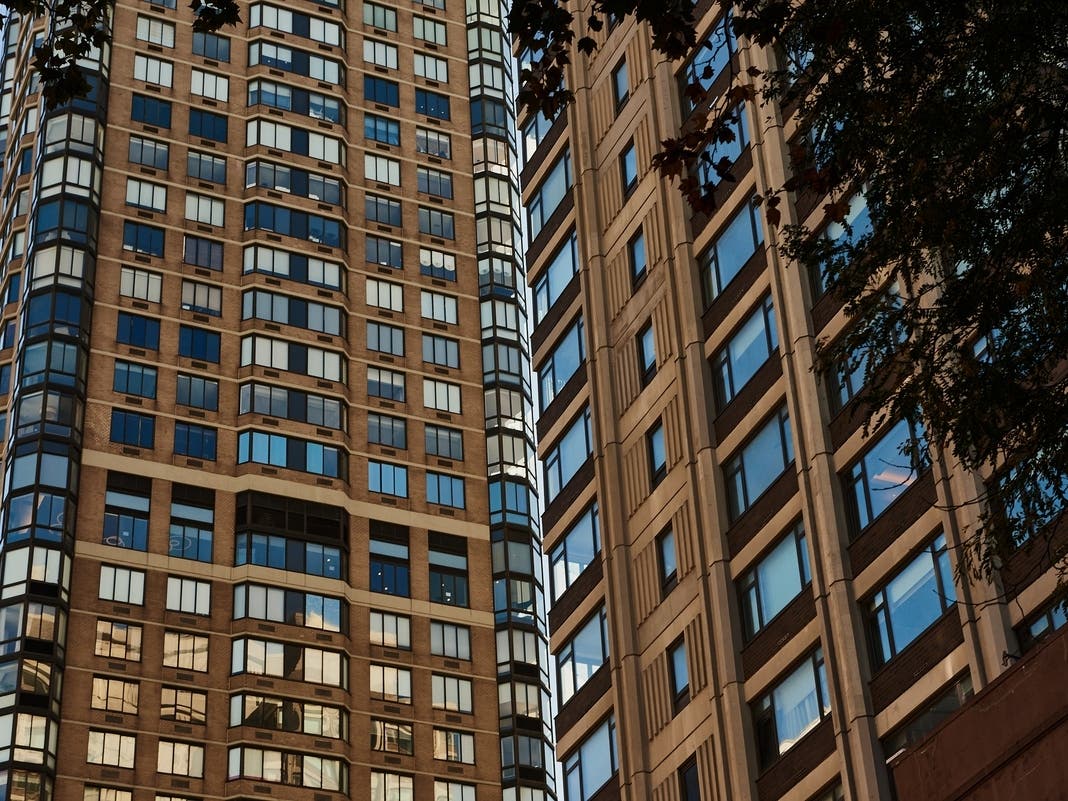
Maiden Lane continues its east-west path today but it is now dominated by skyscrapers in the city’s financial district. It ends at South Street near the South Street Seaport, a road created during the late 1700s on landfill.
Residents of Maiden Lane
Besides officials of the new government, Maiden Lane also was the home to some very interesting characters mostly lost to history.
Captain Lourens Cornelissen Vanderwel built a home here during 1691. He described himself as the “Skipper under God of the ship the Angel Gabriel.” He failed to improve his land and forfeited a portion of it to Indian trader Sander Leendertsen.
Leendertsen’s real name was Alexander “Sandy” Lindesay of the Glen, a Scotsman descended from Sir David Lindesay, a 16th century poet. He built his house on what had been the skipper’s garden and then left New
Amsterdam to become one of the pioneers of a new settlement known as Schenectady. Remains of his well are believed to exist under Pearl Street.
Another resident was the Screeching Woman of Maiden Lane. Before street lighting, Maiden Lane was a very dark area of the city. Stories and rumors were the buzz of neighbors, including that of an evil terror
present at night that frightened residents.
A shriek of a night-strolling woman paralyzed those who heard it and one contemporary wrote: “…she was a very tall figure of masculine dimensions, who used to appear in flowing mantle of pure white at midnight, and stroll down Maiden Lane.” Then “one Capt. Willet Taylor paced Maiden Lane alone at midnight, wrapped like Hamlet in his ‘inky cloak,’ with oaken staff beneath. Bye and bye, he heard the sprite full-tilt behind him, intending to pass him, but being prepared, he dealt out such a passing blow as made ‘the bones and nerves to feel,’ and thus exposed a crafty man.”
The “sprite,” or “apparition,” actually was created by a little man with a white cloth draped over a tall wooden frame.