Schools
Mental Health Program Targets NYC School Areas Hit By Coronavirus
Trauma-informed counseling is coming to 350 schools in neighborhoods where the pandemic hit the hardest, said First Lady Chirlane McCray.


NEW YORK CITY — Children carry more than their backpacks into New York City’s schools, especially amid the traumatic coronavirus pandemic.
That was the message First Lady Chirlane McCray imparted Thursday as she helped unveil twin programs aiming to expand mental health access in the city’s schools.
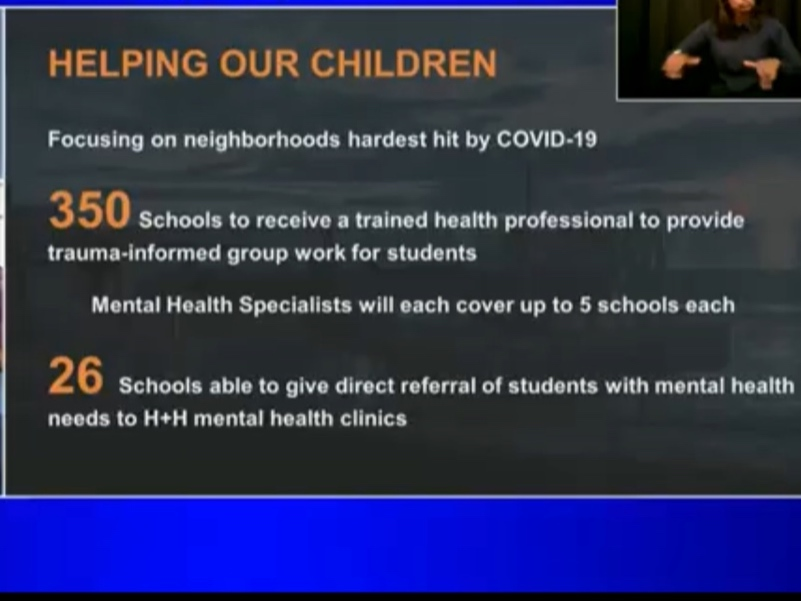
One program will bring mental health workers trained in trauma-informed group work into 350 schools in neighborhoods hardest hit by the virus. The other will provide 26 schools with direct links to outpatient mental health clinics.
Find out what's happening in New York Cityfor free with the latest updates from Patch.
“Someone will be there for these students as long as they need it,” McCray said. “Think about what this means for our children, their parents, or caregivers, the teachers, and the classroom to have that kind of emotional safety net during this difficult time.”
The dual programs in part build upon existing programs in ThriveNYC — the at-times controversial mental health initiative run spearheaded by McCray — and a new partnership between NYC Health + Hospitals and the city’s public schools.
Find out what's happening in New York Cityfor free with the latest updates from Patch.
The trauma program will begin in late October, with specialists stationed at up to five schools providing direct support and other mental health education, according to a release.
The mental health clinic program — Pathways to Care — run with Health + Hospitals will speed up referrals and connections to community-based services for students in neighborhoods with high levels of trauma and loss from the pandemic, the release states.
“Children who have experienced trauma can join a group therapy session with others who have had same or similar experiences,” McCray said. “Children who have suffered through their parent’s loss of livelihood, or the threat of eviction can talk about it with a specialist who facilitates the conversation and keeps coming back, building a relationship with these young people. And when a student has lost a mother, a father, or another loved one to this virus, they can be immediately referred by a teacher, a principal, or another school staffer for ongoing therapy and treatment.”
Get more local news delivered straight to your inbox. Sign up for free Patch newsletters and alerts.