Politics & Government
New Flood Barrier Takes Shape Along NYC Waterfront
Phase one raises part of The Battery waterfront and advances flood protection for residents, jobs and businesses.


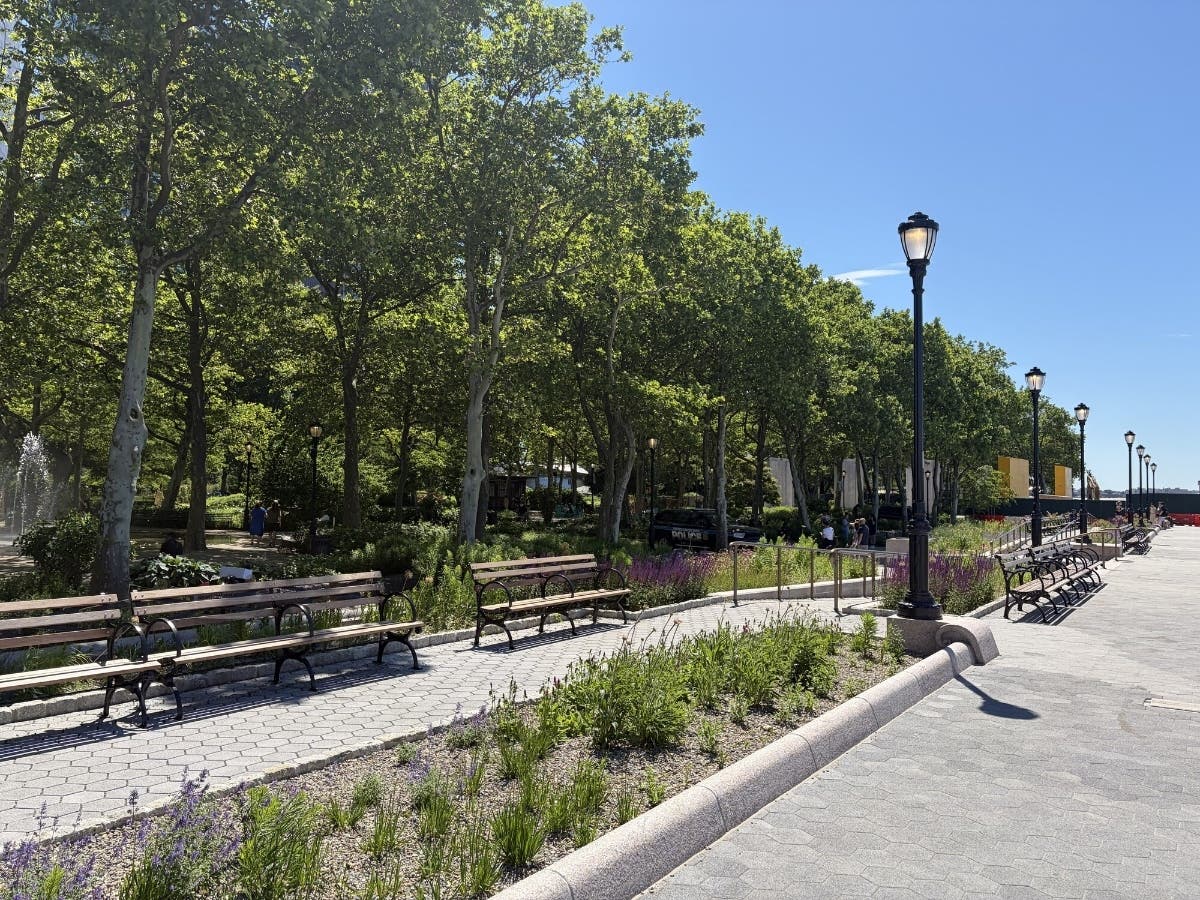
NEW YORK, NY — City officials have completed the first phase of the $200 million Battery Coastal Resilience project, a major effort to protect Lower Manhattan from rising sea levels and increasingly severe coastal storms.
The project rebuilt and elevated a section of the historic wharf promenade at The Battery, strengthening flood defenses along one of New York City's most visited waterfront parks. The work forms part of the City's broader Lower Manhattan Coastal Resiliency strategy, a network of projects backed by more than $2.7 billion in capital investments.
Once completed, the Lower Manhattan resiliency program will help protect more than 100,000 residents, 300,000 jobs and 12,000 businesses from coastal flooding and storm surge.
Find out what's happening in New York Cityfor free with the latest updates from Patch.
"The Battery is one of the most treasured public spaces in New York City, but it is also on the front lines of the climate crisis," Mayor Zohran Mamdani said. "We cannot treat climate resilience as something we can put off until tomorrow."
The Battery sits at the southern tip of Manhattan, where projections show rising sea levels and stronger storms will increase flood risks throughout the century.
Find out what's happening in New York Cityfor free with the latest updates from Patch.
The completed section of the project raises portions of the waterfront while preserving public access to New York Harbor.
Officials said the project also reduced its environmental footprint during construction.
Contractors used reclaimed and low-carbon materials, including granite, wood and bronze, and transported materials by barge rather than truck whenever possible.
The approach reduced embodied carbon by more than 50 percent and eliminated more than 2,000 truck trips through Lower Manhattan, cutting transportation-related carbon emissions by more than 90 percent, according to city officials.
The second and final phase is scheduled for completion in 2027. Crews will reconstruct and elevate the remaining portion of the wharf, creating a continuous line of waterfront protection along the park.
Officials said the full project will support approximately 400 construction jobs and add new seating, lighting, gardens and accessibility improvements.
Visitors will continue to have access to landmarks throughout the park, including the Gardens of Remembrance, which honors those who died in the Sept. 11, 2001, terrorist attacks and survivors who escaped Lower Manhattan by ferry.
When the final phase is complete, the reconstructed waterfront will provide expanded public space and panoramic views of New York Harbor while serving as a key piece of the city's long-term coastal defense system.
Get more local news delivered straight to your inbox. Sign up for free Patch newsletters and alerts.