Neighbor News
New York Times Ignores Basic Grammar with Fake Headline
The New York Times made front page news with a fake headline that could never be grammatically correct.

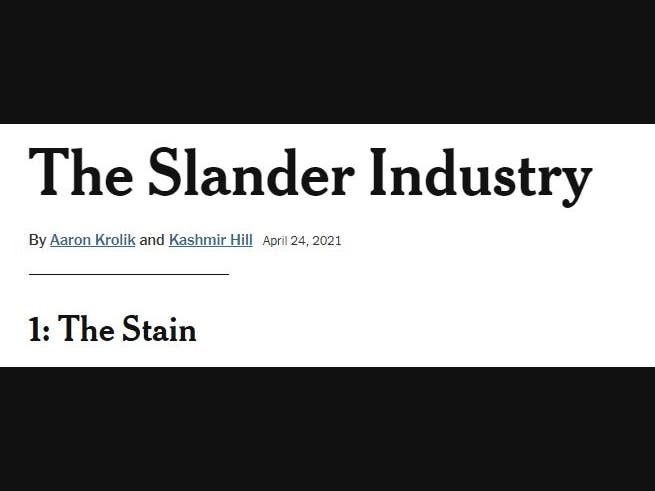
On April 24, 2021 The New York Times published a fake headline that the editorial staff turned into font page news despite being technically incorrect. The headline read "The Slander Industry" and focused entirely on written statements made online. Not only is it not technically possible for written statements to be considered slander, but the article also presented common knowledge as if it were a "dirty secret." On top of that it failed to mention efforts by some of the sites to educate users so that they don't take what they read literally at face value.
Libel v. Slander
Merriam-Webster defines "slander" in two parts "1 - the utterance of false charges or misrepresentations which defame and damage another's reputation" and "2 - a false and defamatory oral statement about a person." (see Merriam-Webster). Merriam-Webster defines "libel" in several ways including "a written statement in which a plaintiff in certain courts sets forth the cause of action or the relief sought" and " defamation of a person by written or representational means" (see Merriam-Webster). The broad dictionary definition of libel does open the door for cases involving oral statements, but the definition of slander does not open the door for its use when describing written statements.
Find out what's happening in New York Cityfor free with the latest updates from Patch.
Legal authorities draw a more clear and distinct line which clearly separates slander from libel based on whether the statement is spoken or written. Nolo describes the difference well, "" (see NOLO).
From those definitions one can easily conclude that false statements made online could not possibly be considered slander. If proven false they would be considered libel. One could arguably call an industry that intentionally trafficked in such statements a "libel industry," but they could never accurately call it a "slander industry." For those reasons the New York Times headline "The Slander Industry" is technically incorrect and what follows should not be taken seriously.
Find out what's happening in New York Cityfor free with the latest updates from Patch.
"Dirty Secret" in Plain View
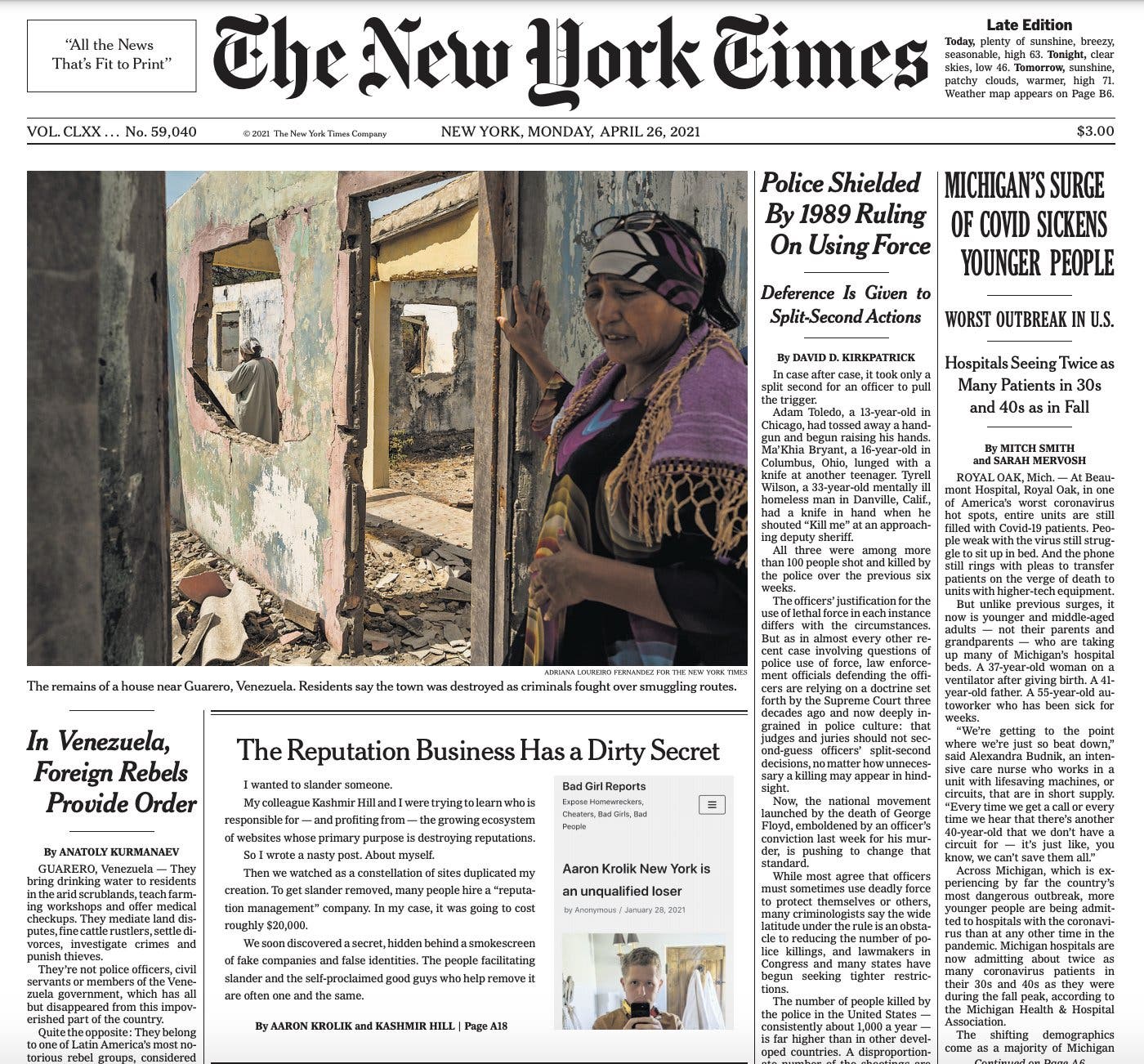
The article was featured on the front page of the print version of the The New York Times under the headline "The Reputation Business Has a Dirty Secret" perhaps in an effort to make the improper use of the word "slander" less obvious. This headline also has factual problems. While it is true that some reputation management companies try to hide their relationships with the gripe sites that they work with and some are owned by the same people, many of those relationships are transparent. The case of one webmaster profiled by the times is a good example of one such transparent relationship.
Cyrus Sullivan of STDCarriers.com and FoulSpeakers.com has been in the gripe site business since 2008, but spent most of those years in federal prison after sending a drunken death threat to someone via the internet in 2012. Earlier that year he launched a reputation management service for his websites which provides people with a variety of services including no index meta tags which direct search engines not to include specific pages in their results. Often overlooked is the personalized services he provides on top of that. Services like the recovery plan which involves him putting himself in clients' shoes and providing them with the knowledge they need to take control of their search results with positive assets under their control. What he has never done is hide the fact that he owns both the reputation service and the gripe sites. In 2012, he explained how the reputation service works on the Anderson Show.
If his ownership of both the websites hosting the content and the reputation management service were a secret he would not have told Anderson Cooper.
The website cited by Sullivan as an example of a similar service, RipoffReport.com, is another example of a gripe site that also runs a reputation management business. Ripoff Report has run its Corporate Advocacy Program for over a decade. Another example is Pissed Consumer which offers a Legitimacy Verification Program at a starting rate of $1,200. Like Sullivan's business, similar businesses are common and perfectly legal.
Some have argued that by hosting his reputation management service on a separate site that doing so could mislead people into thinking that the reputation business is independent of the source website. That is not Sullivan's intention. He simply realized it would be more efficient to build just one site for the reputation business than it would be to create a new section on every site he uses it on.
Gripe Site Reputation Management Relationships
In many cases the gripe sites and reputation management companies are not one and the same. Sullivan has worked off and on with two of the companies mentioned in the article (247Removal.com and RemoveReports.com). Both of those relationships were established in a similar fashion. People from the companies reached out to Sullivan on behalf of their customers and Sullivan agreed to work with them. They had no prior relationship whatsoever.
Third party reputation management companies work by developing relationships with sites that host content hoping that they can help their clients remove as many negative articles as possible. That relationship can become as cozy as it is mutually beneficial, but often the reputation companies and the sites hosting the content are in fact owned by different people. When they are owned by the same people that is typically beneficial for their clients since they can actually guarantee results.
Efforts to Mitigate the Spread of False Information
The article quoted Sullivan as saying, "Teach children not to talk to strangers, then teach them not to believe what they read on the internet." Other than that it failed to properly document Sullivan's efforts to mitigate the impact of false information found on his sites. On Foul Speakers he created the Dumbass Test which teaches users not to believe what they read on the website. He also displays the phrase "Don’t Believe What You Read on the Internet!" on the top of every page. The STD Carriers site has a giant disclaimer on every report directing people to click a button to avoid misleading impressions. He is not required to do any of those things. He does it because he wants people to be able to speak on the internet without other people forming conclusions based on what they say.
Imagine a world where only those capable of proving their accusations are allowed to post them online. How could movements like #metoo exist if people could not say what they know to be true in their hearts without getting silenced for lack of evidence? They could not exist. Freedom of speech is far more important than how some people might react inappropriately to words. People need to be taught not to use what they read online as the basis for conclusions without doing more work to verify its accuracy. Baseless claims will always have a usefulness to society because they give people a heads up they might not otherwise have, but with them comes the responsibility of the individual not react inappropriately. The true problem exposed by The New York Times is a failure by society to react appropriately to what they read online. Only when society fixes that problem will negative information stop having the impact complained about while at the same time protecting the right to speak.
Learn more: The "Slander" Industry