Neighbor News
Pace U Professor Receives NIH Grant to Study Therapy Resistance
NIH Grant to Study Therapy Resistance in Breast Cancer and Melanoma
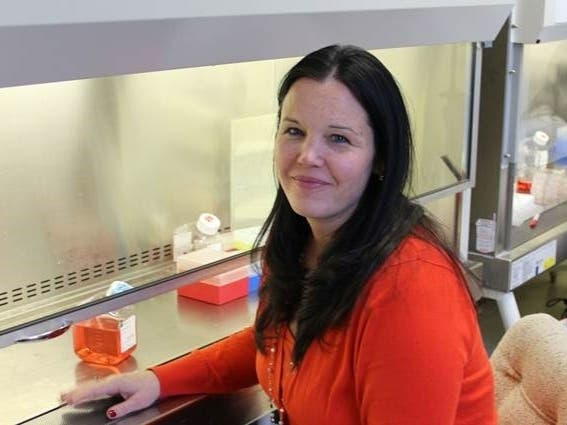
Pace University Professor of Biology Nancy Krucher, PhD, has received a three-year $400,241 grant from the National Cancer Institute (NCI) through the National Institutes of Health (NIH) to study new methods to combat cancer cell development of resistance to targeted treatments.
“Cancer is a major health concern in our country and throughout the world,” said Professor Krucher. “Currently, much of cancer research focuses on identifying specific mutations or abnormalities in tumor cells and creating drugs that target them. These targeted therapies have exhibited a great deal of success in some cancer types. Unfortunately, while targeted therapies usually work for a few months or a few years, cancer cells often develop resistance to these agents.”
Targeted therapies—which involve certain drugs used to specifically target the ways in which cancer cells grow, divide, and spread—are becoming more common in cancer treatment. However, cancer cells can acquire resistance to the targeted agent, making the treatment less effective. ATP-citrate lyase (ACLY) is a critical enzyme in cancer cell growth that can be activated as a response to targeted therapies, particularly in treatment of breast cancer and melanoma, often resulting in poor prognosis.
Find out what's happening in New York Cityfor free with the latest updates from Patch.
In February 2020, the FDA approved a new ACLY inhibitor, and another was recently developed. In this project, these agents are predicted to have anti-cancer activity. Krucher’s research aims to investigate the hypothesis that targeting ACLY with these inhibitors can reverse resistance in breast cancer and melanoma.
Because the newly developed ACLY inhibitors that will be used in this study have largely not been tested on cancer cells to date, Krucher hopes her work can provide new insight for cancer treatment, including the development of novel drug combination regimens. Additionally, Krucher’s work will employ an in vivo model of cancer metastasis in melanoma as well as three-dimensional cancer cell cultures, an innovative and effective approach to studying the physiological tumor environment.
Find out what's happening in New York Cityfor free with the latest updates from Patch.
Undergraduate biology students will also be closely involved in this research, carrying out a majority of the experiments outlined in the study, helping prepare them for careers in the biomedical research workforce.
“Professor Krucher is doing incredibly important work in the field of cancer research, an area of biomedicine that touches so many lives around the world,” said Tresmaine R. Grimes, PhD, dean of the Dyson College of Arts and Sciences and School of Education. “Through this grant, Professor Krucher and our biology students have the opportunity to uncover critical information that could improve the effectiveness of these vital treatments.”