Neighbor News
Pace U Researchers Champion Call to Protect Scientific Diversity
International scientists call on leadership to actively support a diversity, equity, and inclusion focus into all COVID-19-recovery efforts
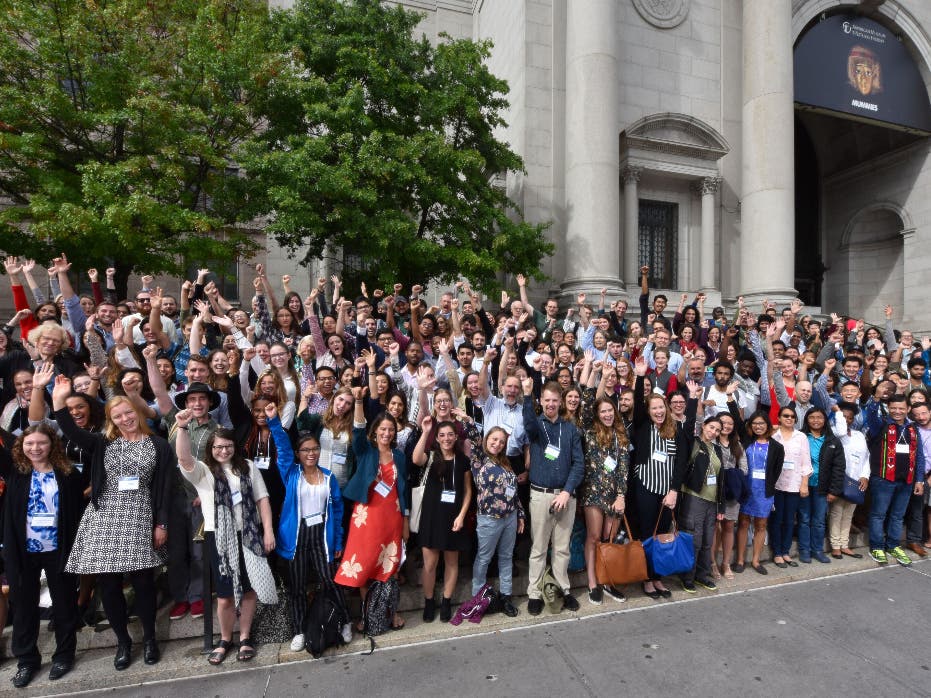
A team of international scientists coordinated by Pace University and the University of Vienna in an article published recently in Nature Ecology & Evolution called for a collective effort by the entire scientific community, especially those in leadership positions, to actively support the retention and diversity of early-career scientists during and after the COVID-19 pandemic.
The article’s authors emphasize the consequences this crisis will have on early-career scientists, especially those from communities historically underrepresented in the fields of environmental sciences, including minorities, women, researchers from the Global South, and persons with disabilities. This is particularly relevant in the current moment, as longstanding racial health and social inequities in the United States lead to worse health outcomes for African Americans and other minority groups during epidemics, placing additional burdens on scientists from these communities as they grapple with additional emotional and financial stress.
“It is important that we keep in mind the life perspective and diversity of scientists,” says Bea Maas, PhD, University of Vienna, lead author of the article.
Find out what's happening in New York Cityfor free with the latest updates from Patch.
The COVID-19 pandemic poses major challenges for all sectors of society, including scientists faced with abrupt disruptions and redirections of research and higher education in general.
“Coping with the current and long-term consequences of the pandemic for underrepresented communities requires courageous and communal action from the entire scientific community,” says co-author Anne Toomey, PhD, Dyson College of Arts and Sciences at Pace University.
Find out what's happening in New York Cityfor free with the latest updates from Patch.
The team identifies key actions for scientific workplaces, communities and broader policy to show clearly what can be done to support early-career scientists during and after the crisis.
“Our collective recovery in the scientific community to this crisis will depend on maintaining and supporting a diverse membership,” says co-author Monica Palta, PhD, Dyson College of Arts and Sciences at Pace University.
The authors emphasize that overcoming the acute and long-term challenges of this pandemic calls for a strong international scientific community that understands that diversity and equity are key factors in promoting healthy, resilient ecosystems as the cornerstones of human health and well-being.
Read the full article here.
Questions should be addressed to the lead author, Bea Maas (beamaas@gmx.at).
About Dyson College: Pace University’s liberal arts college, Dyson College offers more than 50 programs, spanning the arts and humanities, natural sciences, social sciences, and pre-professional programs (including pre-medicine, pre-veterinary, and pre-law), as well as many courses that fulfil core curriculum requirements. The College offers access to numerous opportunities for internships, cooperative education and other hands-on learning experiences that complement in-class learning in preparing graduates for career and graduate/professional education choices. www.pace.edu/dyson
About Pace University: Pace University has a proud history of preparing its diverse student body for a lifetime of professional success as a result of its unique program that combines rigorous academics and real-world experiences. Pace is ranked the #1 private, four-year college in the nation for upward economic mobility by Harvard University’s Opportunity Insights, evidence of the transformative education the University provides. From its beginnings as an accounting school in 1906, Pace has grown to three campuses, enrolling 13,000 students in bachelor’s, master’s, and doctoral programs in more than 150 majors and programs, across a range of disciplines: arts, sciences, business, health care, technology, law, education, and more. The university also has one of the most competitive performing arts programs in the country. Pace has a signature, newly renovated campus in New York City, located in the heart of vibrant Lower Manhattan, next to Wall Street and City Hall, and two campuses in Westchester County, New York: a 200-acre picturesque Pleasantville Campus and a Law School in White Plains. Follow us on Twitter at @PaceUnews or on our website: http://www.pace.edu/news