Home & Garden
Just How Bad are Interstate Roads and Bridges in New York?
Conditions are among the worst in the country, says a report issued on the 60th anniversary of the Interstate highway system.


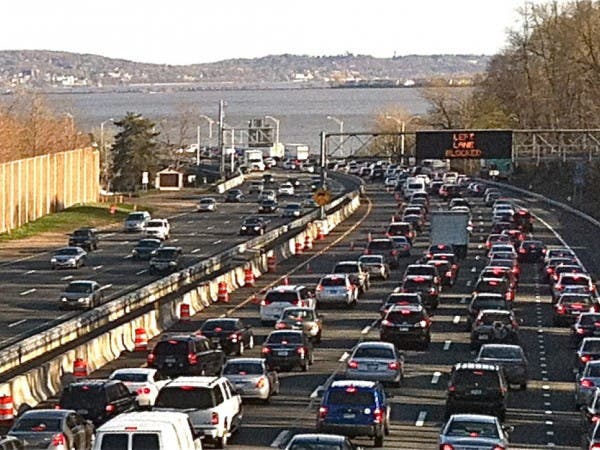
Conditions on New York's roads and bridges are among the most deteriorated in the United States.
A new report by TRIP, a Washington, DC-based national transportation organization, says that 8 percent of New York’s Interstate bridges are structurally deficient, the fourth highest rate in the nation.
Find out what's happening in New Cityfor free with the latest updates from Patch.
Seventeen percent of pavement on New York’s Interstate system is in poor or mediocre condition -- and that's the 10th highest rate in the nation.
The TRIP report, The Interstate Highway System Turns 60: Challenges to Its Ability to Continue to Save Lives, Time and Money was issued as the U.S. marks the 60th anniversary of the interstate highway system this week. The organization says the country’s overwhelmed interstates face increasing congestion, unprecedented levels of travel – particularly by large trucks – and not enough money to make needed repairs and improvements.
Find out what's happening in New Cityfor free with the latest updates from Patch.
"These latest figures from TRIP are beyond disappointing and should serve as a wakeup call to policy makers at all levels of government," said Heather C. Briccetti, Esq., president and CEO of The Business Council of New York State, Inc. "Thankfully, after years of hard work by AGC, The Business Council and our other partners in the Rebuild NY coalition, this year's state budget did include funding parity for upstate roads and bridges. But it's not enough. Statistics show that every dollar spent on infrastructure investment returns three to the overall economy. We need to increase our infrastructure investment and we need to do it now."
In New York, 35 percent of the state's urban Interstates are congested during peak travel times. That's nothing compared to California, which tops the rankings at 85 percent. Or to our neighbors: peak travel time means congestion on 73 percent of New Jersey's Interstates and 60 percent of Connecticut's, according to TRIP.
TRIP officials said the design of the Interstate makes it more than twice as safe to travel on as all other roadways.
In New York, they said, the fatality rate on non-Interstates was more than three times higher than the Interstate fatality rate – 0.27 versus 0.94. TRIP estimates that the Interstate Highway System saved 5,359 lives nationwide in 2014 and 182 lives in New York. This estimate is based on the number of additional fatalities that would have occurred had Interstate traffic been carried by other major roadways, which often lack the safety features common to Interstate routes.
And people are increasingly out on the highways, according to the report.
Nationally, the average annual amount of travel per Interstate lane mile increased by 11 percent from 2000 to 2014, according to the report. Interstates carry one-quarter of all the nation’s traffic, and truck traffic on Interstates is growing at twice the rate of other vehicles.
But as usage is growing, funding to maintain the Interstate is falling far behind.
TRIP reports that the current backlog of needed improvements to the Interstate Highway System, as estimated by the U.S. Department of Transportation, is $189 billion. But the nation’s current transportation investment is less than two-thirds (61 percent) of the amount needed to keep Interstates in good condition and make the improvements necessary to meet the nation’s growing need for personal and commercial mobility.
The report writers predict that by 2020 the annual shortfall into the nation’s Highway Trust Fund will be $16 billion annually.
PHOTO: Congestion on the Tappan Zee Bridge/Bill Demarest
Get more local news delivered straight to your inbox. Sign up for free Patch newsletters and alerts.