Community Corner
South Mountain Road Was A Home, Artistic Haven For Eva Zeisel
Internationally recognized craftsperson, artist lived in New City for nearly 60 years until her death at age 105.


Eva Zeisel was amazing. For me, that’s the word that fits the work and life of this 105-year old South Mountain Road-based designer who died on December 30, 2011.
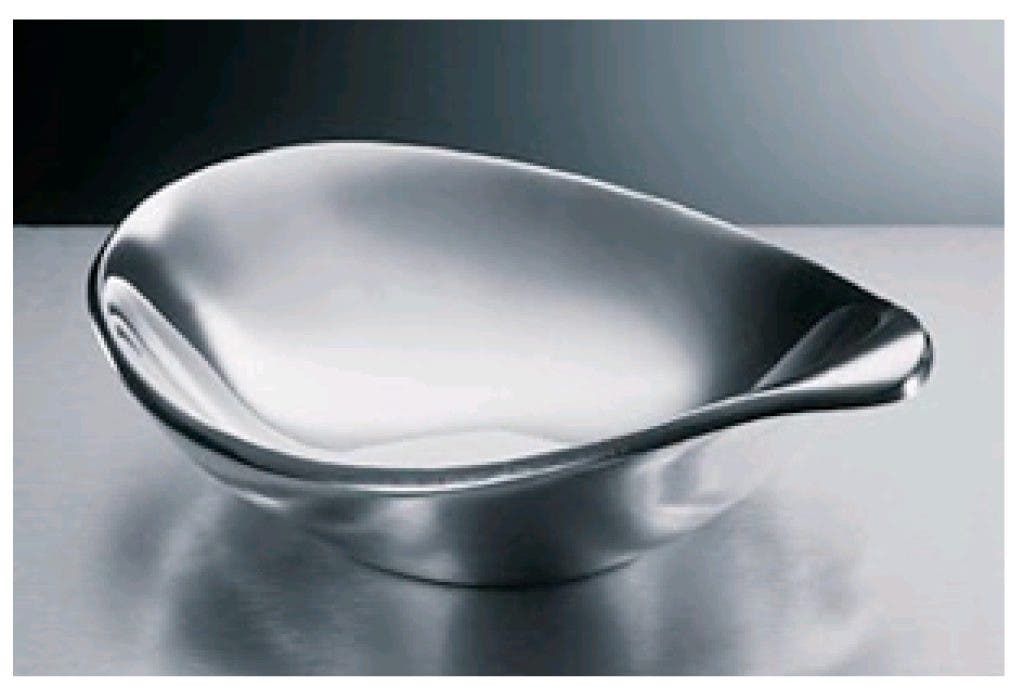
Eva Zeisel created household items: plates, teacups, sugar bowls and cream pitchers. Chairs and teakettles. Vases, lamps and bowls. She was a noted commercial designer who crossed the often indefinable line between craftsperson and artist.
Find out what's happening in New Cityfor free with the latest updates from Patch.
You can see Eva Zeisel’s work in the British Museum and the Victoria and Albert Museum in London, the Museum of Modern Art (MoMA) and the Metropolitan Museum of Art in Manhattan and in Crate and Barrel, for which she designed tableware that could be produced fairly inexpensively. Or you can go online and look at it. When you do, notice the absence of frills or awkward angles on the pieces Zeisel designed for close to 85 years. Her soft curves are lines you could live with forever, regardless of whether you like Gothic or Art Nouveau or Modernist or Rococo. They are comfortable and comforting. Using the items she designed helps you enjoy eating or drinking or sitting.
Zeisel didn’t make magic. She thought about how she wanted her work to affect its users and created items that emphasize communication, harmony, elegance, grace and charm. She incorporated humorous touches into her designs: a lid in the shape of a sleeping duck; handles that float into the air like birds. This was a departure from the Modernist straight lines and sharp angles that marked art in the period she grew up in, which she found cold and rigid.
Find out what's happening in New Cityfor free with the latest updates from Patch.
Born into a prosperous family in Budapest, Eva Amalia Striker (Zeisel was her husband’s name) might have emulated her father, a textile factory owner, or her mother, the first woman to receive a doctorate in Hungary and a candidate for political office. Instead, she turned to design and learned a craft an unheard-of step for a woman who had been raised by governesses in a class-driven society. Jobs as a potter and stage designer didn’t satisfy her, and in 1928, at age 22, she was hired as an industrial designer for a major factory that employed 250 people (the Schramberg Majolika Fabrik). Zeisel’s responsibility, at a time of high unemployment in Germany, was to design tableware that could be manufactured on a large scale and keep the 250 workers employed.
While successfully doing this, she started to develop a personal style that engendered good feeling. Her primary reason for designing to please was not a commercial one, although, of course, it led to sales. Does that sound like the 1960s emphasis on “good vibes?” But Zeisel wasn’t making handicrafts; she was an industrial designer.
Eva Zeisel believed that the best works are the result of a “personal dialogue between maker and thing, which leads to a design that communicates to others,” as she wrote in her book, Eva Zeisel On Design, now in paperback published by Overlook Press. “Whether we make things or they just happen, whether we grow them or form them, things speak to us,” Zeisel wrote. “When you begin your work, nothing exists,” she said. “When it is finished it looks as if it just happened, spontaneously, effortlessly, convincingly. It looks as though it had been there all along.”
On Design defines Zeisel’s concept of art. In it, she writes about space, shadow, how a slight shift in line affect the viewer’s perception. Her explanations blend into other art forms. I’ve read the book several times, and Eva Zeisel has given me a way of seeing the fluidity of sculpture, dance and architecture. It even has given me a better perspective on the German Expressionists that she despised and I like.
In 1932, after two years of living in Berlin, which Eva Zeisel found intellectually exciting but permeated by a sense of hopelessness, and of being part of a group of intellectuals who were entranced by the colorful, optimistic Russian culture portrayed by Russian émigrés, Zeisel moved to the USSR. Later, she said that she had acted on a whim.
Zeisel immediately found work, and soon was designing for the second-largest ceramic factory in the world, near Moscow. A year later, she became artistic director of the Russian China and Glass Industry.
But, strange events took over her life, and in May 1936, Zeisel was arrested on trumped-up charges of plotting to assassinate Josef Stalin. She was in prison for 16 months, including 12 in solitary confinement. She attributed her release partly to her mother’s remarkable success in getting eminent Russian physicists to attest to her good character.
Years later, Zeisel learned that two weeks before her arrest, Stalin had noted that there was no prisoner in Russia who could be accused of having been sent by Leon Trotsky to kill him. A scapegoat was needed. She also learned that her principal interrogator, who had extracted a false confession from her using illegal methods, had been imprisoned. She immediately retracted her “confession.”
Zeisel was a good friend - and one-time lover - of Arthur Koestler, a Hungarian author and journalist who, like many other Eastern Europeans, had become a communist. When Koestler broke with communism, he wrote Darkness at Noon, one of the twentieth century’s most famous “political novels” (fictional accounts of a historical reality).
A memorable part of Darkness at Noon is the description of a communication system between two prisoners in solitary confinement in the USSR. Koestler based parts of his book on Eva Zeisel’s experience in a Soviet jail.
Eva Zeisel never lost interest in the events around her arrest. As new information came out, she incorporated it into a memoir about her prison experience. Her daughter and son-in-law, Jean Richards and Brent Brolin, are about to publish an ebook for iPod and Kindle called Eva Zeisel: A Soviet Prison Memoir. Information about the book is at http://www.evamemoir.com/; excerpts can be found in the literary journal, A Public Space, Issue 14, available at Barnes & Noble or online.
Eva Striker (later, Zeisel) left Austria in March 1938. Soon after that, she married Hans Zeisel, a lawyer and sociologist whom she had known in Berlin. Their emigration to the United States was lengthy and arduous. They arrived here with sixty-four dollars, their talents, their sense of humor and their determination.
Eva and Hans Zeisel both came from places where they had prestigious work and excellent reputations in their fields, yet both were unknown in America. But Eva Zeisel immediately became aware of the resources offered by the New York Public Library, where, the day after she arrived in New York, she researched the names and addresses of editors of design magazines who could lead her to work possibilities. Work came quickly. She designed for several companies, and a year later organized a Ceramics for Industry program for Pratt Institute, where she taught students to design objects they thought beautiful as well as functional.
Explaining her perspective, she wrote “…I see how the lone emphasis on function induces stagnation in the development of many young artists and prevents the public from enjoying the beauty of many good things,” in a letter in the late 1940s to the then-head of the Department of Industrial Design at MoMA.
By 1946, Zeisel’s work had earned so much respect in the U.S. that she was given a one-person show. “New Shapes in Modern China Designed by Eva Zeisel” at MoMA featured the first all-white dinner service. The porcelain set used modern shapes and was considered a brilliant innovation. It was produced for sale, first in select stores, later for wider consumer distribution. Many who don’t recognize Eva Zeisel’s name remember the distinctive, clean design that allowed food to be prominent on dinnerware in the 1950s.
In the summer of 1952, Zeisel’s husband Hans was working in England. When he came home, he confessed to Zeisel that he had splurged. “I bought a set of leather luggage,” he said. She replied, “That’s nothing. I bought a house.”
The house was on South Mountain Road. It reminded Eva Zeisel of the beautiful home and garden in which she grew up in Budapest. Zeisel had looked for a house in Rockland near her brother, Michael Striker, who lived in Pomona. She wanted their children to spend summers together. Her daughter Jean, her son John and their cousins rambled around the neighborhood and the side of South Mountain.
Zeisel incorporated her studio into the house, and worked there until she died. Over time, she also turned a garage apartment into a quirky split-level house.
Her daughter Jean told me, “Eva loved South Mountain Road and was happy here. She wasn’t really part of the arts group that lived further west the group that included Henry Varnum Poor and the Maxwell Andersons. Her house was a place for young people. She encouraged painter Dan Newman to start his Shakespeare acting group for neighborhood children and their friends in her living room. She filled the house with parties and concerts. It was a wonderful place to grow up.”
In 1963, Zeisel, who still was in demand, stopped designing. She became involved in the peace movement and several historical projects. Twenty years later, an invitation from a leading ceramic factory in Hungary led to a visit to that county and back to design. Subsequently the range of her work increased: she designed teakettles, chairs, toys, lamps, dinnerware, crystal and rugs.
Eva Zeisel received major awards from design institutes, museums, artists groups, universities and more. These included a Lifetime Achievement Award from the Cooper-Hewitt National Design Museum and the highest civilian order from the Republic of Hungary.
Zeisel continued to work until her death. Her recent designs are available at Crate and Barrel, evazeiseloriginals.com, The Rug Company and KleinReid. Older designs are on ebay.
The most comprehensive source of information about Eva Zeisel and her designs is evazeisel.org, a fascinating website created by Eva Zeisel fans.
Almost every article I’ve read about Eva Zeisel refers to “the playful search for beauty,” the title of a book published in conjunction with a 2004 exhibit of her work in Knoxville, Tennessee. I prefer Zeisel’s own, more explicit phrase, “The Magic Language of Things.”