Politics & Government
Assembly Passes Moratorium on 'Hydrofracking'
The controversial gas drilling method could be banned until May of next year, pending the results of a state study into the effects of the practice.
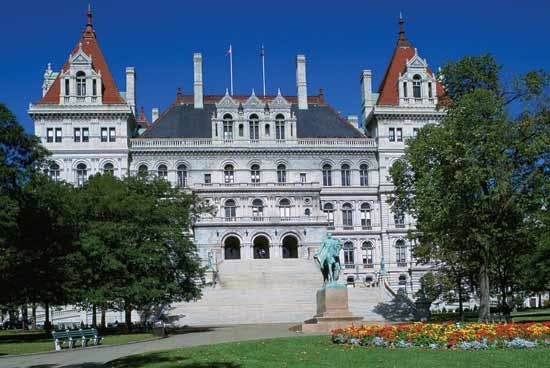
The state Assembly on Monday passed a six-month moratorium on hydraulic fracturing, a controversial natural gas drilling method currently in use in the state's Southern Tier.
The method, often called "hydrofracking," involves injecting a mixture of water, sand and chemicals into oil formations such as the Marcellus Shale, which runs from upstate New York to West Virginia. The pressure from the blast opens up horizontal wells from which the oil can be extracted.
Opponents of hydrofracking say the potent chemical cocktail can contaminate drinking water while methane gas released from the wells endangers air quality. Industry officials say the practice creates jobs and funnels revenue to the state in the form of drilling permits while decreasing energy costs to local homes.
The bill, which was passed by the state Senate in August, would block oil and gas companies from hydrofracking until May 15, 2011 at the earliest.
Rachel Treichler of the Sierra Club's Gas Drilling Task Force applauded the moratorium because it gives state officials and environmental advocates more time to study the potential impacts of the drilling.
"In New York we really don't have experience with this type of high-pressure, high-volume hydrofracking, which is very different from the type of drilling that has been done in the past," Treichler said. "The moratorium gives us more time to learn from the experiences that other states are having."
The bill now awaits a signature from Gov. David Paterson to become law. His office won't comment on pending legislation, but the outgoing governor recently voiced support for the moratorium and said the state would not "risk public safety or water quality."
"At this point, I would say that the hydrofracking opponents have raised enough of an argument to thwart us going forward at this time," Paterson told WAMC radio.
If Paterson signs the bill, New York would become the first state to pass a moratorium on hydrofracking.
Assemblyman Bob Castelli, R-Goldens Bridge, has been calling for the moratorium for months. He said he was disappointed that the Assembly had to rush to pass the "weaker" Senate bill instead of a more specific proposal, but he acknowledged that the moratorium will be a valuable step in determining any potential harm that could come from hydrofracking.
"It's a step in the right direction and a chance to have the studies by the [state and federal government] completed in order to make an informed judgment about whether hydrofracking is something we want in New York," the freshman Assemblyman said. "The oil has been in the ground for hundreds of millions of years, so I think it can wait six more months."
Castelli added that the moratorium could be extended next year if environmental agencies fail to complete their studies because of steep budget cuts.
A handful of other states, including Pennsylvania, Colorado and Texas, have allowed hydrofracking for years. In Gasland, which has aired on HBO, filmmaker Josh Fox traveled to 24 states to chronicle the impact of natural gas drilling on local residents.
In one of the film's most memorable scenes, a Colorado man is able to light his tap water on fire, likely due to the concentration of gas and other chemicals in the water supply. A recent YouTube video features a man from Candor, New York who claims he has had the same problem for three years and state officials have done nothing to help him.
But industry officials say that claims about the dangers of hydrofracking have been overstated and that the state and upstate communities stand to benefit from increased drilling.
"A major solution to the economic despair of New York state and its residents is a mile below our feet, yet science and history has been trumped by politics and a campaign of misinformation and exaggeration," said Brad Gill, the executive director of the Independent Oil and Gas Association of New York.
Gill added that the moratorium is "a slap in the face to landowners, New York taxpayers, all the people of the Southern Tier, as well as the [State Department of Environmental Conservation]," which collects the drilling permit fees paid by gas companies.
The DEC is currently studying hydrofracking and its effects, but the agency has undergone massive budget cuts that could hinder the progress of the study.
Some experts say the purported economic advantages of hydrofracking have been exaggerated by the industry. Dr. Susan Christopherson, a professor at Cornell, is currently conducting a study looking at the long-term economic benefits of drilling. Earlier this month, she told Albany radio host Susan Arbetter that her preliminary findings suggest that the Southern Tier would enjoy little financial benefit from the drilling of thousands of wells in the Marcellus Shale.
"It's a very poor idea for policy makers to anticipate that this is going to be a long-term economic development boom for the state of New York," Christopherson said. "If we look at the evidence from other states that have had natural resource extraction, they don't do so well in the long term."
She added that as much as 70 percent of the money that firms invest in drilling projects goes directly to private landowners, and it's difficult to estimate whether those landowners would invest the money back into the community.