Community Corner
9/11, 25 Years Later: The 'Missing' Posters That Haunt Me Still
For all of us who watched the horror unfold on our televisions on 9/11, 25 years ago, the memories are forever just a heartbeat away.


A reflection by Patch editor Lisa Finn on 9/11. The words and opinions are her own.
The sky was blue again this morning. Not quite as blue as that sunny September morning 25 years ago, when the skies were a hue so brilliant it felt as though anything were possible.
Until it wasn't. And never would be again.
Find out what's happening in North Forkfor free with the latest updates from Patch.
We all have a 9/11 morning story. "Where were you?" "I was trying to get my daughter home from school." "Trying to get a ferry out of lower Manhattan."
On that morning, I was sitting at home — then, as now, I worked at home, but at the time, I commuted to New York City a few days a week. I was breezily eating breakfast, leafing through the paper, thinking about a sun-kissed beach day the weekend before and tentative plans for a trip with my friend and her family.
Find out what's happening in North Forkfor free with the latest updates from Patch.
Waiting for Regis & Kelly at 9 a.m. on Channel 7, there was a news brief. A plane had struck the Word Trade Center. At first, and now it seems shockingly naive, I thought, maybe we all thought, that it had been an accident. At first, there was no indication that anyone had even been hurt. At first, it seemed as though it would be okay.
Until it wasn't. And never would be again.
Then came the second hit. The Pentagon. United Airlines flight 93. The news kept coming, a horrific tide of devastation, striking as fast and hard as as spray of evil bullets. What was happening? Why? What unspeakable attack was next?
The phone calls kept coming in to the TV stations. One man, who was trapped with his staff, was calm at first, stating clearly what floor they were on, where they could be found.
Certain, with the mindset of a man who'd clearly worked hard and followed all the rules — the rules that had him at his desk before 9 a.m. on a regular day at the office — that they would, of course, be rescued and found. Confident that the sheer dedication and hard work he'd put forth for years would mean that he'd live to see the rest of his life play out, that he'd continue to follow the rules, live to retire and share a life with his family, play with his yet unborn grandchildren.
Those rules had served him well so far, brought him success, and he clearly, from the tone of his voice on the phone, had no reason to doubt that they'd once again pave the way for a happy ending to a story he'd undoubtedly tell, again and again.
Following the rules had always been enough.
Until it wasn't. And never would be again.
The tower fell. And his voice was silenced.
The calls intensified in agony as the day went on. "You have to find my husband," one woman begged, tears heavy as she explained she was pregnant; her husband worked for Cantor Fitzgerald. "I need him to come home."
I remember veteran broadcaster Peter Jennings, that day, his normally soothing voice a steady drumbeat of unprecedented shock and fear.
I remember calling my son's school from the tan rotary phone still on the kitchen wall, asking if I could come now, bring my fourth grader home. They wanted normalcy, I was told. And while I understood, I remember my hands shaking, thinking the world could be ending and all I wanted was my little boy home safe.
I remember trying to call friends in New York City, on Staten Island. "All circuits are busy." I heard the words, again and again.
We gathered in my backyard, the other moms and I, that afternoon, the sky still so impossibly blue, shocked, too numb to speculate, needing to be together.
My mother, she had worked for years in Lower Manhattan before she died when my son was just a year old of an insidious cancer.
On the day of the World Trade Center bombing in 1993, my infant son had just undergone surgery for something not critical but still frightening; he was just a few months old.
We'd had no phones at the hospital and no access to television.
When we got home with my son, swaddled in blankets, my mother was calling frantically. She'd been home that day, not in her office on Rector Street, due to chemo. But she'd seen the images! There had been a bombing!
Later, when I mentioned wanting to bring my son to the World Trade Center one day, she immediately responded: "Never. Never bring Billy to the World Trade Center!" she said. "They'll be back."
By the time 9/11 dawned so many years later, my mother was gone.
But one of the first thoughts I had as the full depth of evil was revealed, was this: "My mother was right. They came back."
After 9/11, I went back to work in New York City, and what will haunt me always is the "Missing" posters plastered on what seemed to be every wall at Penn Station, every light post and street sign and bus stop shelter. Those faces on the posters, they were all smiling, hopeful, bright-eyed men and women grinning eagerly at cameras. Looking at those missing flyers, it was hard not to believe that at least most would come home. That they could all be gone, it was impossible to grasp.
The air was thick in New York City, acrid and heavy, the weight seeming thick as a blanket, too enveloping to discard.
On a night soon after 9/11, the song "Beautiful City" from the play "Godspell" echoed in my mind: "Out of the ruins and rubble, out of the smoke, Out of our night of struggle, Can we see a ray of hope?" I wrote to Stephen Schwartz, composer and lyricist, who'd written that song of my heart, telling him how much the music was helping soothe my shattered soul.
He wrote back, inviting me to a church on the Upper West Side where he played the music for a small group of anguished listeners, the smoke still heavy all around. That night, it felt sacred.
As the gray blanket of grief descended on the world, blacking out the shining blue of that traitorous sky, the tentacles of horror began to creep far from Ground Zero. Even in the sleepy hamlet of Remsenburg where I lived at the time, the nightmare became real for the men and women who were our friends, for the innocent, unsuspecting children — as we learned that our community had lost a beloved husband and father.
Until that day, so many of us thought we'd lived lives that were graced by pure decency and a sense of fairness. Work hard, treat others as you'd like to be treated, help the needy. Raise the kids right, go to church and give back in the community. Yes, we'd all known personal sorrows and painful losses. But there was a belief that in America, the land of the free, home of the brave, that an act of evil so dark that it would shape everything that came after, would never unfold so close to our homes and hearts. The American dream had always been enough, more than enough.
Until it wasn't. And maybe, never would be again.
I watched one of my tiny Cub Scouts grapple with the unspeakable. One boy, who'd always colored Pokemon characters as the kids watched cartoons, suddenly began drawing angry pictures — showed me crayon images of planes exploding, Osama bin Laden being killed. He was 9 years old.
We could have let horror win that day. We could have become a nation of bitter, disillusioned people, fueled by hate.
But every day since, over 25 impossibly long years that also feel like just a single heartbeat, there are stories of courage, of hope and decency — just yesterday, I wrote a new story about the son of a brave firefighter who left his pregnant wife, expecting their fourth baby, who headed in to work at his Brooklyn firehouse, trading shifts with a friend. He never came home. Never saw his baby boy. But his son, who was just a fourth grader when 9/11 stole his father, is proof that evil did not win that dark day. That baby, he, too, has grown up to be a fine young man. Their mother, she raised those four children with dignity and grace and so much love — a testament to the life she and her husband had shared.
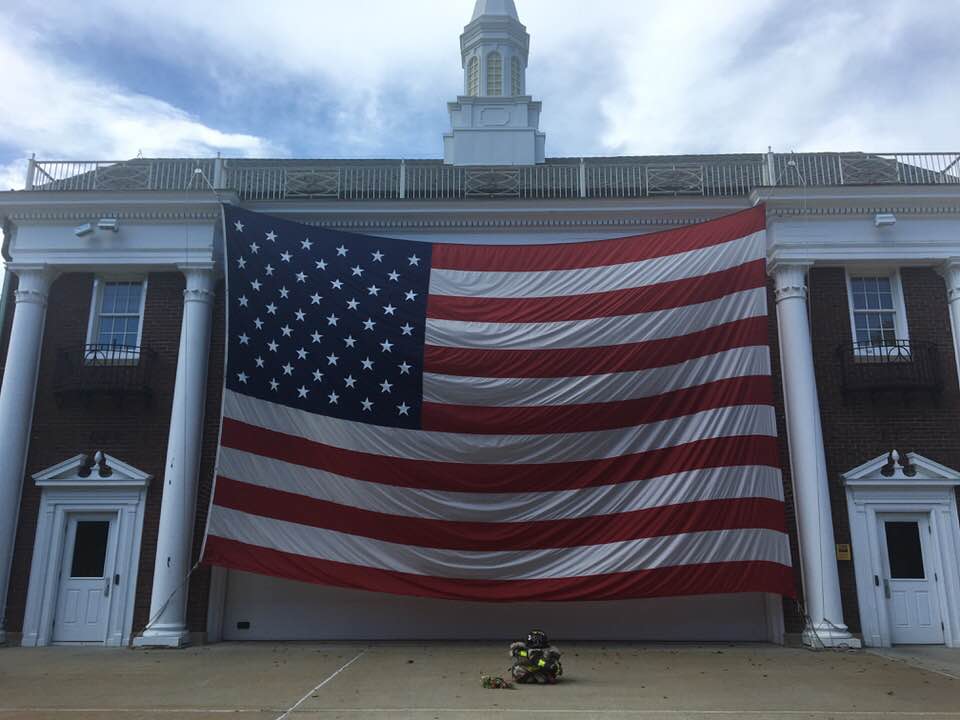
(Lisa Finn)
That firefighter's brave and selfless story is one of countless others. Of firehouses across the country where men and women still serve without a second thought, who would run today just as quickly into a burning building against impossible odds, trying to save those souls inside. Every day, there are stories of good, of the caring hearts and giving spirits that make this country what it always was, and always will be. There are stories of men and women whose values continue to shape the future — and for that, we are forever grateful.
The relentless evil on 9/11 was vast and dark; it could have been enough to alter everything America and its men and women have long stood for and believed. It was sinister enough, and vile enough, to have wiped out our dreams and hopes for the future.
Until it wasn't. And never will be again.
Because together, holding hands and hearts, tears streaming down our collective faces, we have rebuilt out of the darkness, imbued tragedy with hope and triumphed over that evil, raised children who will continue to make us proud.
And that's why, on 9/11 and every day, we remember the heroes who walked before us. Together, we have made a promise with firm resolve, that we will continue to live our lives with decency and courage in their honor: We will never forget.
Get more local news delivered straight to your inbox. Sign up for free Patch newsletters and alerts.