Politics & Government
Bellone Unveils Plans To Revitalize Shellfish Industry
Shellfish farming plays a critical role in cleaning LI waterways and promoting the economy, Suffolk County Executive Steve Bellone says.


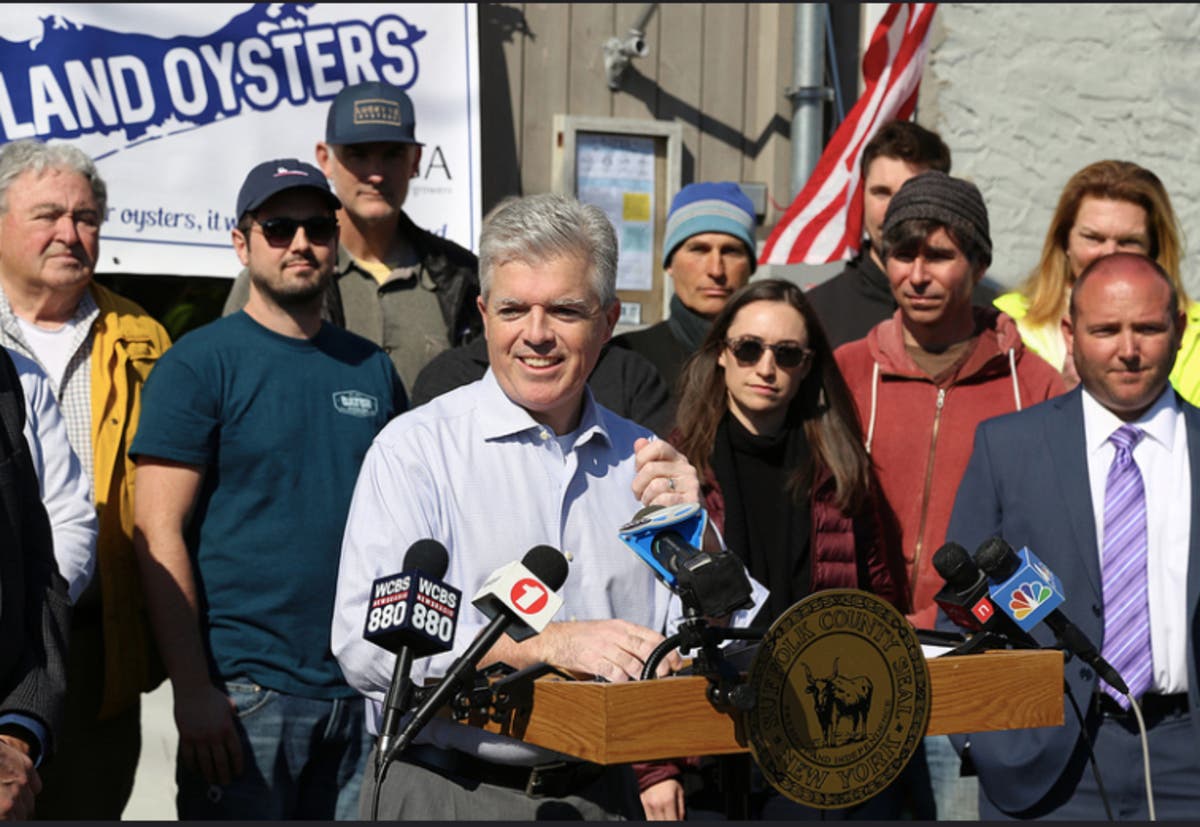
LONG ISLAND, NY — With an eye toward revitalizing the shellfish industry, Suffolk County Executive Steve Bellone announced a pilot program Monday aimed at helping local oyster farmers and stimulating the industry by allowing shellfish vendors to expand their current retail opportunities — and eliminating red tape.
Bellone will be introducing legislation to implement an annual temporary event permit for vendors of shellfish grown or harvested in Long Island waters, which will include no fees for the first two years, he said.
In addition, Bellone unveiled a one-page resource guide to provide an overview of the industry and its history.
Find out what's happening in North Forkfor free with the latest updates from Patch.
Suffolk County efforts, Bellone said, build on efforts underway under the direction of New York State Governor Andrew Cuomo to improve water quality and restore our marine ecosystems. Last May, Cuomo deployed the first installation of recycled materials from the former Tappan Zee Bridge in an effort to expand New York's network of artificial reefs, Bellone said.
“Shellfish farming has been an important part of Long Island’s heritage for decades and plays an important role in cleaning our waterways and promoting economic activity,” Bellone said. “The introduction of this legislation will go a long way in removing barriers that have made it difficult for our farmers to sell and market their locally sourced products.”
Find out what's happening in North Forkfor free with the latest updates from Patch.
Under current regulations, for a Long Islander shellfish farmer to be able to market and sell their products to a consumer, they are required to apply for a vendors temporary food service permit with the Suffolk County Department of Health Services, Bellone explained.
The permits require a$95 fee and are valid for a single event at a fixed location, with a 14 day limit, impeding shellfish farmers from taking part in weekly and monthly reoccurring events such as farmers markets and fairs under a single permit, and "severely limiting and hampering" the ability of farmers to market and sell their products, the county executive said.
Local markets, fairs, vineyards, breweries, and cideries offer a "valuable opportunity" for oyster farmers to sell their products directly to consumers competing in a competitive business, he said.
If approved by the legislature, the new law would create a shellfish annual temporary event permit for vendors of shellfish grown or harvested in Long Island waters that would be valid for one year at temporary events approved by the Department of Health Services. As part of the pilot program, there would be no fee for the shellfish annual temporary event permit for the first two years.
The shellfish industry has always been an important part of Long Island’s history and identity and its "subsequent decline was devastating to so many families who had been doing this work for generations," said Deputy Presiding Officer Rob Calarco.
“I want to thank County Executive Bellone and the Suffolk County Department of Health Services for working to come up with a plan to cut through the red tape to help small businesses and the shellfish industry,” said Suffolk County Legislator Al Krupski, whose district includes many shellfish growers and harvesters.
And, added Suffolk County Legislator Bridget Fleming: "Oysters and oyster farming have historically been a critical component of the economy and culture of Long Island, and provide essential environmental protections by filtering out nutrients that cause red tide. The industry is making a strong comeback. This legislation will allow the local seafood industry more opportunity to showcase their products while reducing operating costs."
Oysters, Bellone explained, help waterways by eating algae, filtering out particulates and excess nutrients and creating habitat for other organisms to thrive. Each oyster can filter up to 50 gallons of water each day and according to the Long Island Oyster Growers Association, Long Island oysters filter approximately 900 million gallons of water every day.
Long Island's farmers and aquaculture producers are grateful for the economic incentive proposal to help market and sell products direct to consumers, said Rob Carpenter, administrative director of the Long Island Farm Bureau. "By reducing the red tape and costs associated with these permits, it will ensure that our growers have the ability to sell and market their product and expand their market opportunities. Shellfish are a great environmental benefit to our waters and by allowing our farmers and bay people to be successful will keep jobs, increase sales tax revenue, and continue all the associated environmental benefits the industry does for Long Island residents and our waters,” he said.
In recent years, Bellone said, Suffolk County has undertaken a number of initiatives to protect the oyster industry, including the implementation of an aquaculture lease program to provide secure access to marine space for private and commercial shellfish aquaculture in publicly-owned underwater lands in Peconic Bay and Gardiners Bay.
The lease program was first adopted in 2009 and implementation of the program began in 2010, with the goal of addressing the access needs of existing shellfish aquaculture businesses, while also accommodating growth in the industry.
The program is currently undergoing a 10-year review, with bay user stakeholders encouraged to get involved.
According to the Suffolk County Department of Economic Development and Planning, for the five-year period from 2012 to 2017, the total economic output to the Long Island economy of the lease program is estimated to be $13 million. The program has issued leases to 55 new businesses in Peconic and Gardiner’s Bay.
Last year, Bellone also announced the launch of ChooseLI.org, a collaborative effort that seeks to raise awareness, advocate and inspire the community to support local and independent businesses on Long Island.
Get more local news delivered straight to your inbox. Sign up for free Patch newsletters and alerts.