Business & Tech
Business Owners Raise Concerns About Proposed Moratorium on Wineries, Breweries, Distilleries
Southold Town Supervisor Scott Russell said the idea that the town is "anti-winery" is untrue.


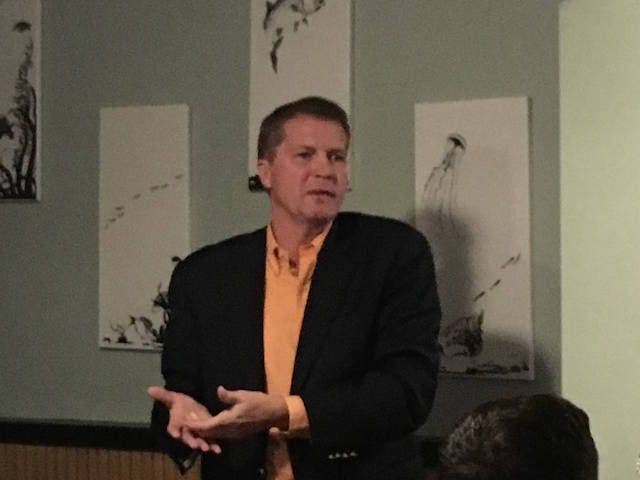
MATTITUCK, NY — Business owners turned out Wednesday night to raise concerns about a proposed moratorium on wineries, distilleries and breweries in Southold Town.
The Mattituck Chamber of Commerce, at their monthly meeting held at the Crazy Fork on Main Road, invited Ali Tuthill, executive director of the Long Island Wine Council, to share her views on the issue. Southold Town Supervisor Scott Russell was also asked to be a guest at the dinner.
But while Russell said he thought a six-month moratorium with a likely three month extension would help the town craft new, comprehensive code as it relates to wineries, distilleries and breweries, Tuthill said she didn't think a moratorium was necessary and others said they thought it could be harmful to small business owners.
Find out what's happening in North Forkfor free with the latest updates from Patch.
Russell first brought up the idea of a possible moratorium at the end of the October.
Russell said he discussed the concept with the Long Island Wine Council and the Long Island Farm Bureau, and later brought it up to the town board.
Find out what's happening in North Forkfor free with the latest updates from Patch.
"I believe that we have needed a moratorium to update a very outdated insufficient code for some time. I have been raising these issues since the State of the Town address," Russell said. "Southold really needs to take charge of our future and adopt code that ensure we stay on that path. These industries are growing and there are new applications seemingly every day. We need to plan for them and make sure that such growth doesn't erode the quality of life this community is entitled to."
But the idea of a moratorium had some business owners alarmed.
Tuthill began by saying the Long Island Wine Council has taken steps to unify and bring the entire East End into the conversation. There's an "inextricable link", she said, between the wine industry, agriculture, local businesses, and residents.
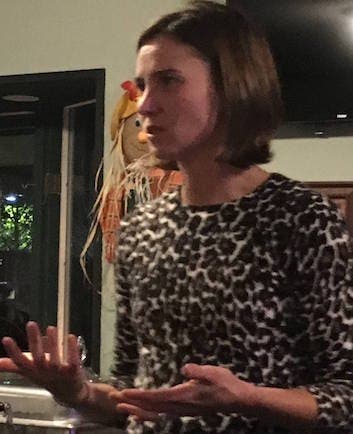
With the idea of a moratorium on the table, Tuthill said her organization believes it's important for them to be out in the community, talking. "From our point of view, as community members, we don't think there's a need for any stop to new businesses coming," such as members of the craft beverage industry, she said. "We need the wine industry, the craft beverage industry, farms," she said. "Our winemakers are farmers. We're supporting a landscape out here, protecting what we all love and want to see maintained," she said
"However, we do have a commitment to being good community members," she said. "We want to work with the town. We want to have successful businesses but be good community partners, as well."
Tuthill said the goal was to work with the Town of Southold to find a possible solution moving forward; she added that the evening was organized to create a dialogue. "This is an opportunity for us to engage in conversation rather than just be silent right now."
Daniel King, who, with his wife Alane Kelly, operate the North Fork Guest House, asked why the idea of a moratorium had been proposed. "Where is this coming from?"
Tuthill said the Long Island Wine Council was still "waiting on that information" and noted that Russell's reasoning had been outlined in the media.
She added that there had been an initial meeting between the Wine Council and the Long Island Farm Bureau "to discuss the potential of" a moratorium, but said "the root cause of that has not been defined."
Tuthill said Russell had brought up reasons for the moratorium, such as the lack of definitions in the code as they pertain to tasting rooms, distilleries and wineries; he also, she said, mentioned other public safety issues such as traffic.
But, Tuthill said, the Wine Council was still waiting for additional information, without which they couldn't elaborate in lengthy discussion.
The wine industry, Tuthill said, is responsible for more than 2,000 jobs on the East End. She, herself, is a perfect example, Tuthill said; after wanting to live on the East End for more than a decade she was hired by the Long Island Wine Council and moved to the area with her husband and three young children year-round.
But discussions need to be had, Tuthill said.
"With growth, there is always a need to address those pains, in any tourist economy."
One goal is to eventually "minimize the peak season" and extend that season year round, Tuthill siad.
"At this point in time, it's not about stopping anything," she said. Instead, it's about working together to bolster the economy year round.
David Perrin, owner of Cedar House on Sound B&B and the Bay Breeze Inn & Bistro in Mattituck, said he was afraid of what a moratorium would mean. He said he did not want to "alienate any industry, in any way, shape or form. As a small business my success is reliant on everyone else's successes in town. A moratorium on small businesses kind of scares me."
Small business owners, he said, are also home owners and residents. "We have families, we want places where kids can come pack. Anything to impede growth makes me nervous."
Supervisor speaks
Russell said he was happy to answer any questions. He explained the genesis of the moratorium and that he'd taken the idea to the Long Island Wine Council, LIFB, and the town's agricultural advisory committee for a discussion.
The concept was still in just premature stages but was brought out into the public forum because of media inquiries, he said.
But since the idea of a moratorium was pitched, the community has been rife with concerns, with some residents turning out at a recent town board meeting to voice their fears.
"This notion that we are anti-winery" is not true, Russell said. "This histrionic overreaction will speak against the very people we are talking about." Those "histrionic reactions," he said, told him some weren't "serious about the dialogue."
The bottom line is that the town code, as it pertains to wineries, is "flimsy," created in the early 80s, and depicting wineries with large tracts of land, fronting main roads, with a large building or two housing the entire operations; Russell said. Thirty or 40 years ago, today's landscape and the multitude of uses could never have been imagined, he said.
Times have changed, he said. Smaller investments are needed for a custom crush, with a new business model emerging, one that allows winemakers to produce niche wines without crippling overhead and large investment. They no longer need road frontage, with social media bringing critical exposure, he said.
A winemaker could produce, perhaps, 5,000 cases, he said. "The problem is, they don't have a place to sell, because town code doesn't allow tasting rooms on agricultural properties," he said. "Evolution is a good thing, but we have to start answering questions."
For example, Russell said, the town board needs to ask if tasting rooms should be allowed and if so, where, and under what conditions. Current code requires 10 acres, with two for the winery, he said.
The irony, Russell said, is that one winery owner in town has been producing for more than a decade; he has 30 acres scattered across town but no 12 acres contiguous. "He's not allowed to have a winery or tasting room under town code," Russell said.
Many who are not allowed to have tasting rooms have them, anyway, he said.
Another example is a winery owner with 15 acres of land and only five acres of grapes, Russell said. Anyone with 10 acres can have a winery, he said.
That owner, the supervisor said, "hasn't shown the commitment, the hard work, the investment in the vineyard, yet that new guy is allowed to have one, but the guy in Southold isn't. That doesn't make sense."
The original intent of wineries was to enhance agricultural production, Russell said. But with some owners planting only minimal grapes, "in some instances now, the production is an afterthought, and that's not the original intent of the code."
The town has reached a point of absorption, Russell said. "We can get overrun very quickly," he said, adding that conditions regarding acreage, and other issues needed to be put in place.
Referencing the principals behind the Threes Brewing application in Cutchogue who came before the board recently to express concerns that their application might get caught up in a moratorium, Russell said, "No one is saying a moratorium is going to hold up" the brewers in an industrial park in Cutchogue. "No one."
That application is far along in the process and will be complete before any moratorium, he added.
New code, Russell added, might bring some restrictions but it may also be more permissive in others.
The aim is to convene a working group, he said.
"The reason we need a moratorium is one solution at a time won't work. It hadn't worked. It's time to put a whole plan together. The community has a right to weigh in. We need to put a comprehensive vision together for the next 20 or 30 years and let the public comment, then adopt it all as one package."
Paul Silansky of Strong's Marine, after the supervisor spoke, suggested the public give him and the board time to make improvements to the code, necessary to help support the burgeoning industry on the North Fork.
Not anti-winery
Russell pointed out that the "elephant in the room" is that many wineries are operating in town that are technically not allowed by code.
"If I was as anti-winery as I have been portrayed," something would have been done about it, Russell said. But instead, the situation reflects that the "one size fits all" approach isn't "good enough anymore."
Perrin said he believed a moratorium was a "bit of an overreach."
When asked, Russell said currently, there are eight applications before the town, for wineries, breweries and distilleries, all in different stages. For applications "this close to the finish line, it would be operating in bad faith for the town to stop them."
Clarity is critical, he said. "The town board has to have a serious discussion," he said.
Russell set out to clear up misconceptions. "This notion that we are stopping growth and business is untrue," he said.
The aim was to address community concerns sparked by the North Fork's growth, including traffic.
"Good God, we don't need another traffic study," Russell said, to nods of approval from the crowd. But, he added, traffic flow, and solutions such as weight limits, need to be considered.
While many have blamed the fall harvest season: "You have parked the bus squarely on pumpkin growers," the supervisor said", the traffic issue is a global concern on the North Fork. Concerns regarding pumpkin farms should be handled on a site specific basis, he said.
To Tuthill, he said the Wine Council advertises bringing in three million people. "That's a lot," he said. "Quite honestly, we have a huge volume of it. Traffic is not a bad thing but it has to be accommodated."
"As a small business, I want to see those people coming or we'll have to move," Perrin said.
"I didn't propose a toll booth," Russell said.
Offsite parking, currently not allowable under town code, is one thing that might be considered, he said.
"The reason why we need a moratorium now is we have a lull. You're done for the most part, with harvesting, and have time to sit around that table."
Six month moratorium
When asked how long a moratorium could be, Russell said it would probably be six months, with a "likely" three month extension.
Attorney Gail Wickham said she saw "threat of a moratorium" as "very punitive" to small businesses. Some businesses, she said, "are going to be really hurt by a moratorium." Instead, she said she'd like to see the Wine Council educate on how many jobs the industry provided and how they served as a boon to the economy.
Working together
"All I am asking is that you keep an open mind, that you showed me weeks ago when we talked about the moratorium," Russell said to Tuthill. "Don't say it's bad."
Tuthill said the purpose of the meeting was to talk about "community, job creation." To Russell, she said. "We have been consistently on the record saying we are still waiting to work with you. We aren't here being antagonistic. We're here as partners. An accusation that we're already not working with you is not fair," she said.
After the meeting Russell added that when he'd first met with the Wine Council a few weeks go, the discussion was "productive. I would like to continue them. However, I question their sincerity if they issue an emphatic 'no' regarding a moratorium. A 'we need to know more is reasonable, and I thought that's where we were at."
He added, "When their leadership uses words like 'scapegoat,' then, to me, that is a histrionic overreaction that doesn't serve the purpose of the community or of the industry itself."
Moving ahead, Russell said he looks forward to making his case over the next week or two. "I'm quite confident that the general public will support it."
Reflecting on the discussion, Russell said it dawned on him that he "dominated the dialogue. That was wrong of me. I have an obligation to listen as well and I didn't do enough of that."
Get more local news delivered straight to your inbox. Sign up for free Patch newsletters and alerts.