Crime & Safety
Town Budget: Higher Tax Rate Talk; No Police Accreditation Yet
Police accreditation costs not included in tentative 2019 Southold budget, which also may have a higher tax rate due to unforeseen costs.


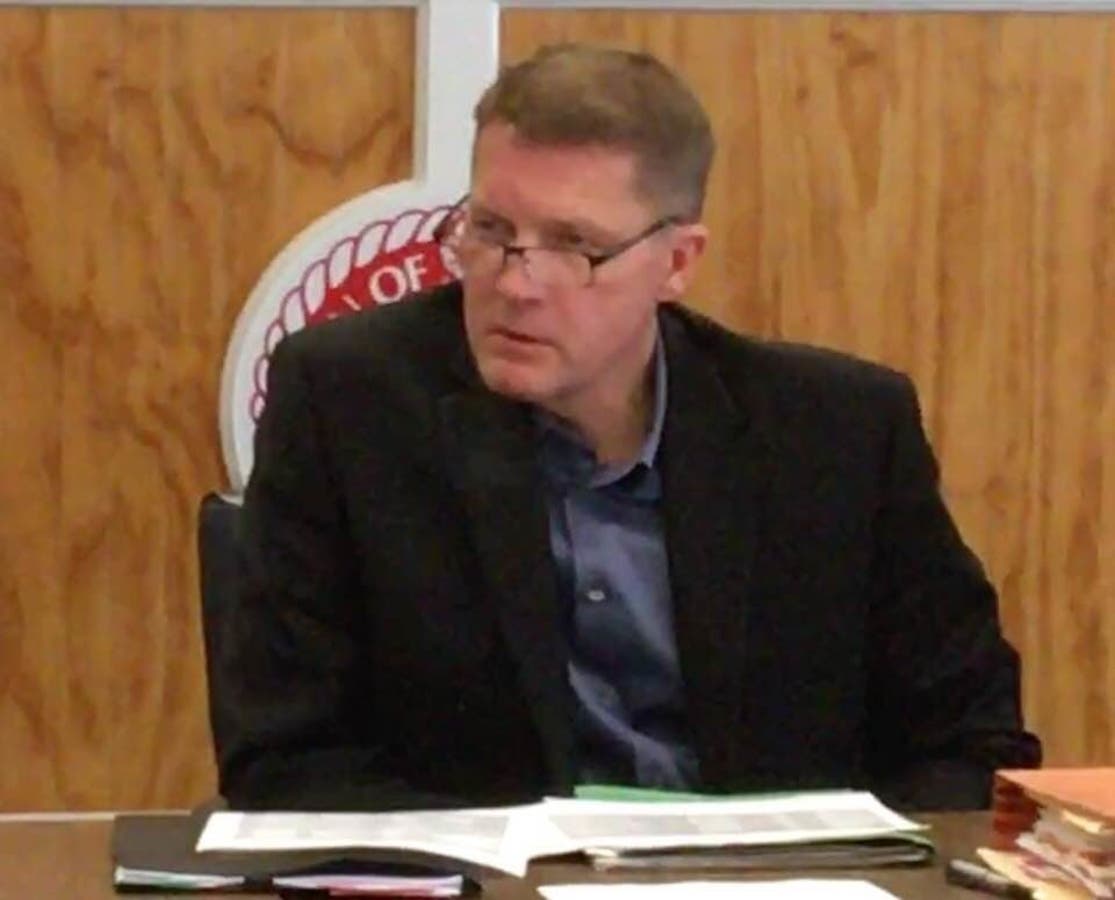
SOUTHOLD, NY — The Southold Town board met at its work session to discuss proposed changes pitched to Southold Town Supervisor Scott Russell's tentative 2019 budget — a budget that does not include costs for police accreditation suggested by the town's police chief and which may include a higher tax rate than initially proposed, due to unforeseen costs.
Russell said recently that the $47.3 million tentative 2019 budget reflects an increase in spending of 3.7 percent.
"The increase is largely due to funding the settlement of the Southold Town Police Benevolent Association contract and the anticipated settling of the Civil Service Employee Association contract," he said, adding that, in addition, the town's medical costs have gone up approximately 10 percent.
Find out what's happening in North Forkfor free with the latest updates from Patch.
The first proposed rate increase was 2.26%; for an average home with an assessed value of $6,000 the owners would see about a $45 increase over-all, Russell said, when the budget was first unveiled.
"However, homeowners who receive exemptions such as veterans or income eligible seniors will not see their bills go up as much," the supervisor said.
Find out what's happening in North Forkfor free with the latest updates from Patch.
Russell added that the budget also includes debt service for the purchase of the Capital One building on Youngs Avenue, which, for 2019, totals $225,000. "This figure covers the cost of the acquisition of 3.1 million," he said. "The figure will be slightly over $400,000 in 2020 once we borrow the $1.9 million for the renovations. Ultimately, those costs will be converted to a long-term bond which will greatly reduce the annual debt service."
On Tuesday, the board came back with possible changes discussed by the town board and new expenditures proposed by department heads — and other, unexpected changes could mean a higher tax rate, said Russell.
"The budget is tight. We had some added costs that we could not foresee and, although I expect that we will comply with the tax cap, it is clear that the tax rate itself will be higher than first anticipated," Russell said in an email Tuesday.
One issue discussed was a decision not to allocate funding associated with a proposed police accreditation process, which was requested by Southold Town Police Chief Martin Flatley.
According to the New York State Division of Criminal Justice Services, accreditation is a "progressive and contemporary way of helping police agencies evaluate and improve their overall performance", providing formal recognition that an organization meets or exceeds general expectations of quality in the field.
Discussing some expenses such as chairs, office supplies, training, and an additional police officer necessary for police accreditation, Russell asked the board if they thought another new police officer should be added to the budget to pursue the accreditation process.
Flatley asked for four new officers — with one hired to help with the accreditation — Russell budgeted for two. Flatley asked for three with the fourth added, if the board decided to pursue accreditation.
"We estimate the added cost of pursuing accreditation would be about $150,000. There is no room in the budget for that," Russell said after the meeting. "Plus, I didn’t include it in the budget I presented because there is a lack of consensus on the board as to what the actual benefits" of accreditation are, he said.
At the meeting, Russell said the costs involved with accreditation would involve hiring an additional officer beyond the regular department size, and would require a substantial amount of time from an existing sergeant's position. Costs don't involved just hiring an officer, they include benefits and time away from an existing position, during the accreditation process, he said, estimating that the cost of accreditation would have a total impact of $150,000 to $175,000.
Councilman Jim Dinizio said a number of years back, the town hired eight police officers, to bring the number up to 52; that number is now down to 48.
The supervisor's tentative budget brought the number up to 50; Flatley asked for four, with the fourth to focus on accreditation.
"Since that 52 number was established, we've got more cars, the lavender farm, people handing out pamphlets in Greenport telling them, 'Don't answer your door if the police knock.' There are a lot of things going on now that weren't, at that time," Dinizio said.
Dinizio, who has advocated for accreditation, said while the process is expensive, not becoming accredited is "looking for trouble."
Russell said while many towns have undergone the accreditation process, he would like to look, instead, at the towns that don't have it and figure out why. "I think there are probably compelling arguments on both sides of the issue," he said.
Also, Russell said, it's one thing to identify the needs of the department, but the second component involves how to pay for it. The police department has to review its budget, he said.
Councilwoman Jill Doherty said while she agreed with Dinizio about the accreditation, "We need to do our due diligence and have all the facts in front of us."
She said at the very least, she'd like to bring the number of officers hired to three.
Justice Louisa Evans said she didn't understand what the town would gain from police department accreditation, as long as the department is being well run.
"It's a well-structured process, and gets the police department looking at safety issues. There are already things this department doesn't have and we should be supplying them," Dinizio said.
Russell said, first of all, the goal of 52 officers was created around 1994 by the town's police advisory committee as an optimum number. "But we hadn't been running at 52 for a long time. That was the goal, 52 was the magic number, but it wasn't the realistic number. It doesn't mean we needed 52 to run an optimal department," he said.
Dinizio said when the department is "down a man," there opportunity is lost to send an officer to the Suffolk County Task Force; he added that schools are asking for officers on campus, as well. "Accreditation gives you a lot more of looking at rules and regulations," he said.
Russell said he didn't think it was appropriate to assume that towns aren't pursuing accreditation because it's too expensive. "That's anecdotal," he said, adding that "enthusiasm is waning" for accreditation "and I want to know why. There are two sides to every discussion."
Dinizio asked why not pursue accreditation.
The supervisor said: "I haven’t seen compelling reason as to why, yet. You have to remember, there are a lot of goals out there that we want to pursue, but we have tax caps. There may be another year, where that cost can be accommodated, but I do not see that this year. We have two contracts being settled. Maybe when we look at 2020/2021 we can accommodate certain things, but you have to say, 'We just can't get some things done because we can't afford it.' That's why accreditation doesn't have to be a priority. The priority has to be complying with the tax cap as best we can."
Councilman Bill Ruland said his concern was directed at the global perspective and safety. "We're looking at the retirement in 2019 of patrol officers. My priority is boots on the street," he said. "Our citizens, and public safety, are number one. I agree with what Jim has said, but if I had to weigh the two, I want officers on patrol." He added that in past situations, there had been too much overtime and officers didn't want any additional overtime.
He said he supported hiring three officers.
"I'll support three," Russell said, adding that the board would need to find offsets for the cost of the third elsewhere in the budget.
Doherty said she understood but if "we don't keep up with it" the police department would find itself needing to hire three or four officers, something that's not easy to do because of the county's scheduling, and she didn't want to have to wait a year to hire a new officer. She also supported hiring three officers.
Councilman Bob Ghosio said he would still like to see the town at 52 officers, and added: "I'm with Jim about the accreditation, but I think the budget will dictate some of what we can and cannot do."
After the meeting, Flatley, who was away and out of state, responded to questions about the board's discussion via email: "If the town board commented that they were only hiring three new officers, obviously I am disappointed as I had requested four new officers to replace retirees and bring us back to our recommended staffing level. However, I do understand the board’s responsibility to the residents of Southold Town in making their budget decisions. On the topic of our department working toward accreditation, the town board was aware that there was going to be a cost associated with this endeavor. If this project is not funded we will continue to attempt to work toward compliance with the NYS accreditation standards with any available resources," he said.
Past accreditation discussions
In Aug.. 2017, the Southold Town board took on the topic of police accreditation at a work session in Town Hall.
Members of the town's police advisory committee, including Jack Slattery, Kevin Foote and George Lessler, along with Flatley, met to discuss the New York State Law Enforcement accreditation process.
The talk followed questions and concerns raised by Orient resident Allison Skrezec at the July, 2017 Southold town board meeting, where she asked if it was true that the Southold Town Police Department was soon to be accredited.
The New York State accreditation program was instituted in 1989 and focuses on four primary goals, including to increase "the effectiveness and efficiency of law enforcement agencies utilizing existing personnel, equipment and facilities to the extent possible, to promote increased cooperation and coordination among law enforcement agencies and other agencies of the criminal justice services; to ensure the appropriate training of law enforcement personnel; and to promote public confidence in law enforcement agencies," the New York State Division of Criminal Justice Services page says.
The accreditation program is made of of a set of standards and addresses issues such as "agency organization, fiscal management, personnel practices, and records management," training standards, and operations standards, dealing with "critical and litigious topics as high-speed pursuits, roadblocks, patrol, and unusual occurrences," the NYS DOCJS said.
Slattery, Southold police advisory committee chair, began by discussing the prior July meeting, where Skrezec alleged that the town, for example, was lacking transparency in offering up its crime statistics on the police department's website.
Slattery said those stats are displayed on the New York Department of State's website; linking to those statistics on the town police department's website is something that's easily done, he said.
As for accreditation, the town's police advisory committee said it believed it was a critical step.
"What we are dealing with is a shifting landscape," Slattery said, adding that transparency is key. He suggested the town's police department could "mimic" Suffolk County Police's website, pulling crime statistics and offering them to residents on the town site.
In researching accreditation, Slattery said he'd learned that 80 percent of program managers statewide are ranked sergeant and above; the program manager would be responsible for getting the accreditation process up and running, and then maintaining that accreditation down the line.
Slattery and Lessler both said they support accreditation; Foote said while his initial concerns were for potentially "bogging down" the police chief, he now believed the process makes sense, especially from an "exposure point of view."
Russell, at the time, asked how many man hours it would take to get the program up and running and how much of a workload accreditation would entail.
To get the program started, it would take one sergeant a full year to get the paperwork in order for accreditation, Flatley said.
Then, moving forward, Flatley explained it would take a full month's worth of work out of every year, dedicated to keeping continuing accreditation "up and going."
Russell said someone would be needed to "plug that hole", if a sergeant was relieved of his normal duties and instead, focusing on accreditation, something that could lead to overtime.
Evans asked why a civilian or someone of lesser rank couldn't work on accreditation; Flatley said to have the authority to rewrite standard rules and procedures, someone ranked at least a sergeant would be needed; while that person cannot single-handedly rewrite policy, he or she can bring it to be reviewed, the chief said.
Despite the questions that still need to be discussed, Dinizio, liaison to the police advisory committee, said in 2017 that one point was very clear: "We've all come to the conclusion that we want to do it. This is something that has to be done."
He said down the line, some duties might be shifted from police officers, such as keeping track of fuel, that don't need a police officer to sign off on them.
"There are plenty of other efficiencies that can be done," so that police resources can be freed up toward the accreditation process, Dinizio said.
"There's a standard that's been set by the state that we haven't proven that we've achieved," Dinizio said.
Doherty said last year that she, like Foote, was initially hesitant to embark upon the accreditation process but said, now, "I think this is something we should welcome because it gives us a standard, as police commissioners . . . it creates a dialogue."
Evans said she was "all for it" but was concerned about the cost.
Russell said in 2017 that the estimated annual cost of maintaining the accreditation would be about $15,840, the "best case scenario," with the starting salary of a sergeant, although he assumed whoever was chosen would be more seasoned.
The funds could be found, Dinizio said, and may not involve hiring a new officer but instead, just relieving police officers of some of their current duties.
The goal was initially to start the accreditation process in September, 2017. Flatley said it was a matter of finding the right person, "who wants to leave their duties and sit at a desk doing paperwork." He said he's been putting out feelers to determine if anyone is interested. Russell agreed finding that individual might prove a challenge.
It's key to keep the accreditation current once it's achieved, Dinizio added. "We don't want to say we lost our accreditation."
Ghosio said he didn't want the public to perceive the town's seeking accreditation as being done "because there's a problem. Aside from a few tweaks here and there, we're doing just fine."
"This is proactive, not reactive," Foote said.
"It is a necessary step that ensures that our department is up to date with its policies and procedures," Dinizio said. "It forces the department and the town board, as commissioners, to review our policies and meet minimum standards. I'm not saying we don't meet minimum standards now. I'm saying it is the established way that we use to confirm that."
After the meeting in 2017, Russell said, via email, "The accreditation of the Southold Town Police Department is something I will need to consider more. I can't yet say I support it or oppose it. I am very interested in learning more. What is clear is that to secure the accreditation, a great deal of hours would need to be worked to complete the substantial amount of paperwork it requires. It will also require a great deal of work on an annual basis to maintain our accreditation."
He added, "In government, like all organizations, time is money and we really need to weigh all of the benefits against the investments that need to be made."
Other tentative 2019 budget news
On Tuesday, the board also discussed budgeting $50,000 to hire a part-time town attorney, bringing the staff up to 2.5; the board proposed bringing that person from part-time to full-time.
Town Attorney Bill Duffy said code enforcement is dealing with advanced administrative duties; also, there are great administrative needs, board meetings, oversight of code enforcement, and being available for various committees.
Russell suggested hiring outside counsel at about $12,000 per year to assist with one board, to begin with, along with the part-time attorney hire.
The board also discussed $50,000 slated for the tentative budget for Dean's Parking lot in Mattituck, which will bring an additional 30 parking spots to the area, something all supported; Russell said the goal would be to find additional sources of revenue to pay for those expenses.
Other expenses included $55,000 for a commercial mower and $10,000 for rock salt. Russell said it's the responsibility of the department head to "rake over" the budget and find funds in places where costs might not have been as high as anticipated.
Russell said on the whole, when it comes to the town's fleet and heavy equipment, he'd like to see a capital plan with information regarding the annual cost of maintenance, what's been replaced, the condition of vehicles, mileage and other considerations.
Looking at recycling, Russell said the town currently sells recyclables for $15/ton but the Town of Brookhaven's facility is no longer operating; down the line,the town might have to pay to truck them, or there might be a fundamental change in recycling in Southold, with a need to find buyers for paper and cardboard.
Finally, Russell said he got new numbers from the assessors' office Monday. "The irony of this impact is that it has nothing to do with the Southold Town budget," he said.
Each year, he said, Suffolk County reimburses commercial property owners retroactively; those numbers get calculated in the town's tax cap. This year, that added $300,000 to the town's spending, "even though it isn't our spending," Russell said. The county pays funds back to private parties and reimburses itself, "but for some reason that money affects our spending," he said. "Based on that arcane and inappropriate charge it looks like we added over $300,000 to new spending. Given that information it's going to be hard to comply with the tax cap," Russell said, adding that executive discussions regarding personnel would help to clarify issues. "It doesn't mean we need to pierce the cap."
The 2019 budget must be adopted by Nov. 20.
Patch photo by Lisa Finn.
Get more local news delivered straight to your inbox. Sign up for free Patch newsletters and alerts.