Weather
Heat Advisories, Air Quality Alerts For The Hudson Valley
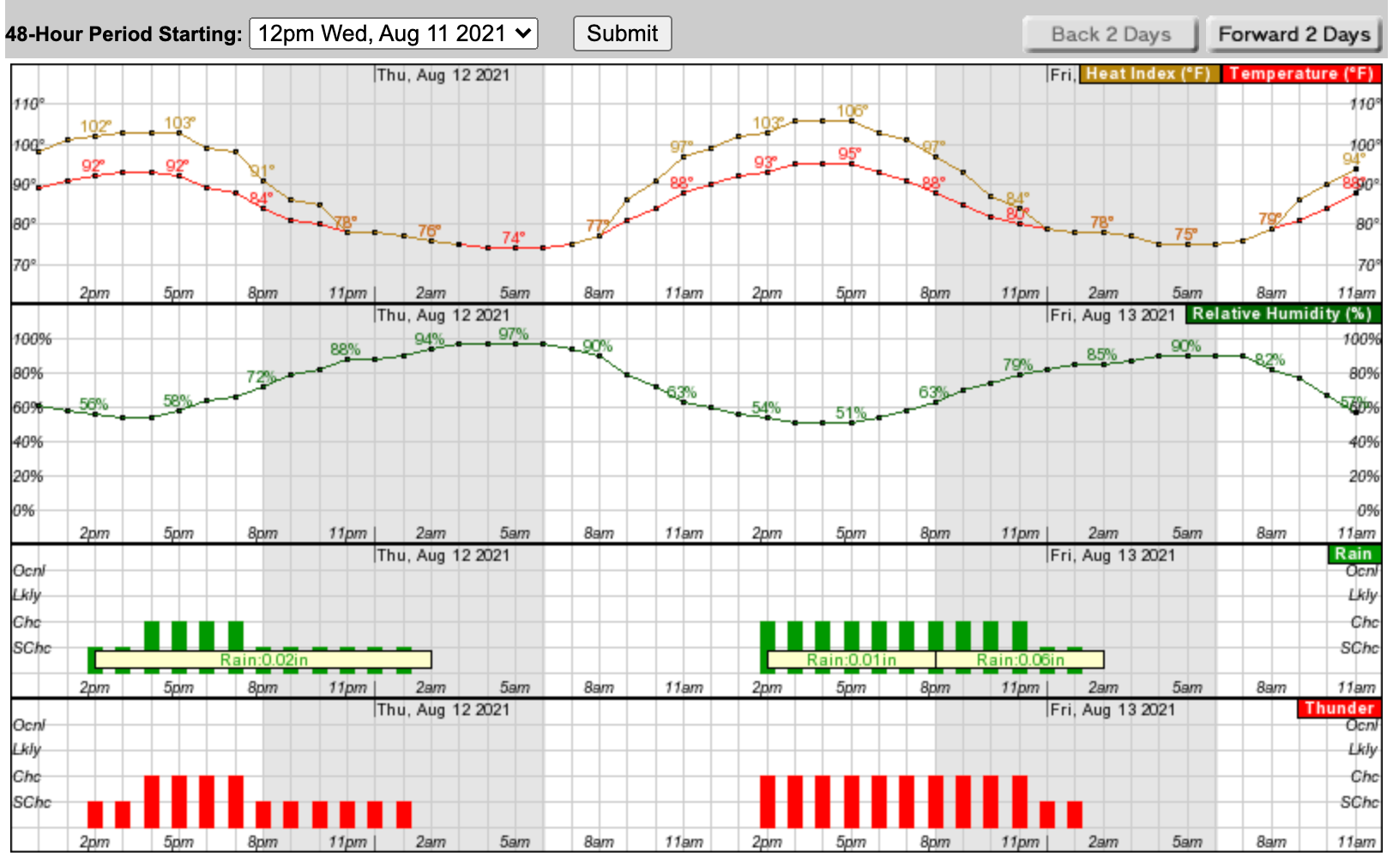
Also, locally heavy rain from scattered thunderstorms could produce ponding of water on roadways and isolated flash flooding.


HUDSON VALLEY, NY — Heat advisories have been issued for Wednesday for the Hudson Valley, and forecasters warn that it's going to get even hotter Thursday and Friday.
As the heatwave hit Wednesday, state health and environmental officials issued an Air Quality Health Advisory for Rockland and Westchester counties along with the rest of the New York City metro region.
Also for Rockland and Westchester, an excessive heat warning is already in place for Thursday. Rockland residents should also be aware that an excessive heat warning has been issued for Wednesday for northeast New Jersey.
Find out what's happening in Ossining-Croton-On-Hudsonfor free with the latest updates from Patch.
For Thursday, Orange and Putnam counties are on an excessive heat watch: hot and humid conditions will continue through at least Friday, with heat index values around 100.
In Dutchess and eastern Ulster counties, in addition to the heat advisory for Wednesday and excessive heat watch for Thursday, the National Weather Service warns locally heavy rain from thunderstorms could produce ponding of water on roadways and isolated flash flooding.
Find out what's happening in Ossining-Croton-On-Hudsonfor free with the latest updates from Patch.
Meanwhile, the pollutant of concern is ozone. The advisory will be in effect 11 a.m. through 11 p.m.
DEC and DOH issue Air Quality Health Advisories when DEC meteorologists predict levels of pollution, either ozone or fine particulate matter are expected to exceed an Air Quality Index (AQI) value of 100. The AQI was created as an easy way to correlate levels of different pollutants to one scale, with a higher AQI value indicating a greater health concern.
For Air Quality Health Advisories, Region 2 is the New York City Metro region, which includes New York City, Rockland, and Westchester counties.
Summer heat can lead to the formation of ground-level ozone, a major component of photochemical smog. Automobile exhaust and out-of-state emission sources are the primary sources of ground-level ozone and are the most serious air pollution problems in the northeast. This surface pollutant should not be confused with the protective layer of ozone in the upper atmosphere.
People, especially young children, those who exercise outdoors, those involved in vigorous outdoor work and those who have respiratory disease (such as asthma) should consider limiting strenuous outdoor physical activity when ozone levels are the highest (generally afternoon to early evening). When outdoor levels of ozone are elevated, going indoors will usually reduce your exposure. Individuals experiencing symptoms such as shortness of breath, chest pain or coughing should consider consulting their doctor.
Ozone levels generally decrease at night and can be minimized during daylight hours by curtailment of automobile travel and the use of public transportation where available.
Take some steps to beat the heat, save energy and reduce pollution:
- Avoid strenuous activity, drink lots of water, avoid alcohol and caffeine and cool off to prevent heat-related illness such as heat stroke or heat exhaustion. Heat stroke is a serious and life-threatening condition that claims many lives nationwide each year. Symptoms include hot red, dry skin, shallow breathing, a rapid, weak pulse and confusion. Anyone suffering from heat stroke needs to receive emergency medical treatment immediately. Call 911 if you suspect heat stroke and immediately cool the overheated person while waiting for emergency help to arrive.
- Set your air conditioner to the highest temperature your comfort and health will allow to help you save cooling money. Close all doors and windows in your home while the air conditioning is running to make things cooler at a lower price.
- Cook, bake or perform other household activities that produce heat and humidity during the cooler times of the day and night.
- use mass transit or carpool instead of driving, as automobile emissions account for about 60 percent of pollution in our cities;
- conserve fuel and reduce exhaust emissions by combining necessary motor vehicle trips;
- turn off all lights and electrical appliances in unoccupied areas;
- use fans to circulate air. If air conditioning is necessary, set thermostats at 78 degrees;
- close the blinds and shades to limit heat build-up and to preserve cooled air;
- limit use of household appliances. If necessary, run the appliances at off-peak (after 7 p.m.) hours. These would include dishwashers, dryers, pool pumps and water heaters;
- set refrigerators and freezers at more efficient temperatures
Those who plan to travel by car should prepare their vehicle before hitting the road. Always travel with a spare battery, and avoid leading radios, phone chargers and other accessories running when the engine is not. Check to make sure your air conditioning is properly functioning and coolant is at the proper level. If you plan to travel in less populated areas, bring water and an umbrella for shade if it becomes necessary to leave the car. Always keep air flowing throughout the vehicle, and try to park in the shade.
A toll-free Air Quality Hotline (1-800-535-1345) has been established by DEC to keep New Yorkers informed of the latest Air Quality situation.
Get more local news delivered straight to your inbox. Sign up for free Patch newsletters and alerts.