Politics & Government
Lowey Pushes for US Education Programs, Disputes Claim that Most Foreign Aid is Stolen
The Hudson Valley Congresswoman said an educated citizenry contributes to strong democratic institutions around the world.


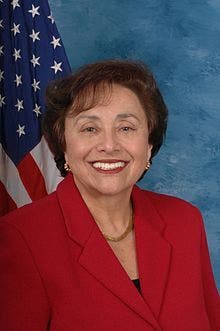
On Tuesday, the House of Representatives passed bipartisan legislation to improve the impact of U.S. education programs around the world, introduced by Representative Nita Lowey (D-NY) and Representative Dave Reichert (R-WA).
“Education is the fundamental tool that empowers girls and boys to increase their economic potential, improve their health outcomes, address cultural biases, participate in their communities, and provide for their families,” Lowey said. “That’s why prioritizing children’s access to education around the world strengthens our national security and global leadership. Simply put, we cannot build the world we want for ourselves, and for future generations, without making education the center of our efforts."
The push in Congress for a strategic US effort in global education came just a week after Sen. Rand Paul (R, Ky) again said that 70 percent of foreign aid money to Africa was stolen "off the top." But his office couldn't back up the number after the Senate committee hearing for State Department nominee Rex Tillerson, said fact-check website Polifact, which got very different answers when it did the research.
Find out what's happening in Ossining-Croton-On-Hudsonfor free with the latest updates from Patch.
“There is no proof to such a claim," said Lowey, who is Ranking Member of the House Appropriations Committee,"and I support strong oversight to help ensure our aid is used as intended. On the contrary, all the evidence clearly indicates that foreign aid is critical to promoting human rights, supporting democracy, and keeping America safe from threats to our security.”
The United States spends about $50 billion on foreign aid. That may sound like a lot, but it's just 1 percent of the entire federal budget.
Find out what's happening in Ossining-Croton-On-Hudsonfor free with the latest updates from Patch.
The Reinforcing Education Accountability in Development (READ) Act aims to enhance transparency and accelerate the impact of U.S. basic education programs around the world in order to help achieve universal access to quality basic education and improve learning outcomes.
“Today, millions of children, especially in conflict-affected states and sub-Saharan Africa, are desperate for an education, but are denied that opportunity through no fault of their own. Helping these children receive a basic education is not only the right thing to do, but will also give them skills to care for their families, improve their own health outcomes, contribute positively to their communities, and foster more stability in conflict-prone regions,” said Reichert. “I am hopeful that with this bill, we can better coordinate our efforts with global partners to work toward reaching the 124 million children around the world who are not in school and improve the quality of education for those currently enrolled.”
Worldwide, 59 million primary school-age children and 65 million adolescents do not attend school – the majority of whom are girls. Tens of millions of children who start primary school drop out, and millions more are denied a secondary education.
An educated citizenry contributes to sustained economic growth, strengthened democratic institutions, the empowerment of women and girls, and decreased extremism. That is why no country has reached sustained economic growth without achieving near universal primary education, Lowey and Reichert said.
Specifically, the READ Act calls for:
- U.S. engagement with key partner countries, other donors, civil society, the private sector, and multilateral global education initiatives, such as the Global Partnership for Education, to promote sustainable, quality basic education.
- A comprehensive, integrated U.S. strategy that improves educational opportunities and addresses key barriers to school attendance, retention, and completion for the poorest children worldwide;
- The creation of a “Senior Coordinator” within the United States Agency for International Development (USAID) responsible for the development, implementation, and coordination of U.S. basic education programs;
- An annual report to Congress on implementation of the basic education strategy and progress achieved by USAID programs.
Get more local news delivered straight to your inbox. Sign up for free Patch newsletters and alerts.