Weather
October Harvest Moon Is Special: Here’s Why
Most years, the September full moon is called the harvest moon, but this year that moniker goes to this October full moon. When to look up.


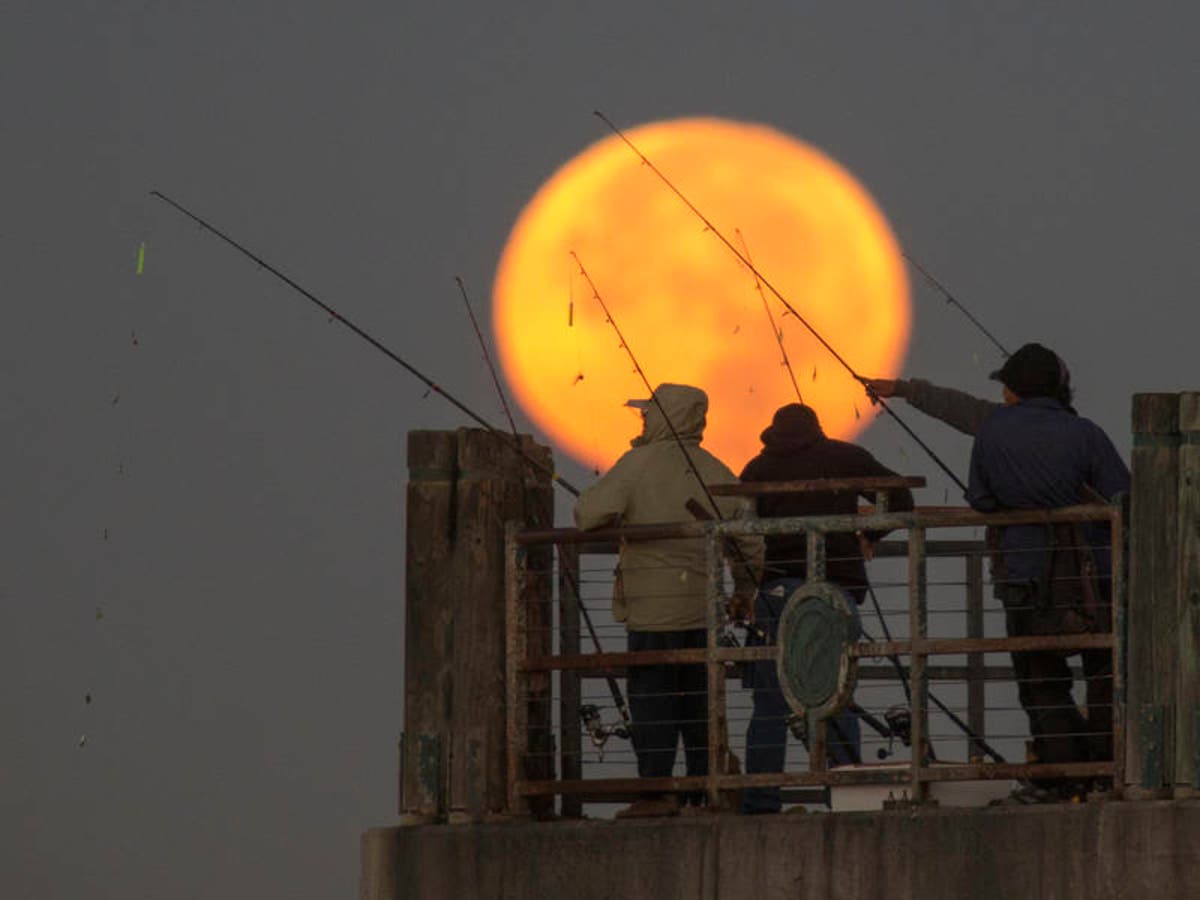
HUDSON VALLEY, NY — It’s not a supermoon — the phenomenon when a moon appears larger than it is — but the harvest moon will be something special over the next several nights. The harvest moon reaches its full phase at 2:40 p.m. Thursday, but it will be rising close to the time of sunset for the next several evenings and shine until dawn. In the Hudson Valley, moonrise Thursday is just 21 minutes after sunset — 6:51 p.m.
You should be able to enjoy it at least one of these nights. Skies will be mostly cloudy Thursday and Friday, but only partly cloudy on Saturday, according to Hudson Valley Weather. And on Saturday, it'll be windy at night. It'll be warmer at night than October usually is — a low of 52 degrees Thursday but by Sunday temps will be in the high 60s at night. So it really will feel like a harvest moon.
Civilizations around the world have used the moon phases to keep track of time, and each one has a special name — or several, depending on regional folklore and seasonal characteristics. Native Americans called the September moon the harvest moon because that’s when crops matured, but the term means something different to astronomers, according to Earthsky.org.
Find out what's happening in Ossining-Croton-On-Hudsonfor free with the latest updates from Patch.
Among astronomers, the harvest moon is the full moon closest to the autumn equinox, which occurred this year on Sept. 22. For that reason, this year’s September full moon went by some of the other monikers — the corn moon, the fruit moon or the barley moon in North America.
And, usually, October’s full moon is known as the hunter’s moon and, less frequently, the blood moon or the sanguine moon, according to nightskyinfo.com.
Find out what's happening in Ossining-Croton-On-Hudsonfor free with the latest updates from Patch.
Though the harvest moon hasn’t fallen in October since 2009, it’s not all that rare, either, Ernie Wright, a specialist at the NASA Goddard Space Flight Center’s Scientific Visualization Studio in Maryland, told National Geographic.
A harvest moon can happen on any date from Sept. 7-Oct. 8, according to the regular 29.5-day cycle of the moon, Wright said. The next one will be in 2020.
Regardless of what they’re called, autumn full moons are special. Earthsky.org explains it:
“Around the time of the autumn equinox, the ecliptic — or the path of the sun, moon, and planets – makes a narrow angle with the horizon at sunset. “Every full moon rises around the time of sunset, and on average each successive moonrise comes about 50 minutes later daily. But, on September and October evenings – because of the narrow angle of the ecliptic to the horizon — the moon rises sooner than the average. “So, instead of rising 50 minutes later in the days after full moon, the waning gibbous moon might rise only 35 minutes later, or thereabouts, for several days in a row (at mid-northern latitudes). At far northern latitudes — like at Fairbanks, Alaska — the moon rises about 15 minutes later for days on end.”
This was important in the days before tractors and combines with lights, because it meant they could harvest under the moonlight.
Photo by David McNew/Getty Images News/Getty Images
Get more local news delivered straight to your inbox. Sign up for free Patch newsletters and alerts.