Weather
Quebec Wildfires Cause 2nd Day Air Quality Alerts In The Hudson Valley
Exposure can cause irritation to the eyes, nose, and throat, coughing, sneezing, runny nose, and shortness of breath.


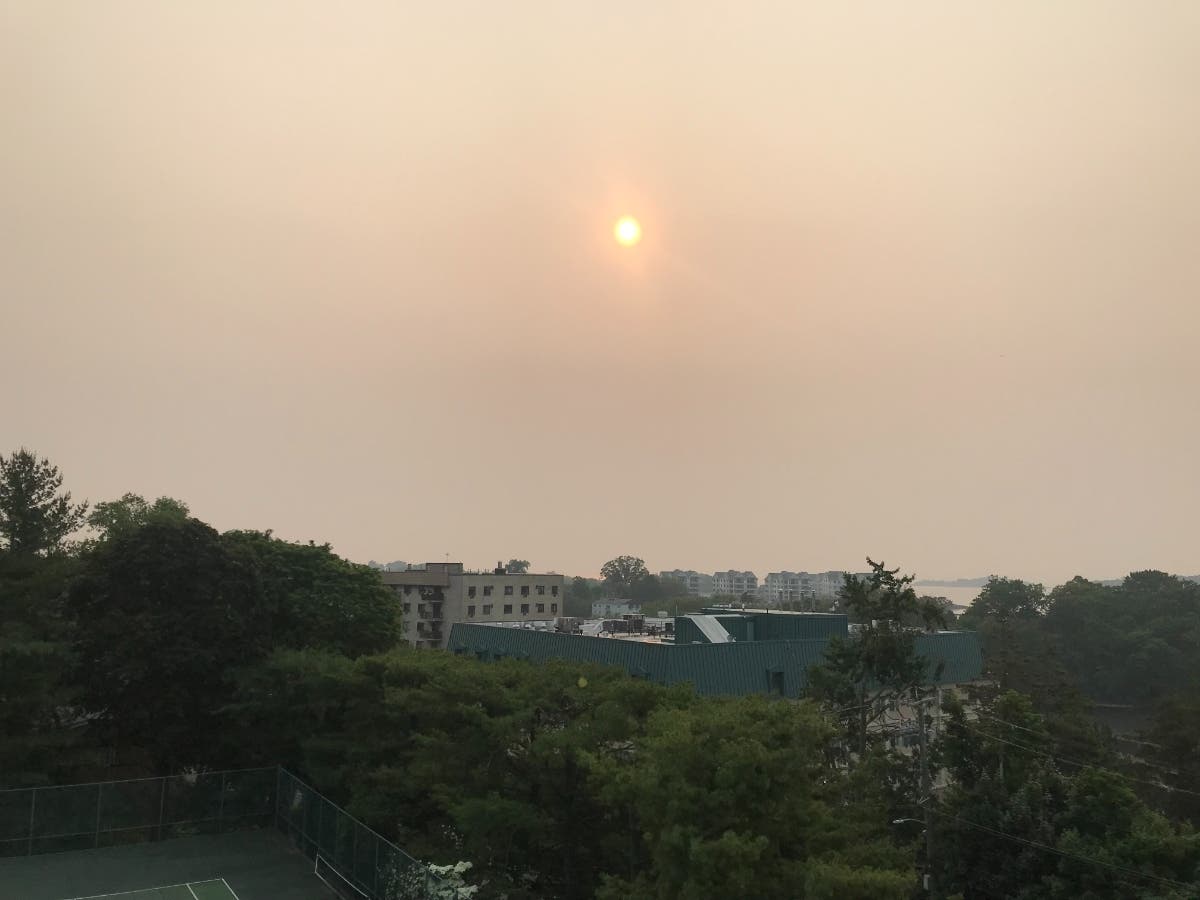

HUDSON VALLEY, NY — The air quality will be poor again Wednesday in the region with widespread haze and patchy smoke expected all day and all night.
The Department of Environmental Conservation updated its alert Wednesday morning to include the lower and upper Hudson Valley regions as well as the NYC metro area. The advisory is in effect until 11:59 p.m.
The air quality is expected to remain unhealthy through at least Friday, according to AccuWeather, which rated asthma conditions as "very high," meaning weather conditions can irritate the airways and cause an increased risk of asthma symptoms.
Find out what's happening in Ossining-Croton-On-Hudsonfor free with the latest updates from Patch.
Exposure to large concentrations of fine particulate matter can cause short-term health effects such as irritation to the eyes, nose, and throat, coughing, sneezing, runny nose, and shortness of breath. Exposure to elevated levels of fine particulate matter can also worsen medical conditions such as asthma and heart disease. People with heart or breathing problems, and children and the elderly may be particularly sensitive, New York health officials said.
The New York State Department of Health recommends you consider limiting strenuous outdoor physical activity to reduce the risk of adverse health effects.
Find out what's happening in Ossining-Croton-On-Hudsonfor free with the latest updates from Patch.
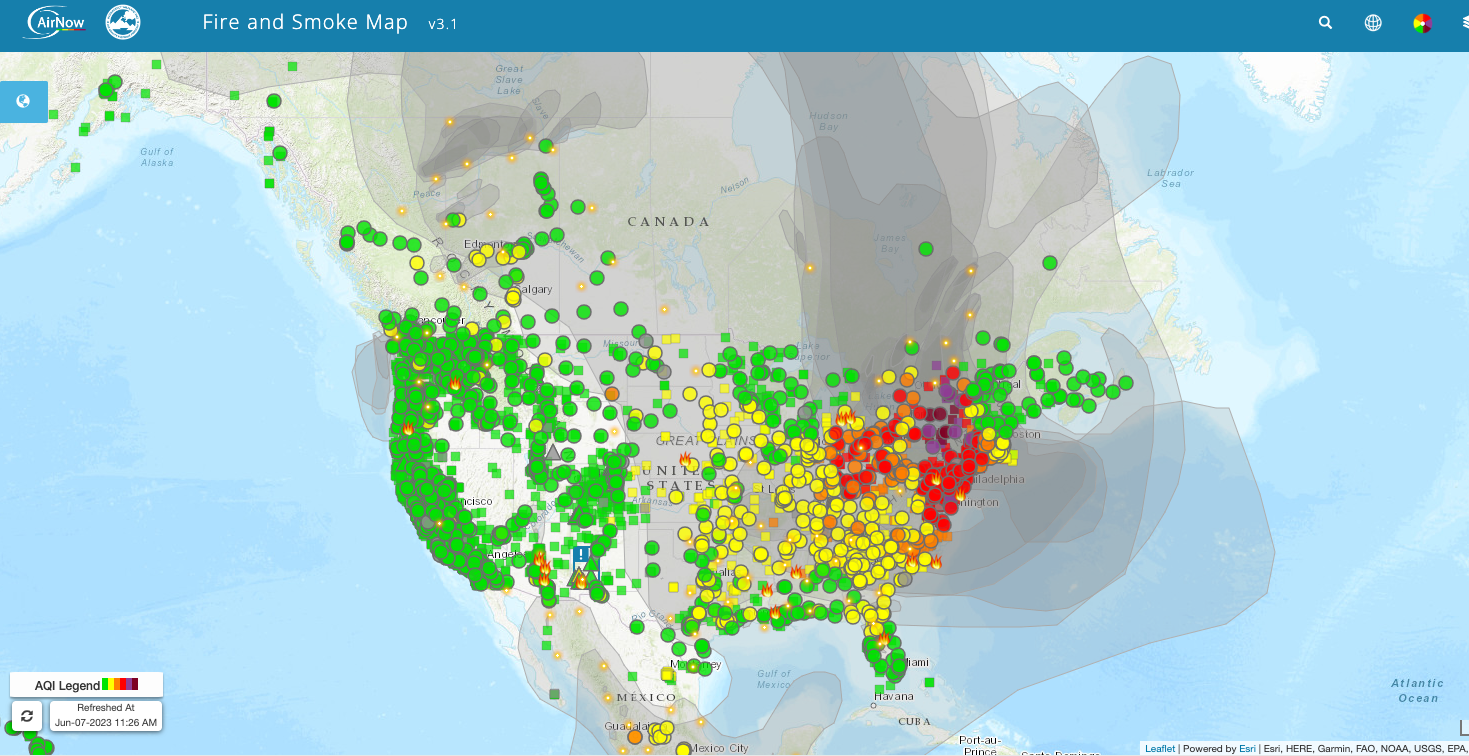
On Tuesday, people across the Hudson Valley could smell and see smoke through the yellow-gray haze. In central New York, Syracuse Hancock International Airport reported a visibility of only 1.75 miles, according to an AccuWeather analysis of NWS data, and schools kept children inside.
Meanwhile, Quebec ordered more evacuations late Tuesday as dozens of wildfires remain out of control, the Associated Press reported. According to the province’s forest fire prevention agency, more than 150 forest fires were burning in the province, including more than 110 deemed out of control.
They are big and relatively close, about 500 to 600 miles away from Rhode Island.
Jay Engle, a National Weather Service meteorologist based in Upton, Long Island, said the wind trajectory that allowed smoke and hazy conditions to be seen in the New York City area could continue for the next few days. Of course, he said, the main driver of conditions is the fires themselves. If they diminish, the haze would too, the AP reported.
Air quality alerts are triggered by a number of factors, including the detection of fine-particle pollution — known as “PM 2.5” — which can irritate the lungs.
“We have defenses in our upper airway to trap larger particles and prevent them from getting down into the lungs. These are sort of the right size to get past those defenses,” said Dr. David Hill, a pulmonologist in Waterbury, Connecticut, and a member of the American Lung Association's National Board of Directors. “When those particles get down into the respiratory space, they cause the body to have an inflammatory reaction to them.”
To underscore the health impacts — based on available research, AccuWeather estimates that breathing the polluted air in the worst affected areas of the Northeast for several hours can result in breathing in the same level of harmful air as smoking 5-10 cigarettes.
Trent Ford, the state climatologist in Illinois, said the atmospheric conditions in the upper Midwest creating dry, warm weather made it possible for small particulates to travel hundreds of miles from the Canadian wildfires and linger for days.
“It’s a good example of how complex the climate system is but also how connected it is,” Ford said.
It's a good time to put off that yard work and outdoor exercise. If you go out, consider wearing an N95 mask to reduce your exposure to pollutants.
Stay inside, keeping your doors, windows and fireplaces shut. It's recommended that you run the air conditioning on a recirculation setting.
“If you have filters on your home HVAC system, you should make sure they’re up to date and high quality,” Hill said. “Some people, particularly those with underlying lung disease, or heart disease, should consider investing in in air purifiers for their homes.”
New Yorkers also are urged to take the following energy saving and pollution-reducing steps:
- use mass transit instead of driving, as automobile emissions account for about 60 percent of pollution in our cities.
- conserve fuel and reduce exhaust emissions by combining necessary motor vehicle trips;
- turn off all lights and electrical appliances in unoccupied areas;
- use fans to circulate air. If air conditioning is necessary, set thermostats at 78 degrees;
- close the blinds and shades to limit heat build-up and to preserve cooled air;
- limit use of household appliances. If necessary, run the appliances at off-peak (after 7 p.m.) hours. These would include dishwashers, dryers, pool pumps and water heaters;
- set refrigerators and freezers at more efficient temperatures;
- purchase and install energy efficient lighting and appliances with the Energy Star label; and
- reduce or eliminate outdoor burning and attempt to minimize indoor sources of PM 2.5 such as smoking.
The Associated Press contributed to this report.
Get more local news delivered straight to your inbox. Sign up for free Patch newsletters and alerts.