Neighbor News
Medication Management Is Critical to a Senior's Welfare
Questions to ask healthcare professionals and pharmacists to better monitor the prescriptions you or your senior loved ones take.
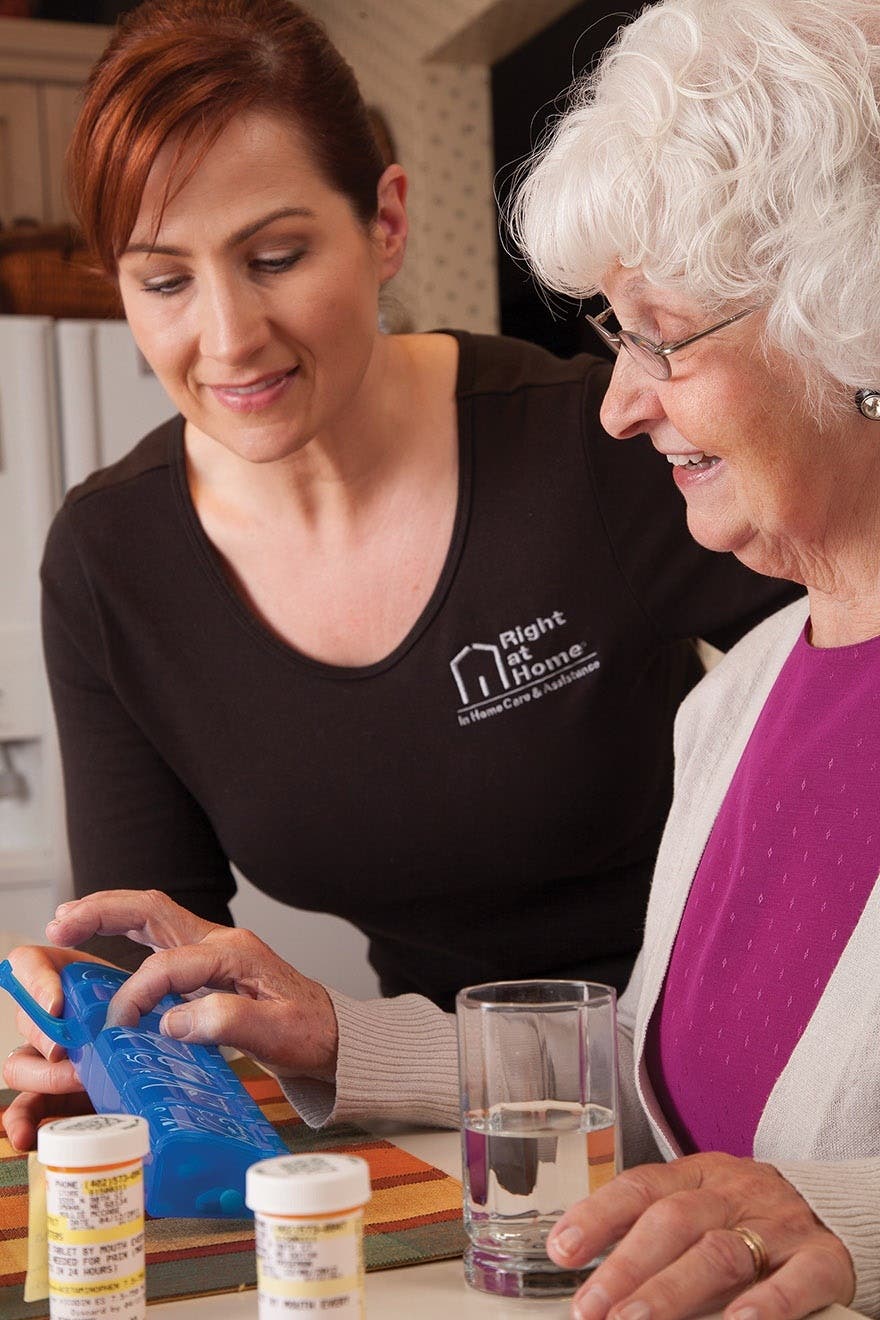
Grandma’s arthritic fingers struggle to grasp the tiny prescription pills, so she frequently drops them on the floor. Sometimes Grandma decides just not to bother with her medications at all. Dad cuts his daily blood pressure tablets in half to save money. Some days Mom forgets to take her diabetes and cholesterol medications. If she’s not sure whether she took them, she’ll take an extra of each the next day to “catch up.”
The wrong medications. The wrong dosage. The wrong timing. Any of these scenarios of skipped medications or taking too much or too little can cause medical complications or even death. The nation’s seniors are particularly at risk for medication-related difficulties. Some healthcare experts rank medication problems among the top five causes of death for people over age 65 and as a source of confusion, falls and loss of independence.
In a 2013 report on aging and health, the Centers for Disease Control and Prevention reported, “More than a quarter of all Americans and two of three older Americans have multiple chronic conditions, and treatment for this population accounts for 66 percent of the country’s healthcare budget … People with multiple chronic conditions face an increased risk of conflicting medical advice, adverse drug effects, unnecessary and duplicative tests, and avoidable hospitalizations, all of which can further endanger their health.”
Find out what's happening in Oyster Bayfor free with the latest updates from Patch.
The more medications a person takes, the greater likelihood of adverse drug interactions or a mix-up in dosages. A nurses’ handbook available on the National Center for Biotechnology Information website states that seniors discharged from the hospital on more than five drugs are more likely to be readmitted to the hospital within six months after discharge.
Medication-related ER trips and hospitalizations also occur because the elderly absorb medicines at a different rate than when they were younger. Drugs taken with certain foods and liquids also can affect absorption and side effects. Staying ahead of complications from medications truly becomes a first line of defense for patients and their caregivers.
Find out what's happening in Oyster Bayfor free with the latest updates from Patch.
“Properly managing medications is crucial for every individual, especially those with multiple health conditions, and the elderly pose an increased challenge said Sandy Quartuccio, President of Right at Home North Shore Long Island. “This is why we train our adult home care providers specifically on monitoring medications. We help ensure older adults stay healthy and relieve family members of the worry of making sure their loved one takes their medications.”
Sandy offers these common medication problems and prevention tips for older adults:
- Trouble Reading Labels – For seniors with diminished eyesight, ask the pharmacist for large-print labels and instructions.
- Memory Impairment – Elders who have dementia and other cognitive issues need specific reminders for timing and dosages. Use standard pill box organizers or electronic ones with timers and rescue alerts, or seek assistance from in-home care professionals like Right at Home.
- Financial Limitations – Some seniors on tight budgets will cut prescribed medications in half or skip doses to save money. Generic brands and 90-day supplies help reduce medication costs, and for those who meet income requirements, prescription assistance programs can help. In addition, people on Medicare and U.S. military veterans also may qualify for lower-cost medications.
- Swallowing Difficulties – Asking for liquid forms of medications can ease swallowing challenges. Never score, crush, chew or mix medications in liquids without first checking with the pharmacist.
- Improper Storage – Certain medications require refrigeration (insulin, eye drops, etc.). Also, exposure to extreme temperatures can alter the effectiveness of the medication or cause side effects.
Successful medication teamwork involves seniors and their family caregivers informing every healthcare provider of all medications, over-the-counter drugs, vitamins and supplements the senior is taking. It’s also essential to ask:
- What is the purpose of this medication?
- When and how often should I use this drug?
- What are the main side effects that could bother me?
- Will this medication interact with my other medications, supplements or vitamins?
- What should I do if I miss a dose?
- Is there a generic, lower-cost brand available and does it work the same?
For additional help to prevent medication errors, the Administration on Aging offers innovative resources and a comprehensive list of prescription-related questions to ask doctors and pharmacists. The key in safeguarding seniors’ drug usage is for all parties involved to be aware of any medication concerns before a mix-up or mishap occurs.
About Right at Home North Shore Long Island
The North Shore Long Island office of Right at Home is a locally owned and operated franchise office of Right at Home, Inc., serving the communities of the North Shore of Nassau County. For more information, visit our website at www.rightathome.net/north-shore-long-island, call us at 516-513-1070, or email us at squartuccio@rahlongisland.com.
About Right at Home
Founded in 1995, Right at Home offers in-home companionship and personal care and assistance to seniors and disabled adults who want to continue to live independently. Local Right at Home offices are independently owned and operated and directly employ and supervise all caregiving staff, each of whom is thoroughly screened, trained, and bonded/insured prior to entering a client’s home. Right at Home’s global office is based in Omaha, Nebraska, with more than 350 franchise locations in the U.S. and more than 40 locations in seven other countries. In addition, Right at Home is the first U.S. in-home senior care franchise to enter Brazil and China. For more information on Right at Home, visit About Right at Home at www.rightathome.net/about-us or read the Right at Home caregiving blog at www.rightathome.net/blog.