Health & Fitness
Deceptive Females and Dishonest Signals
The insect world can be a dangerous place. Learn about the dishonest "come hither" signal emitted by female fireflies to lure unsuspecting males of another species!
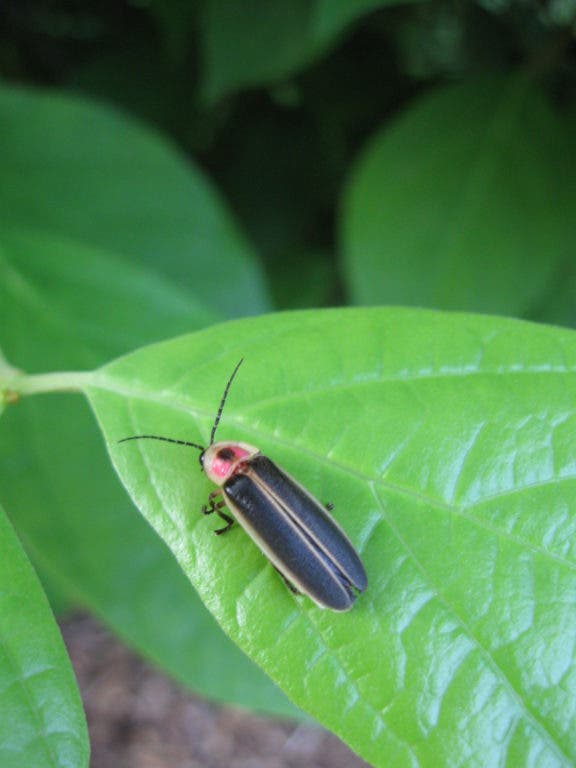

I consider myself a fair and objective person. As a scientist I am trained to present facts devoid of personal prejudices and/or prior experience. Therefore, I cannot be held accountable for the horrible truth about deceptive females and dishonest signals I am about to tell.
How did this come to pass? Well, just the other night I was taking out the garbage when I saw a flickering light across the yard. I knew it right away: fireflies! Yes, this brief account is about deceptive, exploitative female fireflies.
A little known fact is that many firefly species have their own unique pattern of flashing along with their own flight behavior. These set paths and lighting sequences are shared amongst individuals within the species, and are used as an important cue in mate finding. Starting at dusk, male fireflies soar through the air on warm summer evenings and announce their presence with a patterned flash. From a resting site on vegetation, females of the same species are genetically programmed to respond after a certain time interval with their own signal, which tells the male that she is an available match and ready to mate. Without shame, females in another genus can respond to males at the correct interval and with the right signal. If she successfully lures in a male, she will grab him, kill him and proceed to eat him! This is the story of two particular genera of fireflies called Photinus (the prey) and Photuris (the predator).
Find out what's happening in Peekskill-Cortlandtfor free with the latest updates from Patch.
You might ask yourself, how does a dishonest signal that kills an unsuspecting receiver perpetuate in the natural world? That’s a great question! A current hypothesis to explain the maintenance of this behavior is called Exploitation Theory. It goes like this: in order for males to reproduce and pass on their genes, they must respond to female signals. Males that avoid responding to female signals for “fear” of exploitative females might live longer, but would probably also ignore females of their own species and leave few or no descendants to carry on this cautious behavior. Therefore, males that respond to female signals are, on average, more successful and leave behind more offspring. As with most behaviors in the ecological world, the benefits of a behavior must outweigh the costs.
So - next time you’re out at dusk and see fireflies lighting up your yard, count the patterns you see and whether males get a date, or go out as dinner!
Find out what's happening in Peekskill-Cortlandtfor free with the latest updates from Patch.
Fun Fact: Light production in fireflies is the result of an enzymatic reaction, and is between 92 and 100% efficient. This means that light is generated with little or no heat as a by-product. Aptly named, this “cold light” is compared to incandescent lamps, which are only about 10% efficient due to excessive amounts of heat production.