Politics & Government
UPDATE: NRC to Re-Analyze Costs of an Accident at Indian Point
Entergy points out the alternatives to be studied are supplementary, not necessary for safety.


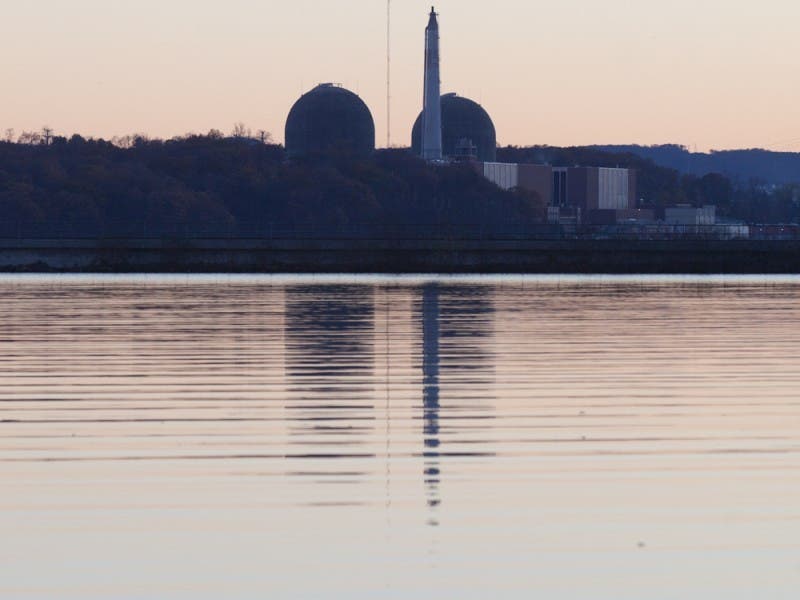
The Nuclear Regulatory Commission, reversing an earlier decision, has directed its staff to supplement the Indian Point Severe Accident Mitigation Alternatives analysis with sensitivity analyses.
However, the Commission denied the New York Attorney General Office’s effort to have new information considered as part of the SAMA analysis. Specifically, the AG sought to have inputs used in the computer modeling for potential off-site impacts from a severe accident. The Commission ruled those changes were not necessary, an NRC spokesman said.
New York officials had challenged the SAMA analysis for Entergy's Indian Point license renewal application. They argued that the Indian Point SAMA analysis underestimated the economic costs of a severe reactor accident at Indian Point by underestimating the costs of decontamination.
Find out what's happening in Peekskill-Cortlandtfor free with the latest updates from Patch.
The Commission said staff had relied on data whose source could not be found, which meant that they were unable to explain and make available underlying assumptions in their environmental analyses.
Entergy officials released this statement:
Find out what's happening in Peekskill-Cortlandtfor free with the latest updates from Patch.
In a decision related to Indian Point’s license renewal application, the Nuclear Regulatory Commission ordered the NRC Staff to perform further analysis of the potential economic consequences of a severe accident compared to the potential costs and benefits of certain plant upgrades that might mitigate such economic consequences. It’s important to note that none of the mitigation alternatives evaluated in the SAMA analysis are measures the agency has deemed necessary for safety. They are supplemental to mitigation capabilities NRC safety regulations already require.
A three-judge expert panel dismissed the vast majority of the more than 100 contentions that were previously filed by New York State and a handful of other opponents. Of the handful or so remaining contentions, Entergy has prevailed on nearly all and expects to fully resolve any remaining issues and achieve a renewed federal license for this important facility.
We will cooperate with the Staff to provide additional information, as requested.
The decision was welcomed by Gov. Andrew M. Cuomo, who has long opposed Entergy's request for license renewal for the plant. In fact, he has called for it to be shut down.
“Today’s decision by the NRC Commissioners to reverse an earlier administrative ruling, and to require a reexamination of the impacts caused by severe accidents at Indian Point and potential upgrades reaffirms our long-standing position that the aging nuclear power plant needs to be retired," Cuomo said in a prepared statement. "Clearly, this facility poses too great a risk to the millions of people who live and work nearby. We will work closely with NRC staff and continue to monitor Indian Point’s daily operations to ensure that a proper analysis is done regarding any unacceptable dangers to ensure that the public is protected at all times.”
RELATED:
- NY Doubles Down on Indian Point Opposition
- Indian Point Sues New York State
- NRC Rejects New York's Appeal, Upholds Easing Testing Mandate at Indian Point
In the NRC's decision, the commission wrote:
Stepping back from the details, we reach the following conclusions. First, the Board’s decision relies on several significant factual errors, both relating to SAMA analysis computer modeling and to the content of the evidence presented. Second, while the evidence does not establish that the Indian Point SAMA analysis non-farm decontamination costs are unduly low or wrong, it reveals potentially significant uncertainties in the non-farm land and property decontamination cost and the decontamination time input values. The Staff and Entergy could not explain the underlying technical basis for these values. And they presented no updated analysis that revisited and confirmed the values in light of any more recent decontamination data. Given the passage of time, it is not surprising that the individuals most acquainted with the work that produced these cost and time estimates may no longer be available to explain their analyses, but unfortunately none of the parties could provide a documented description outlining the technical foundation of the estimates (e.g., the experiments, data, size of area, or other factors considered). In this circumstance, running sensitivity analyses for the TIMDEC and CDNFRM values is appropriate.
and
We conclude with two comments. First, our decision today is not about flyspecking. It is instead about responding with appropriate scrutiny and reasoned explanations to “opposing views,” which includes being able to explain and make available underlying assumptions in our environmental analyses. Second, while the sensitivity analyses we direct the Staff to provide may identify additional potentially cost-beneficial mitigation measures, these would be additional alternatives for consideration to further reduce risk. NEPA does not require that a “mitigation plan be actually formulated and adopted.” NEPA seeks to “guarantee process,” not any “specific outcomes.”
Get more local news delivered straight to your inbox. Sign up for free Patch newsletters and alerts.