Politics & Government
NRC Eases a Testing Requirement at Indian Point
The results of past containment concrete and liner visual inspections demonstrate acceptable performance, federal officials said.


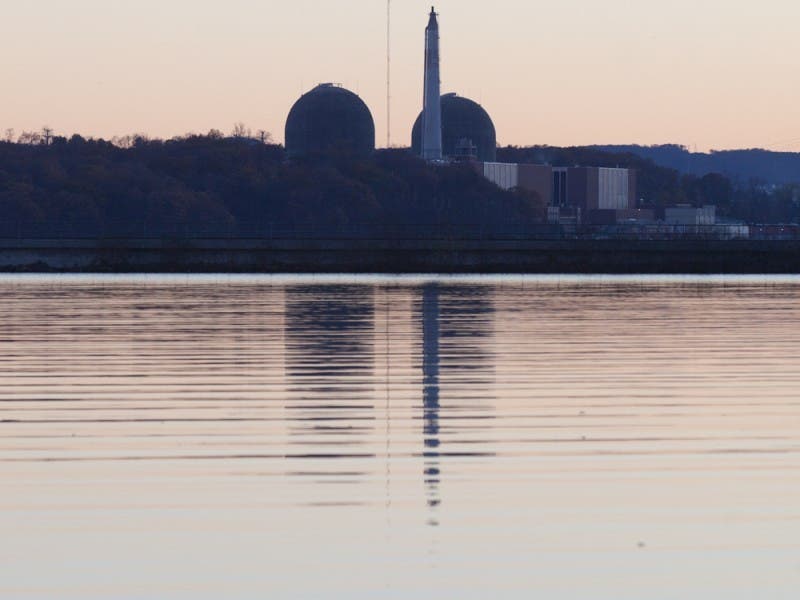
The Nuclear Regulatory Commission has approved Entergy’s license amendment request for Indian Point unit 2, allowing the plant to change the frequency of a certain containment pressure test.
A similar license amendment request was approved by the NRC for unit 3 in March of 2015, according to Entergy officials. The NRC along with the industry created guidance whereby plants can extend the performance of this test from 10 to 15 years, based upon good performance in past tests and following comprehensive engineering analyses, they said.
New York state officially opposed the amendment. When the Atomic Safety and Licensing Board rejected the state Attorney General’s request for a hearing, the AG’s Office filed an appeal, which is pending.
Find out what's happening in Peekskill-Cortlandtfor free with the latest updates from Patch.
Congresswoman Nita M. Lowey (Westchester/Rockland) objected to any loosening of testing mandates.
“The Nuclear Regulatory Commission should not ease any type of testing requirement at Indian Point,” she said in a prepared statement this week. “Recent, alarming leaks at this aging facility make clear that Indian Point requires more safety tests, not fewer. It’s particularly concerning that NRC is loosening testing requirements for Indian Point while the facility seeks renewal of currently expired licenses for its Units 2 and 3 reactors.
Find out what's happening in Peekskill-Cortlandtfor free with the latest updates from Patch.
“I’ve introduced a measure to require the NRC to evaluate old power plants to be re-licensed with the same stringent criteria used to license new plants. I have also introduced a proposal requiring NRC to award grants for emergency preparedness when the agency collects safety-related fines from nuclear facilities. As Ranking Member of the House Appropriations Committee, I will continue to be laser-focused on ensuring that the NRC puts public health and safety first.”
According to the NRC:
NRC regulations require periodic testing of the containment buildings surrounding power reactors to check for leakage. This is accomplished by mechanically increasing pressure levels inside of the structure and then checking for air leakage. At IndianPoint Unit 2, the containment building has walls that are approximately 4.5 feet thick, with a steel liner on the interior that varies in depth from a quarter-inch to three-quarters of an inch. The containment structure is designed to prevent the release of radioactivity to the environment in the event of a severe accident.
Plant owners are required to perform these Integrated Leak Rate Tests (ILRTs) once every 10 years. However, they are also permitted to seek five-year extensions based on performance-based monitoring of the containment building. Entergy submitted a license amendment request to the NRC on Dec. 9, 2014, asking for a five-year extension for Indian Point Unit 2. (A similar request for Indian Point Unit 3 was approved by the NRC in March 2015. Other plants have also received such extensions.) Entergy’s basis for the change included the historical leakage test results for Indian Point Unit 2 and Containment In-Service Inspection program results, supported by a plant-specific risk assessment. (The in-service inspections are visual examinations of the containment building conducted during refueling and maintenance outages, which are conducted at each plant every 18 months to two years.)
The last Integrated Leak Rate Test for Indian Point Unit 2 was completed in April 2006. The plant was scheduled to perform another ILRT in March, but the approval of the license amendment will postpone that to March 2021.
After a thorough review of all of the information submitted by Entergy, including responses to follow-up questions posed by the agency, the NRC staff has determined that the company has “adequately implemented its Containment In-service Inspection Program to periodically examine, monitor, and manage the condition of its containment structure. The results of past containment concrete and liner visual inspections demonstrate acceptable performance of the containment and demonstrate that the structural integrity of the containment structure is adequate. Thus, the staff finds that there is reasonable assurance that the containment structural integrity will continue to be maintained, without undue risk to public health and safety, if the current Type A (Integrated Leak Rate Test) interval is extended to 15 years.”
In May 2015, the New York State Attorney General’s Office sought a hearing on the license amendment request and urged the NRC to deny the request. In September 2015, an Atomic Safety and Licensing Board (ASLB) panel rejected the AG hearing request. (The ASLB is the quasi-judicial arm of the NRC that conducts licensing hearings.) In October 2015, the AG’s Office filed an appeal. The appeal is before the presidentially appointed Commission that oversees the NRC for its consideration.
Get more local news delivered straight to your inbox. Sign up for free Patch newsletters and alerts.