Community Corner
'I Would Do It Again': Coworkers Turn 22-Year Friendship Into Lifesaving Kidney Donation
One friend's kidney donation helped save the life of her longtime colleague after years of illness and dialysis.

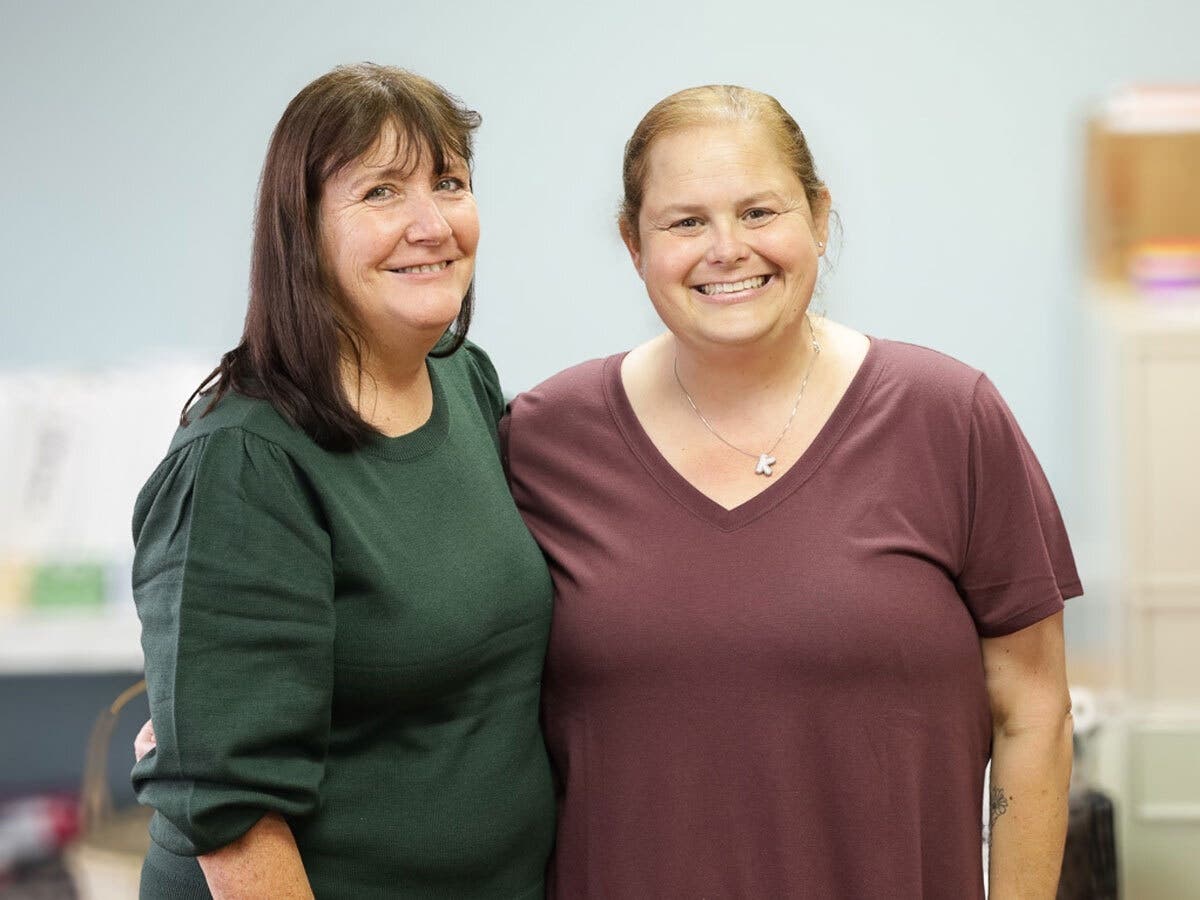
BETHPAGE, NY — AHRC Nassau employee Krystie Damsker received the gift of life with a kidney donation through the help of her coworker and longtime friend Jerri Walker.
Krystie Damsker, a hands-on caregiver and Assistant Manager at the Bethpage Day Services hubsite, began to notice concerning health symptoms in July 2022 and brushed them off as 'long COVID.' As time went on, the pain became debilitating, and her legs and stomach swelled.
"It was bad," she said. "I stopped being able to breathe. I couldn't lie down. I was having difficulty walking. After that, it was all downhill. It got worse and worse. Then one day, I was like 'I have to go to the hospital.'"
Find out what's happening in Plainviewfor free with the latest updates from Patch.
The day before Thanksgiving back in 2022, she decided enough was enough and was admitted to the hospital. She was diagnosed with advanced-stage renal disease.
Doctors found that her symptoms were caused by 80 pounds of fluid buildup in her body.
Find out what's happening in Plainviewfor free with the latest updates from Patch.
From November to January, the doctors tried to keep the fluid at bay with water pills, which affected her kidneys. Damsker had to have a catheter in her chest to begin dialysis. As her body adjusted to dialysis, she had to take a month off work, which she said was incredibly difficult.
For months after work, she traveled to receive dialysis: "I practically lived there for a year and a half."
Even during difficult days, Damsker found ways to stay positive – and even laugh.
"When I was working while undergoing dialysis, one of the incredible ladies we support would notice sometimes my chest catheter tubes falling over my shirt and call out, 'Krystie, tuck in your tail,'" she said. "We’d all laugh and continue on to the next activity."
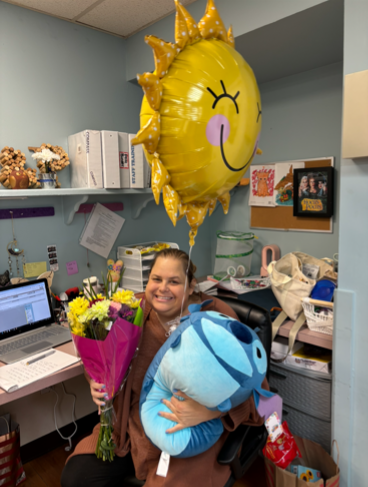
Her body had begun to adjust, and she felt 'great,' until it took a turn. One day, during treatment, she became pale and clammy. A nurse shouted at her, running to help.
"After that happened, I couldn’t find my way back to feeling good," she said. "I just kept getting sicker and sicker."
As she was undergoing treatment, she was still trying to live her life. Her job at AHRC Nassau means the world to her, and she wanted to be able to show up for those who needed her. She hardly ever took a day off work before she became ill.
"I was still going to work," she said, adding that it became difficult to be fully present. "I wanted to be there for the people I support."
In March 2023, she began to feel worse, even with dialysis.
"During that time, there was nothing to do besides wait," Damsker said. "I was miserable and could barely walk. I hid it. Dialysis is hard on the body. I would get migraines that would paralyze my whole body. I'd be screaming and crying each day. I dreaded going to dialysis, but I didn’t want to die."
Her coworker and the Director of Wheatley Farms & Arts Center, Jerri Walker, had mentioned to her that she always wanted to donate an organ to help someone in need, but Damsker had reservations.
"How can I ask someone for a body part?"
As her condition worsened, Damsker began to panic. She had a cousin willing to step up, and she didn't want to tell anyone what was going on besides her mother. Although she tried to keep it a secret, Walker noticed Damsker's health decline. She texted Damsker, asking for the number of NYU Langone’s kidney donation hotline, to see if she could be a match.
Back in 2008, Damsker had her first transplant – her mother donated a kidney. She had undiagnosed or unnoticed high blood pressure, which scarred the kidneys and led to renal insufficiency at 15 years old. It was kept at bay for 11 years until she was 26, when she received her first transplant.
The doctors confirmed her longtime friend Walker was cleared to be a donor. Walker’s kidney wasn't a direct match for Damsker, but she could donate to someone else. Her donation ultimately helped Damsker receive a kidney.
"I cried," Damsker said, adding that she didn't want to ask her to donate an organ. "But it would help me live."
Walker never wanted recognition for her life-saving donation.
"She said her part was easy," Damsker said. "She did it for me."
As to why she donated her kidney, Walker said it was to save her friend’s life and that Damsker was so deserving.
"I saw Krystie push through some very challenging times," Walker said, sharing how Damsker put others first. "She had these difficult days and still showed up at work. It was her priority. She pushed through. She even moved doctor’s appointments to be at events with friends."
Reflecting on the process of donating a kidney, Walker said soon after calling the NYU Langone’s kidney donation hotline, she underwent a full day of hospital screenings. She had physical tests, stress tests, ultrasounds, MRIs, blood work, and met with a counselor.
"I was determined to donate my kidney," she said. "Even if it wasn’t going directly to Krystie, it still helped her – and someone else."
She underwent the laparoscopic surgery before Damsker did, and said she was walking the very next day.
If there was one thing she would want people to know about donating an organ, it's that it can truly save a life.
"I would do it again."
The day Damsker was told she would receive a kidney transplant, she was at dialysis and became overjoyed with emotions, despite how hard she tried to hide it.
"There's no privacy in dialysis," she said. "There are people all around you, and you don't want to react because the person next to you may never get a kidney."
On the day of Damsker's operation, she said there was always the concern that the kidney wouldn't work right away, but she kept her outlook optimistic.
"Before surgery, I didn’t cry this time out of fear," she said. "I was smiling and laughing because this was it. My surgeon asked if I was ready, and I felt a calm come over me and said 'I'm ready.'"
Her kidney was driven to the hospital by a black car, with bodyguards and nurses: "It even gets its own seat on a plane."
The feeling of relief after the surgery washed over Damsker. "I said, 'I'm alive.'"
Although the surgery had been a success, recovery was still rough. She was allergic to the staples, had her stomach split open, and was put on a wound vac. A home nurse had to visit her three times a week. It was a three-month road to recovery, but by September 2024, she was making steady progress.
"I didn't know this is how you're supposed to feel," she said. "I woke up one day and felt really good and was running around the place. The kidney wasn't directly from Jerri, but I got one because of her. I'm always thanking her. My family keeps thanking her."
Looking back, Damsker said her recovery would not have been possible without the support of those around her:
"We all need community. Nothing happens alone. I’m fortunate to have wonderful people in my life: my mom and family, teams of doctors at NYU Langone and Northwell Health; a supportive workplace; and a friend who saved my life. What I’ve learned from this experience is to live your life and cherish the people in it. They saved mine and could save yours, one day."
It had taken time before she was fully recovered, but she was thankful to be back at work, helping people.
"It was terrifying, but it took me over a year to feel good," she said. "I can walk into work and make a difference because I’m doing better. I was so happy to be back. Everyone here sees everything. When I became that person again — the one people come to for questions and encouragement — I felt like I was truly back."
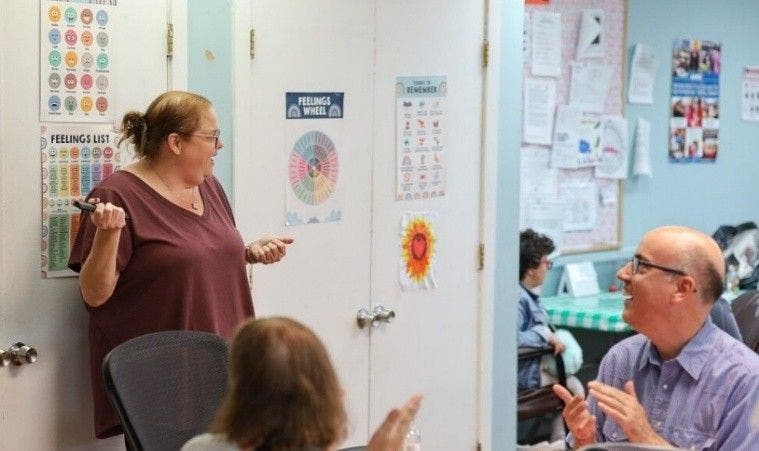
Emily Storz, who is supported by AHRC Nassau's Bethpage Hubsite, has known Damsker for 13 years. Storz said Damsker helps her stay calm.
"Krystie's my hero," Storz said. "She's grown a lot and been very strong. She comes in here with a positive attitude. It was hard to say goodbye for a time. I remember the swelling, and Krystie had difficulty walking. Now, Krystie is walking all over the place like a champ."
One of the last outings before Damsker’s condition worsened in November 2022 was a bingo event with friends, Storz recalled.
"I noticed something wasn’t right," Storz said. "My heart sank."
Storz said she prayed for Damsker's strength and recovery, and is grateful for both Walker's donation and Damsker's progress.
For Walker, AHRC Nassau has always felt like home.
"It feels like family," Walker said.
More information about the donation process and how to become a donor is available through the National Kidney Foundation.
Those interested in living kidney donation through the NYU Langone Transplant Institute can contact a donor team specialist at 212-263-3621 or email NYUTrLivingDonor@NYULangone.org.
Get more local news delivered straight to your inbox. Sign up for free Patch newsletters and alerts.