Health & Fitness
What Kids Need to Know About The Wrong Answer Penalty on The SAT
Too many SAT test-takers misunderstand the wrong answer penalty, costing them valuable points. This post describes the penalty and explains when students should guess vs. skip questions.

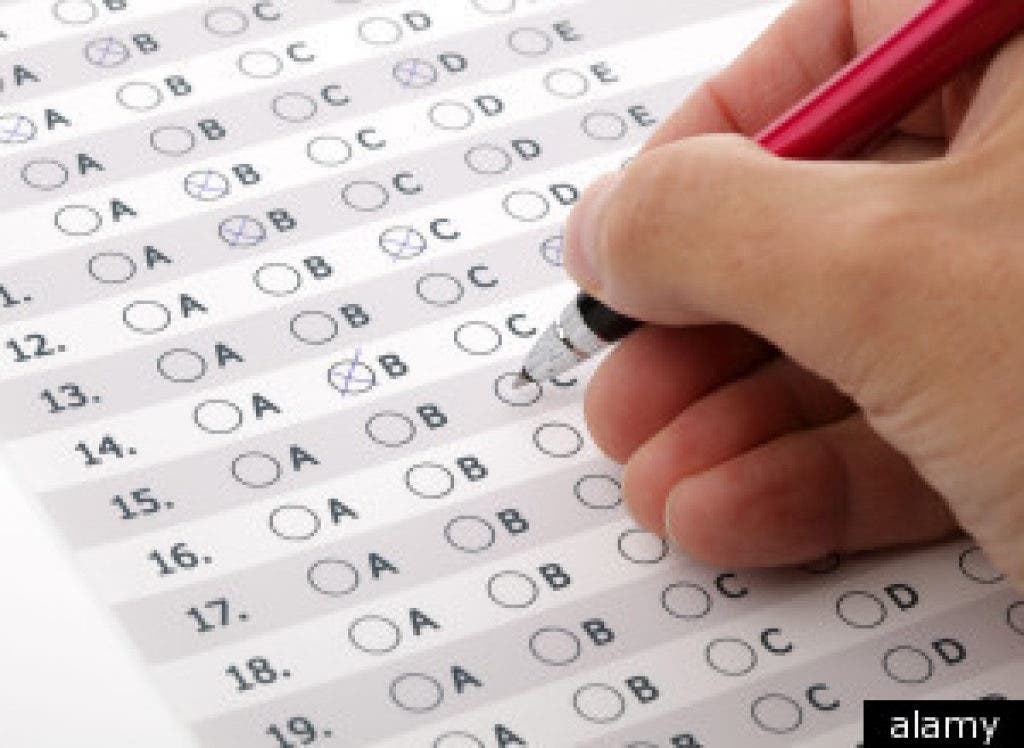

One of the more frustrating experiences that I often have as an SAT tutor revolves around the wrong answer penalty and the question of whether to guess on a question or just skip it.
Very often I have a very long and thorough conversation with a tutoree in which I explain the details of the penalty and explain when they should or should not guess. Usually that is pretty well received and understood but at some point in the future the student somehow forgets the advice and makes mistakes in the way that they manage themselves through a section, mistakes that often cost a lot of points and that can very easily be remedied. Students can certainly be forgiven since there are many tutors, instructors, and even entire test prep companies that provide bad advice on when to guess and when not.
I think that the reason that many kids skip questions unnecessarily is that they understand that there is in fact a wrong answer penalty and they don’t want to incur it unnecessarily. However, they fail to understand how it really works. The penalty is there not to punish wrong answers and not even to punish guessing. Heck, its not even there to punish random guessing. Its merely there to make sure that someone who randomly guesses doesn’t gain an advantage. On a 20-question math section, if you were to randomly fill in C for every question without even opening up the test booklet, you would, on average, end up with a raw score of 0. This is exactly what you would score if you just skipped every single question. So the penalty, if we can even call it one, is merely there to make sure that you just break even when guessing randomly.
Find out what's happening in Port Washingtonfor free with the latest updates from Patch.
So when should you actually skip a question then? Well, if you cannot eliminate a single answer on a question, guessing is unlikely to help you. BUT it won’t really hurt you either!!! And in practice, test takers can almost always eliminate some answers, particularly on the Writing and Critical Reading sections. So, if you’ve spent any significant amount of time on a question you probably should guess, since you are likely to have a better than 20% chance of picking the right answer. What if you weren’t really able to eliminate anything? Well you certainly don’t have to guess, but again it will not hurt you if you do; it just may not help.
So when does it actually make sense to skip a question? The only really good reason to skip a question is to save time. Particularly on the Math section, where the questions go in order of difficulty, it is not a good idea to spend valuable time on questions that are out of your range and move too quickly through ones that you should be able to get right. Or if on a Critical Reading section one of the passages is much harder than the other, it may make sense to spend more time on the passage you are more comfortable with and perhaps skip over some of the harder questions on the harder passage. The idea is to read a question and say to yourself, “no, this question is too hard, I am not going to waste my time on it.” In that case, skip it. But if you dive in and attempt to answer it, at that point you should select an answer even if it is a guess.
Find out what's happening in Port Washingtonfor free with the latest updates from Patch.
I am often pleased and not really surprised when I force a student to answer a question (especially a Writing or Critical Reading question) that they skipped on a practice test and they answer it correctly. It happens far more than 20% of the time!
------------------
Brian Prestia, a Port Washington resident, is a full-time, professional test-prep tutor and SAT expert. He has a decade of experience and scored a perfect 2400 on the test. For more information, please visit ReasonSAT.com