Crime & Safety
Accused Gilgo Killer A 'Sexual Sadist' Who Contacted 60 Prostitutes, Searched For 'Torture' Porn: DA
Accused Gilgo Beach killer Rex Heuermann reached out to more than 60 sex workers before his arrest, an explosive new filing indicates.


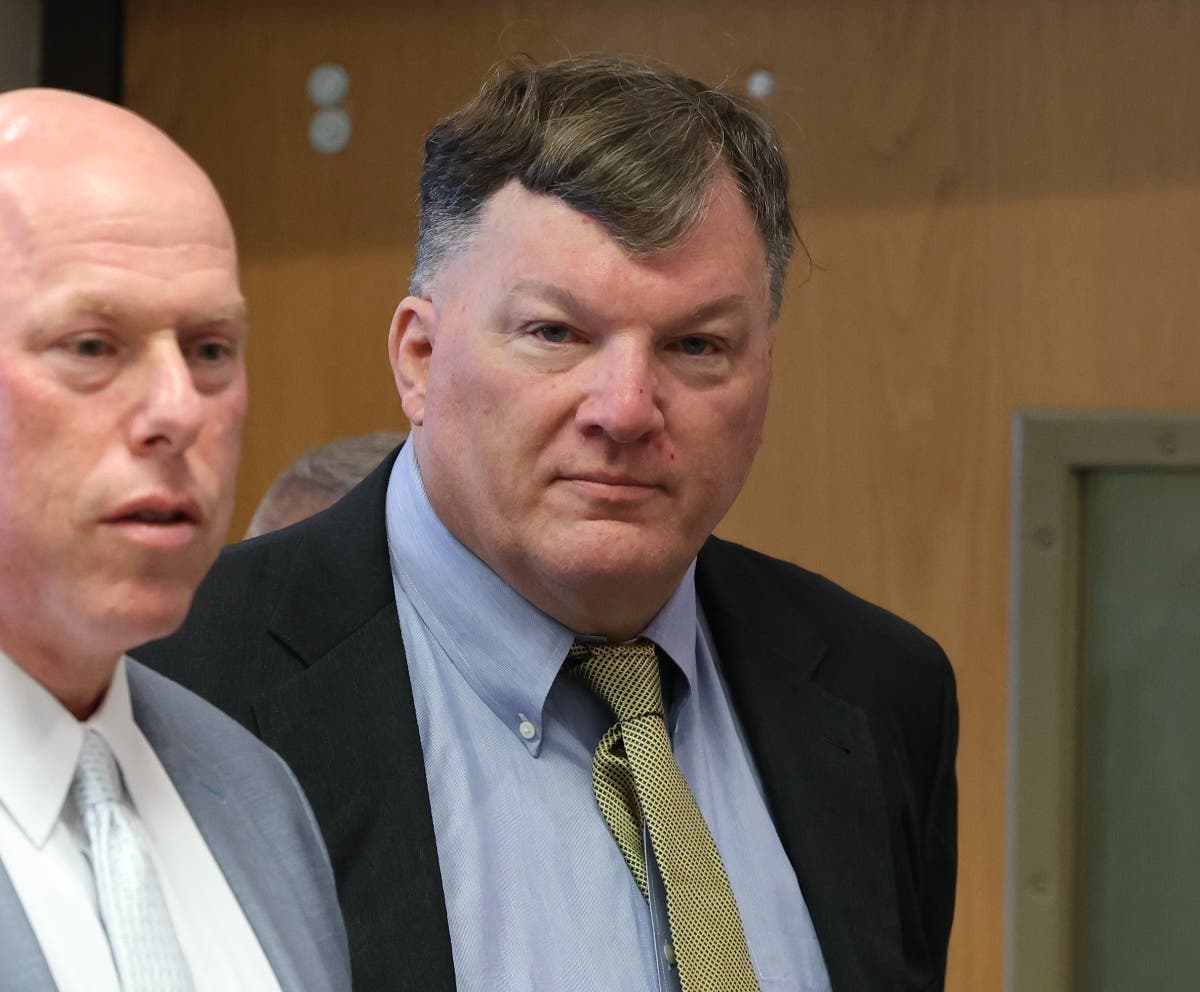
LONG ISLAND, NY — Accused Gilgo Beach killer was in contact with more than 60 sex workers and searched extensively for "torture" porn — and well as for information on the serial killings he is charged with committing, Suffolk County District Attorney Ray Tierney said this week.
Tierney, who is prosecuting the case against accused Gilgo killer Rex Heuermann, submitted an affirmation and memorandum of law in opposition to an omnibus motion presented by the defense in January.
The defense asked for court inspection of grand jury minutes; an order dismissing Count 10, involving victim Sandra Costilla on the grounds that the "evidence before the grand jury was not legally sufficient to establish the offense charged or any lesser included offense and that the integrity of the grand jury was impaired so as to warrant dismissal."
Find out what's happening in Riverheadfor free with the latest updates from Patch.
Also according to the omnibus motions, the defense has asked that any evidence gleaned from an unlawful search be deemed inadmissible or that a hearing be held for the purpose of making findings of fact necessary to decide instant application. In addition, the omnibus motions ask that any evidence consisting of statements made by Heuermann to a public servant or agents thereof "as such statements were obtained in violation of Heuermann's rights as protected by United States Constitution and the Constitution of the State of New York, for the purpose of making the findings of fact necessary to decide the instant application."
The omnibus motions also ask for suppression at trial of the introduction of "testimony concerning an observation" of Heuermann "either at the time and place of the commission of the offense, or upon some other occasion relevant to the case as such observation was unduly suggestive; and to suppress at trial any testimony regarding an in-court identification such as such testimony is tainted by the unduly suggestive out-of-court observation" or that, as an alternative, a hearing be held.
Find out what's happening in Riverheadfor free with the latest updates from Patch.
The motion also asks for all evidence favorable to Heuermann to be handed over by the prosecution.
The DA's opposition to the omnibus stated that, "contrary to the defendant's assertion, the prosecution of the defendant for the murder of Sandra Costilla does not 'rest entirely on a single hair.'"
The prosecution maintained that the "evidence presented to the grand jury was legally sufficient to sustain the indictment against defendant for the murder of Sandra Costilla."
The affirmation added: "A constant theme of the defendant’s affirmation is his attempt to trivialize and minimize the nature of the evidence presented to the grand jury," by mentioning the "single hair."
Instead, the prosecution said: "A male hair recovered from the mutilated remains of Sandra Costilla, which two forensic laboratories were able to independently determine is substantially more likely to have derived from a person genetically identical to defendant’s mitochondrial and nuclear DNA profiles. In other words: When evaluating mitochondrial DNA: While 99.96 percent of the North American population can be excluded as the contributor of the male hair on Ms. Costilla, defendant could not be excluded as the contributor of the male hair on Ms. Costilla."
Also, the prosecution said: "The DNA profile generated from the male hair on Ms. Costilla is 4.347 x 10332 times 1 more likely to come from an individual with the identical genetic profile as the defendant."
The prosecution also discussed a female hair found on Costilla, "While 99.98 percent of the North American population can be excluded as the contributor of this female hair on Ms. Costilla, defendant’s ex-wife could not be excluded as the contributor of this female hair on Ms. Costilla."
Heuermann's ex-wife and mother moved out of his residence shortly before the murder of Sandra Costilla, the DA said.
The filing added: "Based on the foregoing, the members of the grand jury could reasonably infer the defendant and his ex-wife’s hair were left on Ms. Costilla’s body either immediately prior to, and/or at the time of her death (e.g., in an enclosed space such as a car, room, and/or bedding, during a struggle, or when Ms. Costilla was handled, restrained, and/or transported to Southampton in 1993). "
Additionally, the prosecution said, "During the properly joined grand jury proceedings, the grand jurors were also made aware that hairs recovered on five other victims were likewise forensically tied to defendant, members of his immediate family, or individuals with whom defendant resided. Based on the foregoing, the grand jurors had every reason to infer that the presence of hairs on five separate homicide victims was no coincidence, but evidence of a clear pattern that points to the defendant’s direct contact with the victims either immediately prior to and/or at the time of their respective deaths. "
Heuermann had "mementos of the charged homicides," prosecution states
The prosecution's response said that Heuermann had "mementoes relating to each of the charged homicides," including magazines and newspaper clippings.
"In making these arguments, the defendant omits two important facts that are fatal to his position," the prosecution said. "First, the defendant possessed a publication relating to the homicides of every single victim named in this indictment."
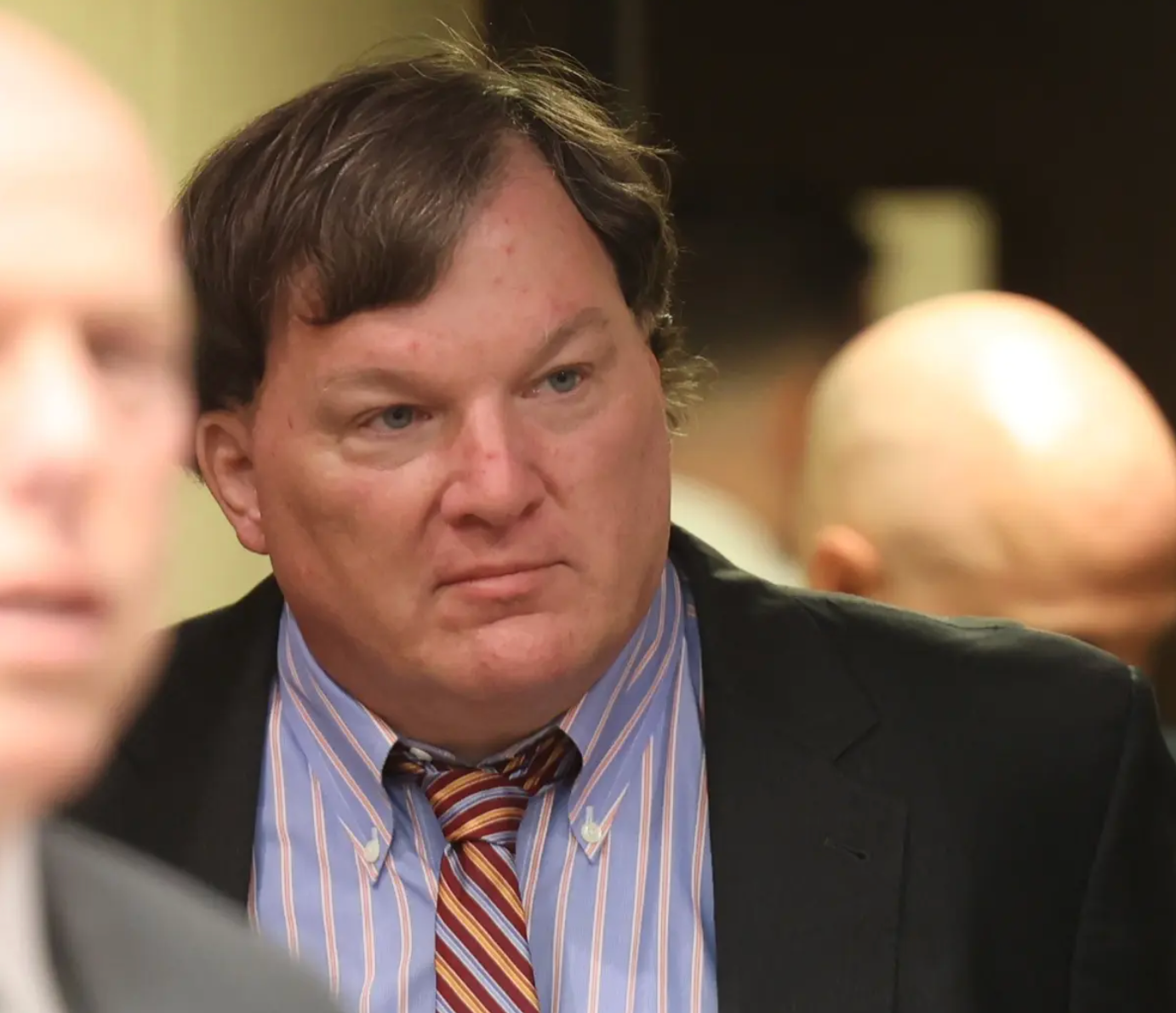
(Newsday pool / Courtesy James Carbone)
The "blueprint"
The prosecution's response references a Microsoft Word document, found in 2024, which, Suffolk County District Attorney Ray Tierney said, was a "planning document" used by Heuermann to "methodically blueprint" and "plan out" his "kills" during the "sprawling" timeline of the case.
The planning document was divided into sections, including "problems," such as DNA, tire marks, blood stains, fingerprints, plastic bags/cat litter, witnesses, trace source of supplies, foot/shoe prints, photos, police and truck stops, and fingerprints in gloves, hair and fiber, prosecutors said.
There was also a section for supplies needed to carry out serial murders "to avoid apprehension and to avoid leaving behind DNA evidence," the DA said.
There was a "DS" heading that referred to "dump site," prosecutors said, as well as a "TRG" section, which appears to refer to "target," prosecutors said.
According to prosecutors, the victims were all small, petite women, consistent with a "SMALL IS GOOD" entry in the document.
The "manifesto" also includes sections on "pre-prep," "prep," and "post event"; that section includes entries such as "distroy (sic) file," "change tires," "burn gloves," "dispose of pic's (sic)" and "have story set."
In the response this week, the prosecution said: "At the outset, because the 'HK Planning Document' was “created years after Ms. Costilla’s death," the defendant contended it cannot constitute "probative evidence" linking defendant to the homicide of Ms. Costilla. Once again, the defendant’s argument amounts to a disguised attempt to relitigate an issue that this court has already decided."
The response added: "The grand jury was permitted to make reasonable inferences that the HK Planning Document provides a window into the defendant’s state of mind, evincing his clear intent for present murders (document initially created in 2000, i.e., Valerie Mack) and future murders (post-2000 homicides, i.e., Jessica Taylor, Maureen Brainard-Barnes, Melissa Barthelemy, Megan Waterman, and Amber Costello) based upon issues he encountered during his past murders (pre-2000, i.e., Sandra Costilla). This suggests a refinement in defendant’s technique over the series of murders and accounts for not only minor differences in packaging, location, and condition of the victims, but also the defendant’s clear intent to murder multiple women."
And, the response added: "The grand jury was presented with ample and overwhelming evidence supporting reasonable cause to believe defendant was guilty of Ms. Costilla’s murder. Therefore, defendant’s motion must be denied."
At least 60 sex workers
The prosecution's memorandum also addressed search warrants and unveiled new details in the case — including that Heuermann made "recurring payments to Tinder," an online dating app, used to find "dates" or "hookups."
According to the memorandum, Heuermann used a pseudonym of "Andy" for his Tinder profile and a phone number associated with a burner phone.
From July 1, 2019 to January 19, 2023, Heuermann had "significant contact with at least 60 prostitutes," the prosecution accused.
The burner phone was "being used primarily to communicate with sex workers," the prosecution said.
In addition, Heuermann's home IP address was "used to access Gilgonews.com, a website maintained by the Suffolk County Police Department to disperse news pertaining to this investigation, specifically on May 23, 2020, and July 3, 2020," the prosecution said.
Based on the "wealth of additional information contained within, the court will find the second search warrant affidavit was also supported by probable cause," the memorandum said."The prosecution said the same in regard to the third search warrant at issue,stating that it was supported by probable cause; the burner phone had "contact with approximately 300 separate phone numbers," which were "almost exclusively been tied to prostitution," the prosecution said.
In addition, the prosecution said, "the fourth search warrant, and every subsequent affidavit thereafter, indicated the 'THAWK email account' was utilized by the defendant to conduct 'thousands' of searches related to pornography and sex workers, as well as searches related to the "Gilgo Four" , the "Long Island serial killer," and the internet searches of the victims' names, the DA said.
The prosecution also discussed reasons for search warrants of Heuermann's home in Massapequa Park, his architectural business in New York City, his safety deposit box in Massapequa Park, his two storage units, and four vehicles.
The telephones of victims Maureen Brainard-Barnes and Melissa Barthelemy, "were kept and utilized by the perpetrator, i.e., the defendant, to check voicemails and make 'taunting' phone calls to the family, respectively. In the case of Ms. Barthelemy’s disappearance and murder, her cellular phone was kept by the perpetrator for over a month," the DA said.
"Sexual sadist", "torture" porn
According to the prosecution, a detective on the case defined "sexual sadists as offenders who achieve sexual excitement by the 'infliction of physical or psychological pain on another person' and who are 'obsessed' with trophy collection, which “plays a significant part in their ability to recall their sadistic acts, helping them re-live the fantasy and obtain continued sexual satisfaction."
The prosecution added that the detective said that there was "'clear evidence' that defendant was a sexual sadist as the defendant’s pornographic searches contained 'significant searches for pornography related to bindings, torture, rape, snuff videos, crying, bruised and impaled women and/or girls, as well as recent searches for [images of] family members [of the Gilgo Four] mourning the decease."
Based on the detective's training and experiences, the searches, " accessed by the defendant’s burner email accounts, indicated the defendant 'achieve[d] sexual excitement by the infliction of physical or psychological pain on another person.'"
And, the prosecution stated: "Moreover, the affiant outlined how two independent forensic laboratories were able to forensically link the DNA profiles of defendant, his wife, and daughter to four hairs recovered from the remains of multiple victims, which further supported the reasonable inference the defendant was a “serial killer” who would, as a result, collect trophies."
Asa Ellerup, his ex-wife, and the couple's children, were out of time at the time of the killings, the DA has repeatedly said.
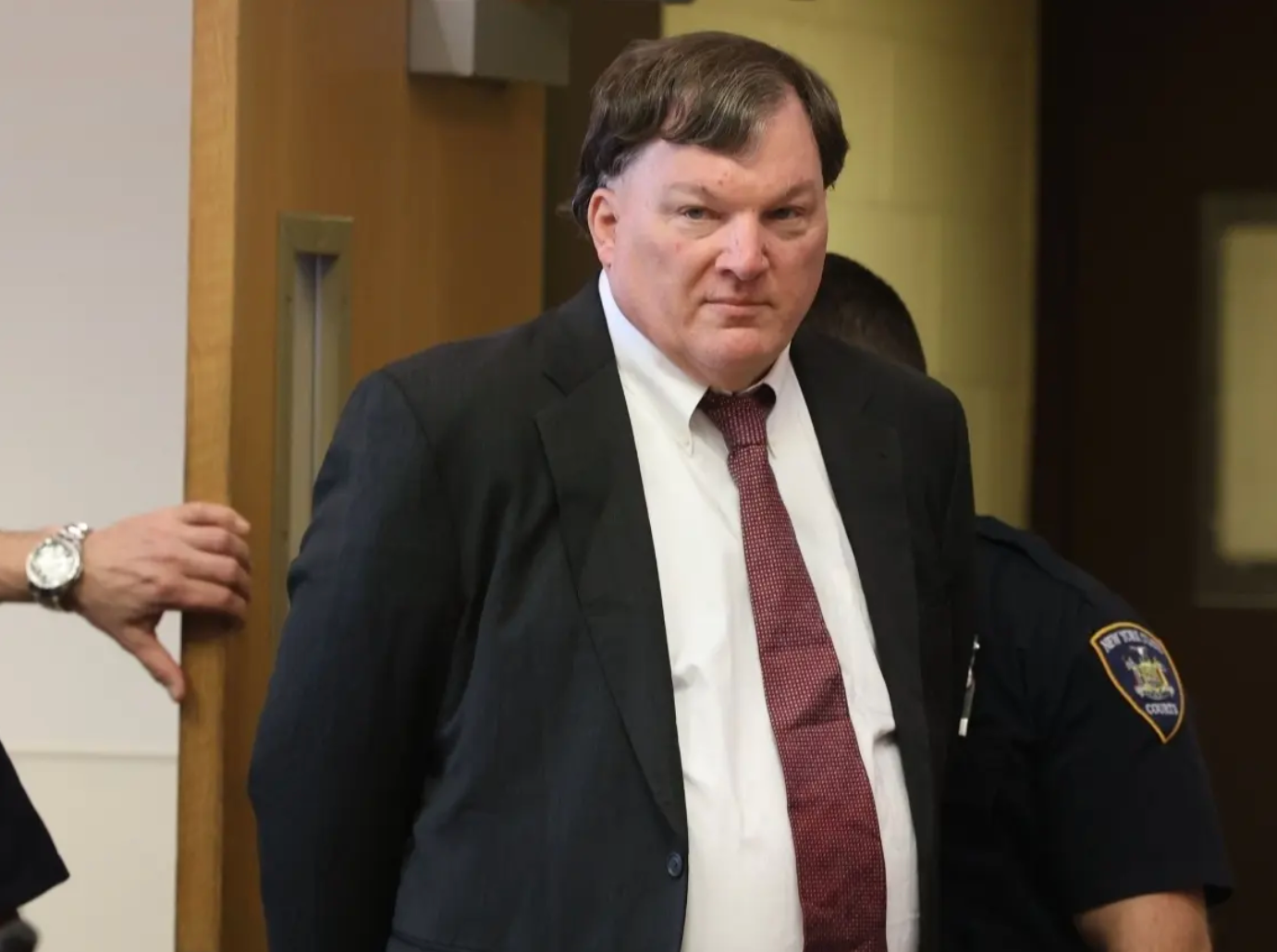
(Newsday pool / Courtesy James Carbone)
The pizza crust
The prosecution responded to a motion by the defense "contesting that DNA derived from abandoned garbage must be denied."
But, the prosecution contends that although the defence alleges violations of Heuermann's Fourth Amendment rights with law enforcement's of DNA evidence from abandoned property, there is "no support in controlling law," for that statement.
On January 26, 2023, the Gilgo Homicide Task Force conducted covert surveillance in the vicinity of defendant’s Manhattan office located at 385 5th Avenue, the prosecution said. The defendant was observed entering a pizzeria on Broadway and exiting with a white cardboard pizza box; the Task Force later observed the defendant discarding a white cardboard pizza box inside of a public garbage can, located on a public street corner, namely the southeast corner of 36th Street and 5th Avenue in Manhattan, the prosecution said.
Shortly thereafter, the task force recovered the pizza box and confirmed that it bore the same decorative print as the pizzeria on Broadway; the pizza box and its contents were then submitted for further analysis, the prosecution said.
Shortly after, a male DNA profile from the pizza crust was developed that "matched” a male DNA profile previously developed from Heuermann's recyclables, which had been left out for collection on July 21, 2022, the prosecution said.
On August 9, 2023, Judge Timothy P. Mazzei granted the People’s order to show cause, compelling the defendant to submit to the taking of a buccal swab; that DNA profile "matched" the DNA profiles form the pizza crust and napkin found in the box, the prosecution said.
Suppression of statements by Heuermann to law enforcement
The prosecution has "elected not to introduce any statements made by the defendant at trial," the prosecution said. Statements made on the night of Heuermann's arrest to law enforcement were "self-serving in nature and, if offered by the defense for their truth, would constitute inadmissible hearsay," the prosecution said.
"Therefore, defendant’s motion to suppress, and the request for a voluntariness hearing, has been rendered moot and should be denied in their entirety."
As for the discovery material, which the defense asked for, the prosecution said all has been provided.
In conclusion, the entire motion presented by the defense "should be denied in its entirety," the prosecution said.
Previously, Judge Timothy Mazzei said the omnibus motion was discussed in chambers; the prosecution was given until March 3 to answer the motion and Heuermann will not be in court on that date.
The defense will have until March 17 to respond; Heuermann will appear in court that day and a discussion will be held on scheduling as well as any hearings, if necessary, the judge said.
And, Mazzei continued: "Make it clear: The trial will begin right after Labor Day — come hell or high water."
Heuermann was first arrested on July 13, 2023 in New York City and indicted the next day in Riverhead.
Heuermann has been charged in the deaths of seven women: In July 2023, Heuermann was indicted on three counts of first-degree murder charges and three counts of second-degree murder charges in the deaths of sex workers Melissa Barthelemy, Megan Waterman and Amber Costello, whose remains were found along Ocean Parkway in 2010.
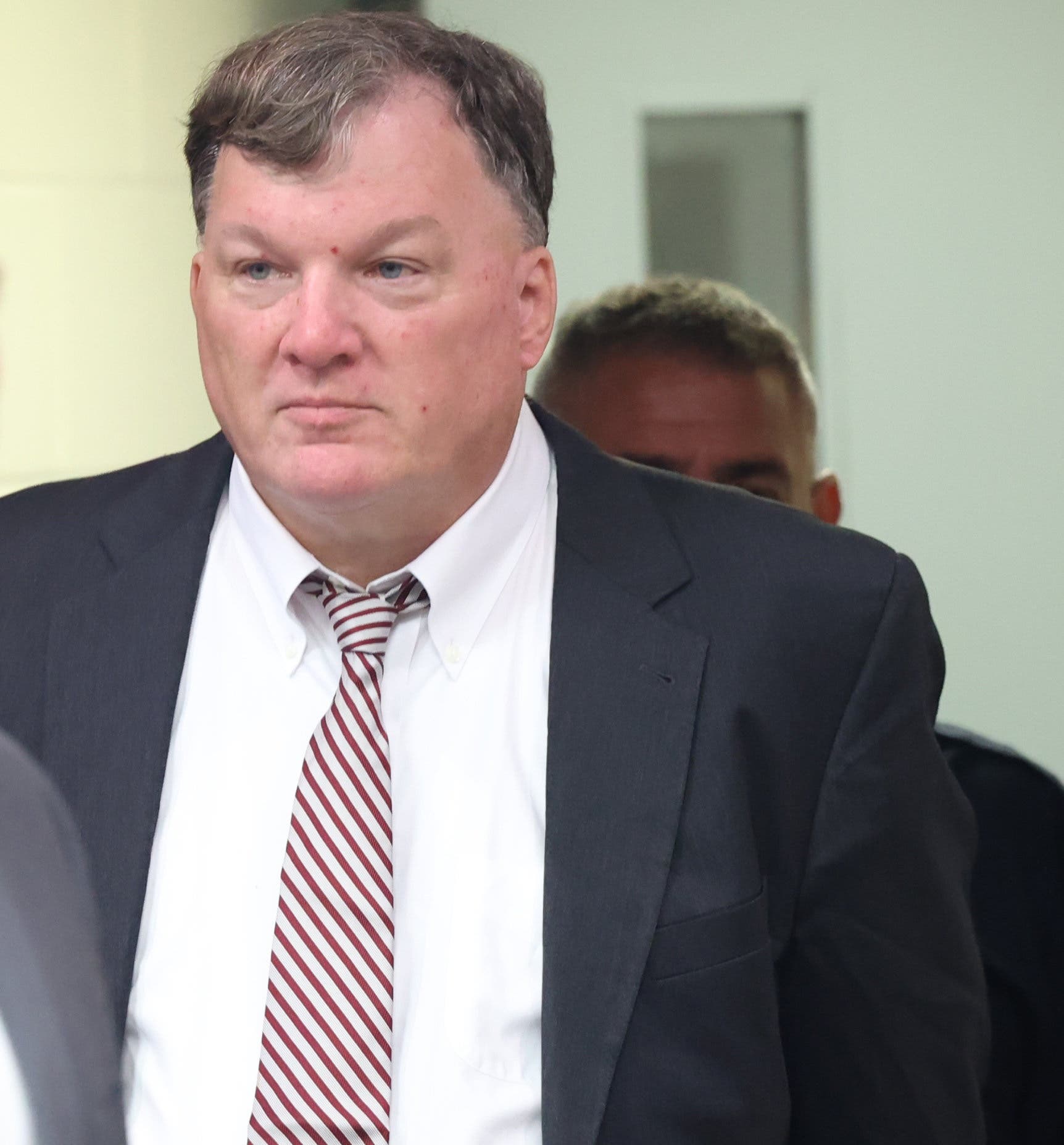
(Newsday pool / James Carbone )
Heuermann was also charged with the murder of a fourth woman, Maureen Brainard-Barnes. New DNA evidence helped connect Heuermann to all four of the deaths, said Tierney, who is prosecuting the case.
In June of last year, Heuermann was slapped with new second-degree murder charges in the deaths of two additional women, Jessica Taylor and Sandra Costilla. In December, Heuermann was charged with the death of a seventh victim, Valerie Mack.
A total of 11 sets of remains were found in the Gilgo Beach murders, which rocked Long Island. The remains included that of a toddler and an Asian male.
Heuermann has pleaded not guilty to all charges.
Get more local news delivered straight to your inbox. Sign up for free Patch newsletters and alerts.