Politics & Government
Countywide Plastic Bag Ban Tabled, New Public Hearing Slated
The legislation needed some minor amendments, requiring a new public hearing before the measure can be put to a vote.


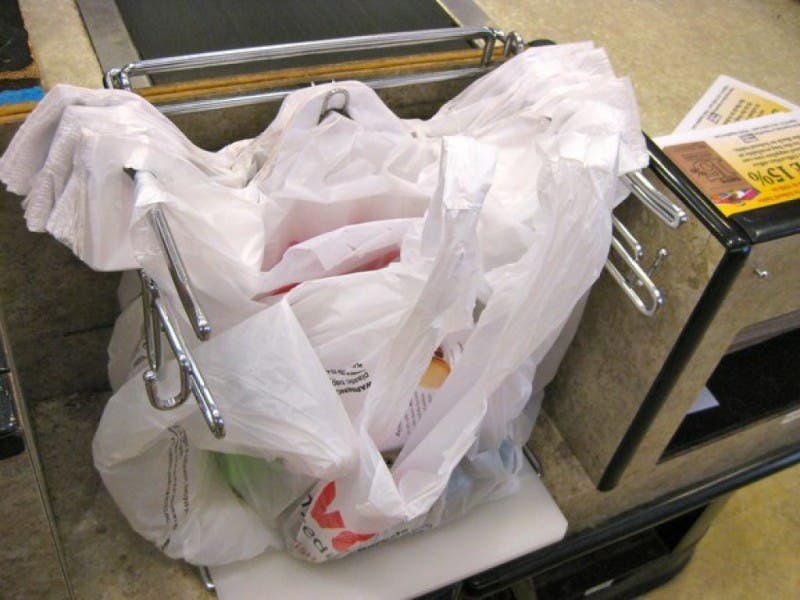
A decision by the Suffolk County Legislature on whether or not to ban single use plastic bans will have to wait just a little while longer.
According to Linda Guido, legislative aide for Suffolk County Leg. William R. Spencer, M.D., who introduced the bill to limit the use of disposable plastic bags, the matter was tabled at yesterday's session due to the fact that Spencer felt some changes needed to be made to the legislation.
Suffolk County Legislator Al Krupski, who co-sponsored the legislation, said because Spensor was considering some minor amendments, he was advised legally that the legislation needs to back for another public hearing.
Find out what's happening in Riverheadfor free with the latest updates from Patch.
To that end, Krupski urged the public to make their voices heard at that next hearing. "Please come out and comment on it," he said. "We had a very good outpouring of support for it before and we're looking for the public to turn out again."
For months, many residents and environmentalists have implored local government officials to "just say no" to single-use plastic bags.
Find out what's happening in Riverheadfor free with the latest updates from Patch.
Spencer said he'd heard from scores of local residents, business owners and environmental advocates that a move to ban the single-use bags was needed.
A plastic bag ban already exists in Southampton and East Hampton towns, Southampton Village, Quogue, Sagaponack and Patchogue.
“The public support to end the use of these polluting bags has been on the rise. I’ve heard the frustration about how they end up as unsightly litter on our roadways and in our waterways after being used for all of 12 minutes. I’ve also heard from business owners who feel with the current movement to reduce their use a countywide policy would make sense. The time has come to work together and tackle this issue," he said.
The free plastic bags come at a hidden cost to consumers and taxpayers, Spencer added.
Retailers, he said, spend $4 billion per year to give out the bags; a cost that is passed on to the consumer in the form of higher prices.
Environmentalists have long maintained that the bags end up as litter in the area's waterways, wreaking havoc on the natural environment, destroying bucolic vistas, and costing taxpayers money and resources for their cleanup and proper disposal.
New York City, Spencer said, spends $10 million disposing of plastic bags.
“Plastic bags pollute our beaches, bays, roadways, parks and neighborhoods," said Adrienne Esposito, executive director of Citizens Campaign for the Environment. "They kill thousands of marine mammals and shore birds every year. Last year 10,500 plastic bags were removed from the South Shore estuary by volunteers. The answer to this ubiquitous pollution plague is simple, ban the bag. A Citizens Campaign for the Environment survey of over 650 Suffolk residents reveals that 80 percent of the public supports either a ban or a fee on plastic bags. The time has come to simply ban them and practice BYOB – Bring Your Own Bag."
If adopted, reusable bags would cost 10 cents at retailers; those who did not comply would be charged $500 for each violation, the legislation states.
Last year, a crowd of Southold Town residents implored the board to adopt a plastic bag ban, collecting hundreds of signatures.
Southold Town Supervisor Scott Russell has always advocated for a countywide solution.
"My position all along has been that a ban should be across the board to ensure a level playing field for all businesses," he said. "The legislation appears to do that so; I support the county's effort to adopt a ban."
Russell has always said Riverhead's adopting the ban, along with Southold, was critical, to ensure equity for business owners in Southold.
Southold business owner Charles Reichert, owner of IGA, said the time had come. “It’s inevitable so let’s have a countywide bill. Honestly, I think it should go statewide as opposed to having these different laws, but I’d be happy with a countywide bill.”
Bi-partisan support
Krupski, who co-sponsored the legislation, said when he served on the Southold Town board, the county once before considered a ban on single use plastic bags. "Nothing came of it," he said.
This time around, Krupski said Spencer had found "a great deal of bipartisan support. And here we are."
Even if the measure is adopted, it won't go into effect for a year, Krupski said. "We want to give merchants time to get rid of their existing inventory, especially seasonal businesses on the East End that have an inventory of bags. We don't want to hurt local businesses," he said.
He added: “I am pleased my colleagues are interested in addressing this issue. Limiting the amount of plastic making its way into our environment and our food chain is important and prohibiting the use of plastic carry out bags is a great start. It is a step numerous communities across the nation have already undertaken.”
Suffolk County Legis. Bridget Fleming, who was on the Southampton Town Board when that ban was adopted, agreed.
"The region-wide effort to eliminate single use plastic bags, which had been a major source of pollution on the East End, has eliminated millions of the bags from our environment," she said.
Southampton Town Supervisor Jay Schneiderman, a former Suffolk County legislator, recalled when Legis. Vivian Viloria-Fisher first introduced the legislation 10 years ago. "It didn't get very far," he said. "Maybe a decade later it stands a better chance."
According to Spencer, plastic bags were first widely used in the 1970s. Due to the proliferation of the bags, he said, the amount of plastic in oceans exceeds the amount of plankton; 2.2 billion pounds of fossil fuel and 3.9 billion gallons of fresh water are needed to produce the 100 billion plastic bags the United States consumes each year, he added.
Next steps
If adopted after the next hearing, there will be a 12-month period before implementation of the law.
Within that time, Spencer aims to propose a companion bill to provide a comprehensive education and awareness campaign to assist the public and retailers with the shift.
“We want to ensure customers and retailers will have a successful transition and are fully aware of the alternatives," he said. "The campaign will also highlight the pivotal role the public will play in reversing the detrimental effects these plastic bags have had on our planet in such a brief period of time."
Get more local news delivered straight to your inbox. Sign up for free Patch newsletters and alerts.