Politics & Government
Riverhead Traffic Reaches 'Crisis' Point, Leaders Talk Solutions
A limited ban on limos and buses, water taxis, shuttles and extension of a 4-lane highway from the LIE were ideas pitched. What would help?


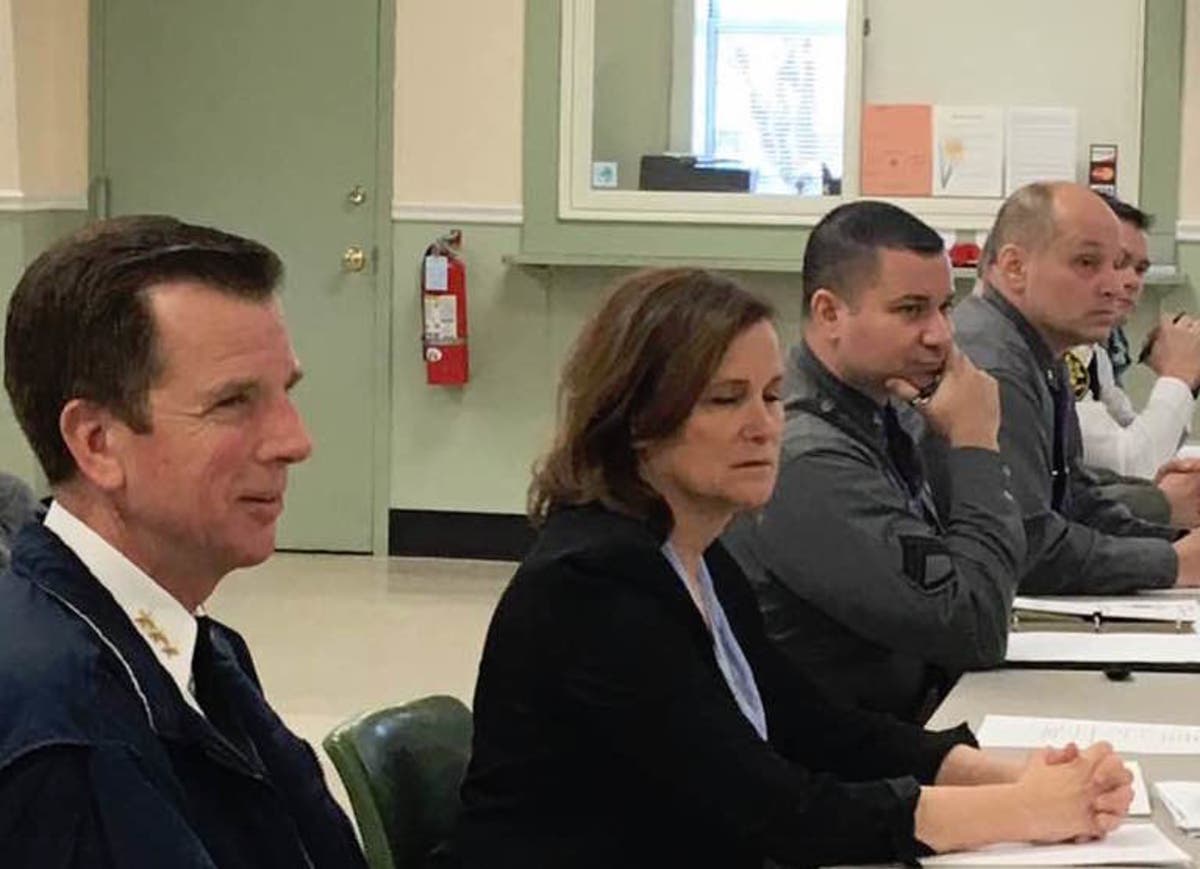
RIVERHEAD, NY — As Riverhead and the North Fork continue to emerge as destinations, traffic remains an escalating concern, as scores of cars flood infrastructure never meant to handle such a sheer deluge of volume.
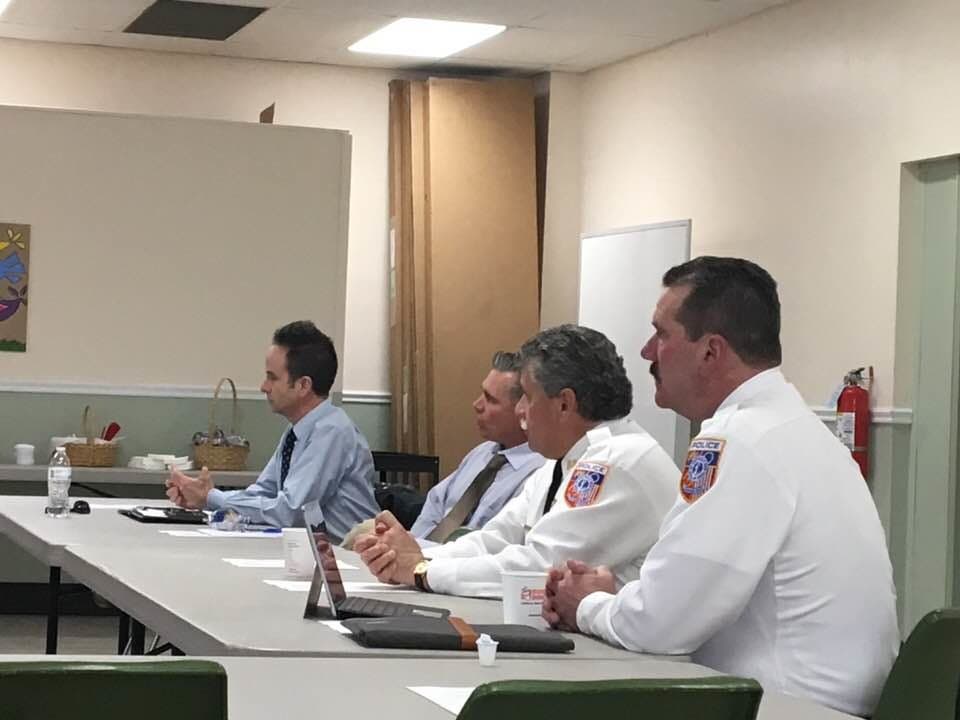
So said officials Wednesday who convened at the Southold Town Recreation Center on Peconic Lane in Peconic to discuss the issues and try to offer ideas for possible solutions.
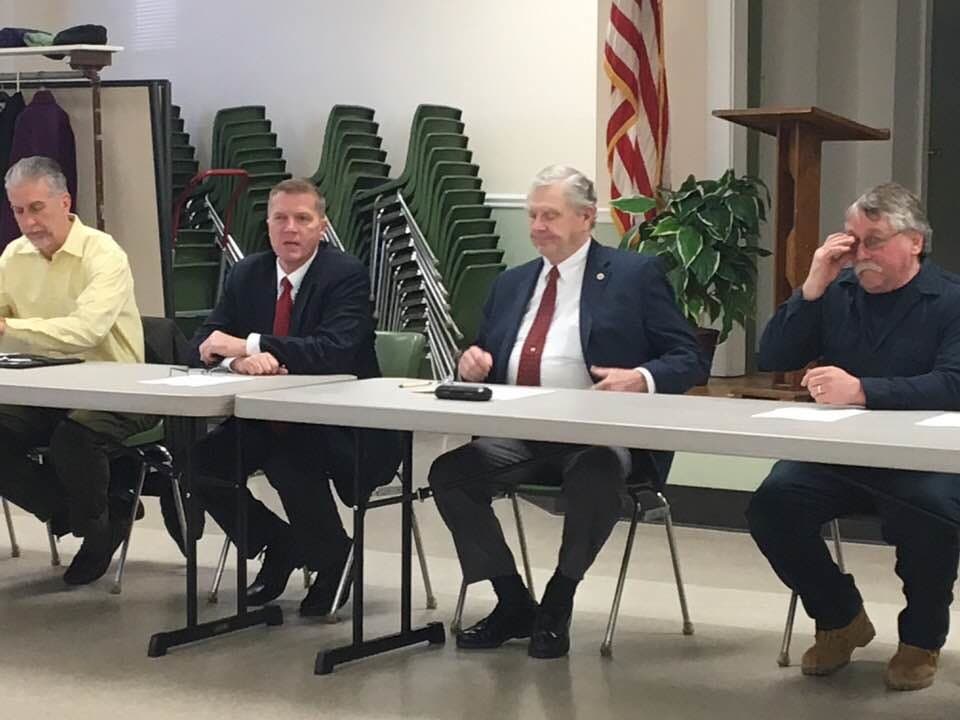
"This is, without a doubt, a crisis that needs to be addressed. At this point, it's almost an intolerable level. But we have to temper our expectations. We're not going to find the solution today," said Southold Town Supervisor Scott Russell.
Find out what's happening in Riverheadfor free with the latest updates from Patch.
And, he added, it's not likely a global solution will be found, either.

Russell, along with Southold Town Councilman Bill Ruland, who organized the meeting along with the town's transportation commission, met with a wide array of representatives on the local, county and state level.
Find out what's happening in Riverheadfor free with the latest updates from Patch.
With County Road 48 and Route 25 flooded with cars heading out to enjoy the North Fork, it's not just the pumpkin farms or any one business that's sparking the problems, Russell said. "It's a volume problem."
Roadways in town including Peconic Bay Boulevard are frequently backed up as traffic congestion woes only continue to increase, he said.
Riverhead Town Police Chief David Hegermiller said Riverhead is the "first choking point" as the cars head east.
Ruland agreed with Russell: "There may not be a silver bullet." But, he said, the goal was to bring together officials from all corners to share ideas and discussion, and talk about solutions that have worked in other parts of the country, as well. Some hybrid of those ideas might work, he said.
Hegermiller began by saying that during the harvest season, the volume is the issue. "It's like sand in an hourglass; there's only so much you can put through at one time," he said.
"There are just too many cars on a too lane highway heading eastbound," he said.
"Everyone is a prisoner on the weekends. You can't go anywhere or leave the house."
Angela Noncarrow, representative for New York State Assemblyman Anthony Palumbo, suggested maybe residents could have stickers so that they could open thoroughfares such as Peconic Bay Boulevard up at certain times only to Southold Town residents. As it stands, she said, "It's crazy." At peak times, she said, "Everyone is a prisoner on the weekends. You can't go anywhere or leave the house."
Harbes Farm, Hegermiller said, has the ability to park 1300 cars but the bottom line, he said, is that there is just too much volume; even if cars were able to pull up onto farm fields, it would still cause traffic backup, he said. Some solutions could lie in parking on the south side with right turns only while exiting, Hegermiller said.
Another suggestion was a pedestrian crossing bridge over Sound Avenue.
Ruland said in some areas of the country, looping is used, with no left turns allowed at some times during the day and traffic rerouted to make righthand turns.
At the terminus of the Long Island Expressway, Ruland said, motorists have the choice to go in more than one direction. Many of those, he said, are only interested in reaching the Cross Sound Ferry in Orient; he suggested the possibility of global routing, where people exiting the LIE are encouraged to use one road for through traffic and the other, for local traffic, which "would take some pressure off of Sound Avenue."
Another suggestion was changing the timing of the light at South Jamesport Avenue to allow more through traffic. Hegermiller said the timing on the lights was changed seasonally.
Riverhead Town Councilwoman Catherine Kent thanked the group for including Riverhead. "We need to be proactive and think outside of the box," she said, adding that apps such as Waze creating changing times. "We've heard stories of limos going across farm fields," with traffic even worse during special events, she said.
She referred to a house fire on Main Road last September in Jamesport where traffic was backed up in all directions.
Others agreed and said GPS in the modern age has caused a whole sea of new problems.
Noncarrow asked if the town could contact GPS to tell them about changes on roads during certain times of the year; Russell said "it takes forever" to get the companies that develop GPS systems to change anything.
Southold Town Police Chief Martin Flatley said Southold's traffic issues differ from Riverhead's because, while Riverhead has traffic year round, Southold's traffic spikes six months of the year, with special events such as the Strawberry Festival and Maritime Festival and the lavender farm causing highest volumes during defined periods of time.
During the fall season, from Labor Day to Columbus Day, Flatley said, "it's worse and worse."
As for the idea of making a major road one way during certain times, Flatley said, "I'd have a hard time telling homeowners they'd have to make a right, and go to Mattituck to turn around so they could turn around and go to Riverhead."
Greenport Village Trustee Mary Bess Phillips said Rocky Point has a bypass. She said since Sound Avenue is designated historic corridor it would be difficult to widen that road and asked if any thought had been given to a bypass.
"The only bypass is dumping it onto Route 25 and that's what they're already doing," Flatley said.
Russell added that some of the farms have sold their development rights so it's not easy to add new parking.
Flatley said although some Strawberry Festival parking has now been moved to Martha Clara it took five or six years to get attendees to change their mindset and accept the notion of buses.
Russell pointed out that the Strawberry Festival is a singular destination but for the most part, scores of people are coming out for a week of fun and heading to myriad places.
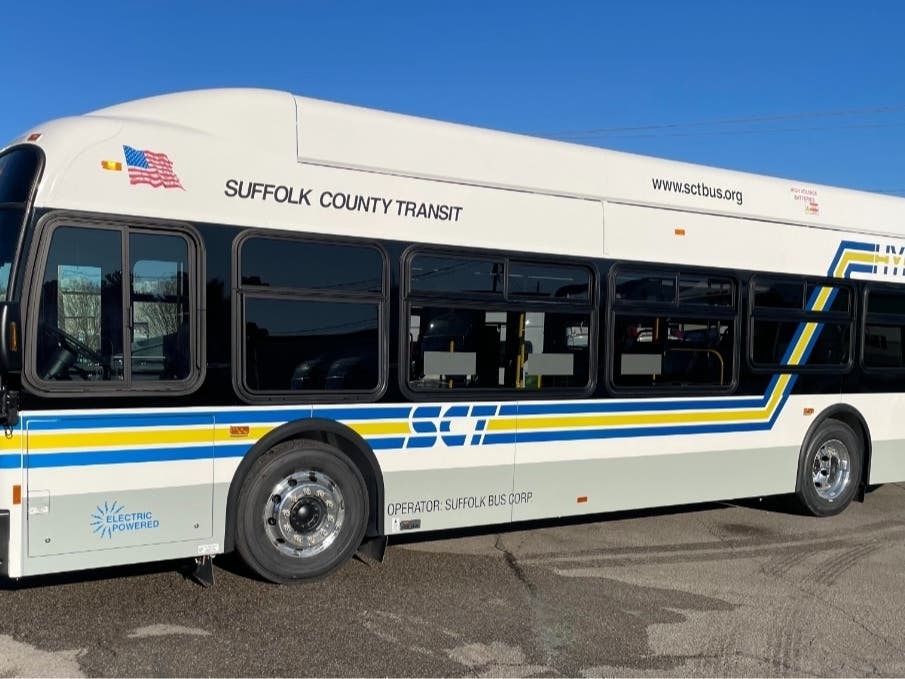
Last year's trolley launch, in conjunction with the Long Island Rail Road, brought visitors from the train to various points around town, and began to be very successful near the end of the trial, Ruland said. The town is seeking a grant to expand that service this year, he said.
However, the trolley is not an end all, he said; traffic still exists but perhaps a bit less of it.
Ideas are welcomed with an eye toward maintaining a balance between a flourishing economy and quality of life, Ruland said. "The success of our economy is driven by our visitors and if you were to take it all away overnight, the community would experience something I'm not sure they are ready to deal with," he said.
Greenport Village Mayor George Hubbard said he'd like to expand the shuttle this year. In addition, during the Maritime Festival, the idea of parking on Moore's Lane would help ease congestion, despite the fact that many people like to park in the village and walk back to their cars after the event, not take buses. He added that expanded train service was a nice way for people to attend the recent Washington's Birthday parade without cars.
Convincing visitors to take the train from Riverhead, Hubbard said, would help alleviate parking issues in the village that are a critical concern. "We're filled up almost every weekend," he said. "We have elderly people who won't leave the house. My mother was one of them, because you leave the house and you can't get back."
Water taxi, anyone?
Tom Fox of the Southold Town transportation commission said a pilot program that launched water taxis from Greenport to Sag Harbor could possibly see rebirth.
Ruland said that concept raised the issue of if Riverhead had parking available near the LIRR for people who might take the train out then hop aboard a water taxi to the South Fork.
Fox also suggested seasonal water taxis running on both sides of Peconic Bay from Riverhead to Greenport and to Southampton or East Hampton. The issue would be parking and staging the boats in Riverhead, he said. The issue is worthy of further study, Fox said.
Phillips said environmentalists might take issue with the impacts to the Peconic Bay.
Kent said a combination of issues must be considered, including water taxis, hop on, hop off buses, and shuttles. She said there's an issue with buses for those heading to wineries because there is a need for bathroom facilities. Also, she said, those picking wheelbarrows full of pumpkins won't get on a bus, although buses would work for special events such as the Strawberry Festival.
"The traffic starts in Wading River," she said.
Russell said he wants to see if those buses, water taxis, or shuttles are just "bringing more people to the party" or actually alleviating the problems for residents. "Is it a way to exchange of economies between the people that are already here? I want to see the impact on the problem," Russell said.
Limited ban on buses and limos?
Limos, Russell said, coming east that have no way to go west end up using quiet, residential streets or farmland to turn.
Perhaps area businesses, including wineries, U-pick or other commercial enterprises, might consider a limited ban on buses or limos during times when traffic is at its worst, such as September and October, he said.
South Fork solutions
John Stype, representative for Suffolk County Legislator Al Krupski, said solutions exist on the South Fork, such as a shuttle that allows people to get on and off for the day. "Things like that can be done here. Maybe we should contact them," he said. "I've been in the Hamptons in the summer and the traffic is worse than here."
He also suggested using parking on school grounds.
"School districts have a lot of parking and to this date they have been very reluctant to participate, usually for liability issues," Ruland said. But, he said, if the goal is to think out of the box, perhaps the financial component could be an incentive during times when school isn't in session, especially because liability insurance already exists.
Businesses in schools need to be part of the ongoing discussion, he said.
The group discussed traffic studies, with the last major study being the East End Regional Transportation Study in 2009, a dual-concept for a coordinated and flexible rail and bus network on the East End, prepared by the Volpe National Transportation Systems Center.
Stype said another option would be to contact the individuals who run the U.S. Open on the South Fork; he said in the past, before County Road 39 was widened, four lanes were created using cones.
Fox reminded that a temporary LIRR station was also created at Southampton College for the U.S. Open, at the spot where one formerly existed. A pedestrian bridge was also created for the event, some said.
State police at the forum said in the past, extra lanes were created in Westhampton and Southampton for the U.S. Open event, but that was not feasible on Sound Avenue because those roads had shoulders to create a third reversible lane.
William Hillman, Chief Engineer, Suffolk County Department of Public Works, said the U.S. Open and the current North Fork traffic situation were "apples and oranges."
Others agreed that the U.S. open is a specific, ticketed event with directions, a train schedule and maps, where motorists are not just heading out on a whim.
Hillman said the South Fork has been dealing with similar issues for years. "All the solutions that have been proposed, have been proposed on the South Fork as well," he said.
However, Hillman said, mass transit, while it may have value to some extent, won't solve the problem.
"You have to make some decisions today that will take a long time to come to fruition but if those are made and the community embraces them and sees the potential, then you might not find yourself in the same position the South Fork is in right now," Hillman said.
Before County Road 39 was widened in Southampton, Hillman said kids were waiting in school buses for an hour and a half, while doctors and nurses were resigning from businesses because the traffic was so bad, he said.
In the 1970s, a proposal existed to extend Sunrise Highway, he said.
His idea for the North Fork would be to extend the four-lane section of County Road 48 west to the LIE. "You need some mechanism for long transport," he said, in addition to solutions including shuttles and water taxis.
"If this community were willing to bite the bullet and do some sort of extension, and make some connection to the expressway, the North Fork would outpace the South Fork," Hillman said.
Russell said in the 1970s it was a popular idea to extend the LIE to Mattituck. But sentiments have changed, he said. "Let's be honest, it's a two lane road that kept Southold rural."
He agreed any solution that would be effective would be unpleasant to some and people would have to make choices. "The larger issue won't be solved without dramatic changes that won't go over so well, with local residents having to choose the lesser of two evils. They'd probably choose traffic over a four-lane highway," Russell said.
Russell said long term solutions and expensive studies were all well and good but if the ideas were not implemented, nothing would come to fruition. The bottom line, the supervisor said, is that Southold needs answers sooner than later.
"I need a short term solution and to get down to brass tacks," Russell said.
One myth, he said, "is that businesses are living on tourism." The fact is, businesses to the east "are getting choked" by the traffic to the west. "Maybe a self-imposed, limited ban on limos and buses," at popular businesses such as U pick operations, wineries and others that spark traffic, could be an answer, Russell said.
Phillips agreed and said those businesses that draw large crowds are "feeling pressure from fellow businesses on the North Fork;" those operations should be made to understand the negative impact that their businesses are having on those struggling to survive when their clientele can't get past the traffic to head east and frequent their establishments.
Russell said the goal for the present time is to focus on smaller, more immediate solutions; additional meetings that will include the business community will be held moving forward.
Patch photos by Lisa Finn.
Get more local news delivered straight to your inbox. Sign up for free Patch newsletters and alerts.