Health & Fitness
everything in its (mise en) place
Get your "top chef" on, by preparing your ingredients prior to cooking. There's even a fancy French term for it - "mise en place" - and it changed the way I cooked!

You may have picked up by now that I am somewhat of an orderly cook. I’m not one to “eyeball”, “judge by feel” or (gasp!) make substitutions in the kitchen. I’m a slave to recipes and rarely (and with great discomfort) stray from directions.
Part of this “style” (?) of cooking includes being organized and neat, whether I’m cooking or baking. I clean as I go, put ingredients away as soon as I’m through, and try to do as much advance prep as possible.
This last part is what I’m writing about today. There’s even a fancy French term for it, called “mise en place” (translation: putting in place).
Find out what's happening in Rivertownsfor free with the latest updates from Patch.
You see mise en place in action while watching any of your favorite cooking shows. Have you ever noticed that all or most of the ingredients for the recipe are chopped, sliced or otherwise readied and sitting in cute little bowls? All the chef has to do is start tossing, sauteing, stirring – you get the picture. It gives the illusion that cooking is quick, easy and effortless but we all know that there’s a crew of minions behind the scenes doing all of that prep work prior to the show.
But just because you don’t have a staff you should still – whenever possible – prepare your mise en place prior to cooking.
Find out what's happening in Rivertownsfor free with the latest updates from Patch.
Why?
It saves time - it may seem like extra work but you actually streamline the process by taking the time up front to prepare your ingredients.
It lessens stress – once your pan is hot, you want to be ready to go with minimal pauses. I’ve had garlic burn because I didn’t realize that I had to chop the peppers right away (let the flop sweat ensue).
It reduces clean up - a clean kitchen is a happy kitchen. Okay, this is just my own personal thing, but I find that getting rid of all the peels, wrappers and trimmings before I begin (and pouring myself a glass of wine too) makes the actual cooking even more enjoyable.
The following recipe is a perfect example of how mise en place can make a complex recipe much simpler. I made this dish for the first time many years ago but can still vividly recall what a disaster the kitchen was when I finally served dinner (everyone loved it; I was too harried and stressed to enjoy it myself). The next morning, I took out the recipe to try and figure out how I could make it easier on myself the next time (and there WOULD be a next time because everyone really did love the dish). I noticed that most of the ingredients could be readied and combined prior to cooking. For instance, the 4 tablespoons of garlic – used in two separate steps – could be chopped up and combined with their appropriate partners. The tomatoes, wine and seasonings could be measured and placed together in a bowl prior to beginning.
Get where I’m going?
I actually made the recipe again a week later (I’m determined, if nothing else) with these changes. What a difference. It didn’t even feel like I was cooking the same dish. It was fun!
My point? What I learned from this experience – and it changed the way I cooked going forward – was that prepping in advance (just like the pros do) is the way to go.
What kind of cook are you? Do you chop slice as you go? Or do you set up everything in advance? And do you do things differently when you are cooking, versus baking?
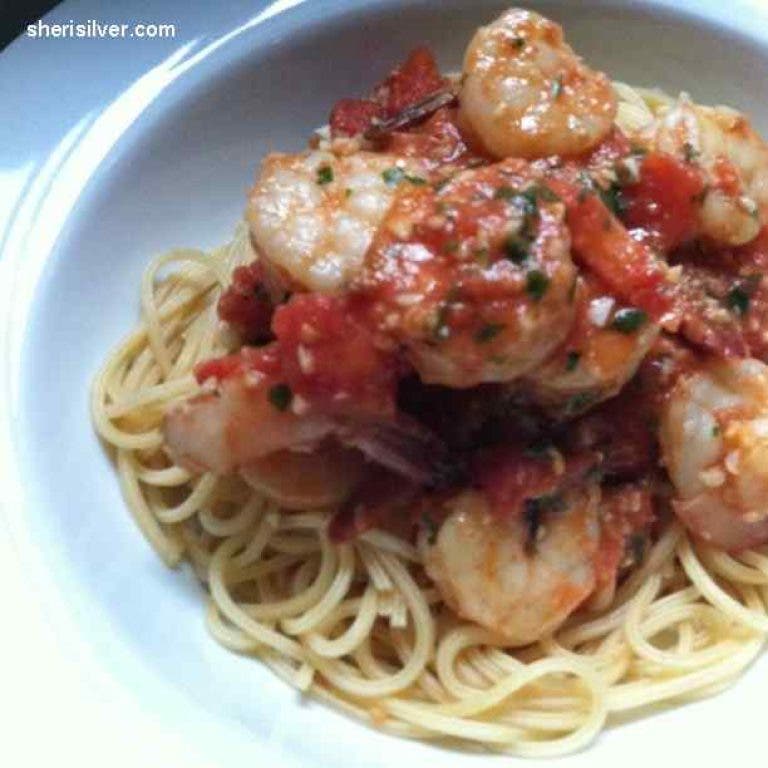
Shrimp Fra Diavlo With Linguine
“reorganized” from Cook’s Illustrated
1 1/2 lbs. medium shrimp, cleaned
1/2 – 1 t. crushed red pepper
6 T. extra-virgin olive oil
1 ½ T. salt
¼ c. cognac or brandy
4 T. minced garlic (about 12 cloves)
½ t. sugar
28 oz. diced or chopped tomatoes, drained
1 c. white wine
¼ c. minced fresh parsley
1 lb. linguine
Set up your “mise en place” - you’ll need two medium bowls and two small bowls (I LOVE these bowls and have a bunch of them):
In one medium bowl combine the shrimp, half the red pepper, 2 T. olive oil and ¾ t. salt. In the other bowl, combine the remaining red pepper, 3/4 t. salt, sugar, tomatoes and wine.
In one small bowl combine 3 T. olive oil and 3 T. garlic, and in the other combine 1 T. garlic and the parsley.
Start cooking:
Set up a large pot of water to boil.
Heat a heavy 12” skillet over high heat for 4 minutes. Add shrimp to the skillet and quickly spread in a single layer. Cook, without stirring, for 30 seconds. Take the skillet off the heat; stir to turn shrimps. Add the cognac; let stand for about 5 seconds. Return the skillet to high heat. Wave a lit match over the skillet until cognac ignites; shake the skillet until the flames subside. Transfer shrimp to a clean bowl and set aside.
Take the empty skillet off the heat; cool for 2 minutes. Return to burner and reduce heat to low. Add the olive oil/garlic mixture and cook, stirring constantly, until garlic foams and is sticky and straw-colored, 5-7 minutes. Add tomato/wine mixture; increase heat to medium-high and simmer until thickened and fragrant, about 8 minutes. Stir in reserved shrimp (and accumulated juices) and the garlic/parsley mixture and simmer until shrimp have heated through, about 1-2 minutes longer. Off the heat stir in remaining 1 T. olive oil.
While sauce simmers, cook linguine with remaining 1 T. salt till al dente. Drain, reserving 1/3 c. cooking water. Transfer pasta back to pot; add about ½ c. sauce (without shrimp) and 2-3 T. reserved pasta cooking water; toss to coat. Divide pasta among warm serving bowls, top with a portion of sauce and shrimp and serve immediately.
Sheri Silver writes the blog donuts, dresses and dirt (www.sherisilver.com)